Morocco Opens its First Museum for Contemporary Art
5 Mars 2018
Magazine C&
5 min de lecture
At the end of February 2018, Morocco opened its first museum for contemporary art. Focusing on artists from Africa and the diaspora, the Museum of African Contemporary Art Al Maaden (MACAAL), is unique in the region. Our author Mandy Sinclair gives an overview of the opening exhibition, Africa is No Island, which runs until 24 August 2018.
La version française suivra bientôt.
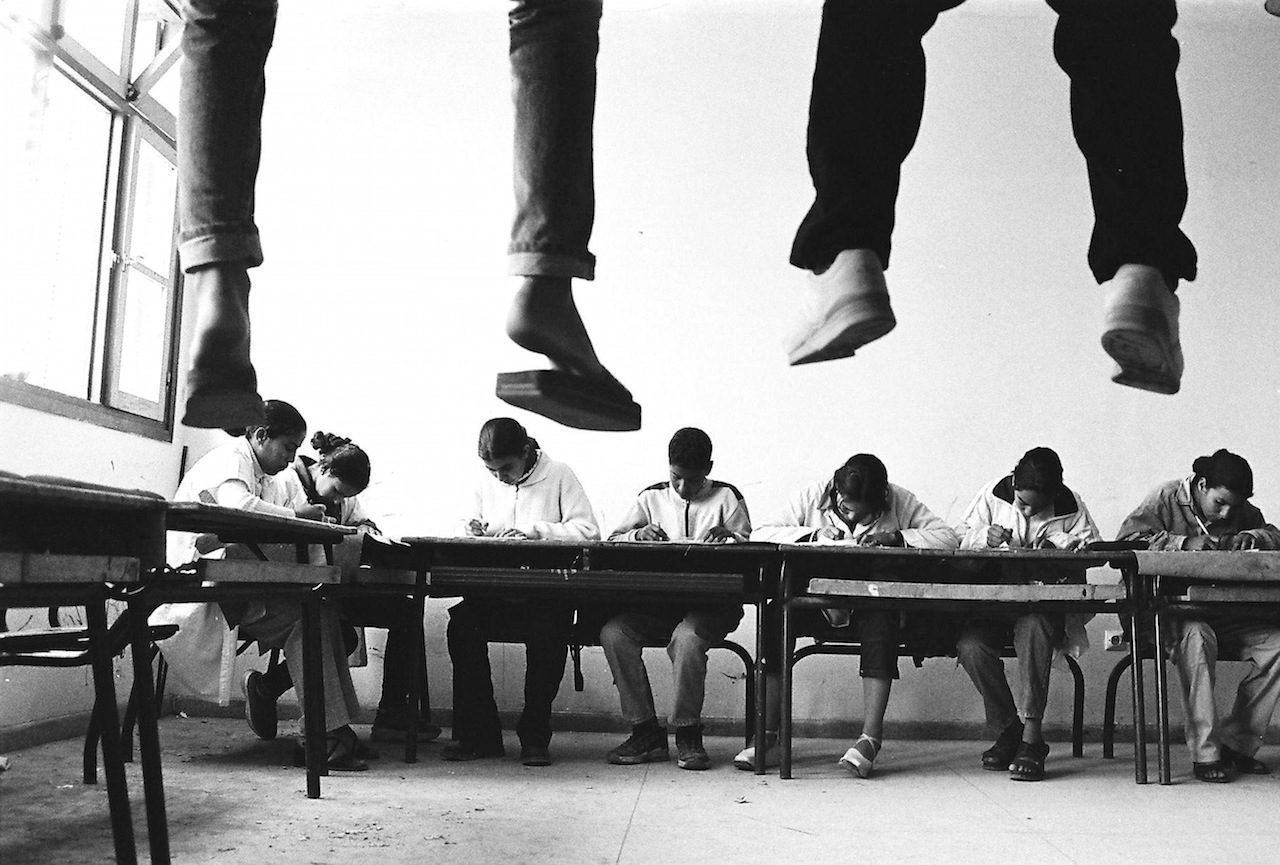
Untitled from La Salle de Classe Series, 1994-2002 © Hicham Benohoud
The museum, directed by Othman Lazraq, wants to nurture talent from Africa both by established and emerging artists. To do so, the MACAAL provides a place to bring the Lazraq family’s private collection of over 2,000 pieces of modern and contemporary art, acquired over the past 40 years, to a broader audience. It also serves as a space for dialogue and exchange.
The inaugural exhibition Africa is No Island features the photographic works from 40 emerging and established photographers working on the continent and in the wider Diaspora. By allowing the artists to capture the continent through their own photographic lens, the aim is to highlight the creative energy and cultural diversity rather than the stereotypical images often used to represent Africa.
The 64 artworks and one wallpaper installation were selected from the foundation’s collection and in collaboration with Afrique in Visu, an African photography association. “Africa is not an island,” say curators Baptiste de Ville d’Avray, Jeanne Mercier, and Madeleine de Colnet of Afrique in Visu, “but rather a connected territory, full of possibilities”.
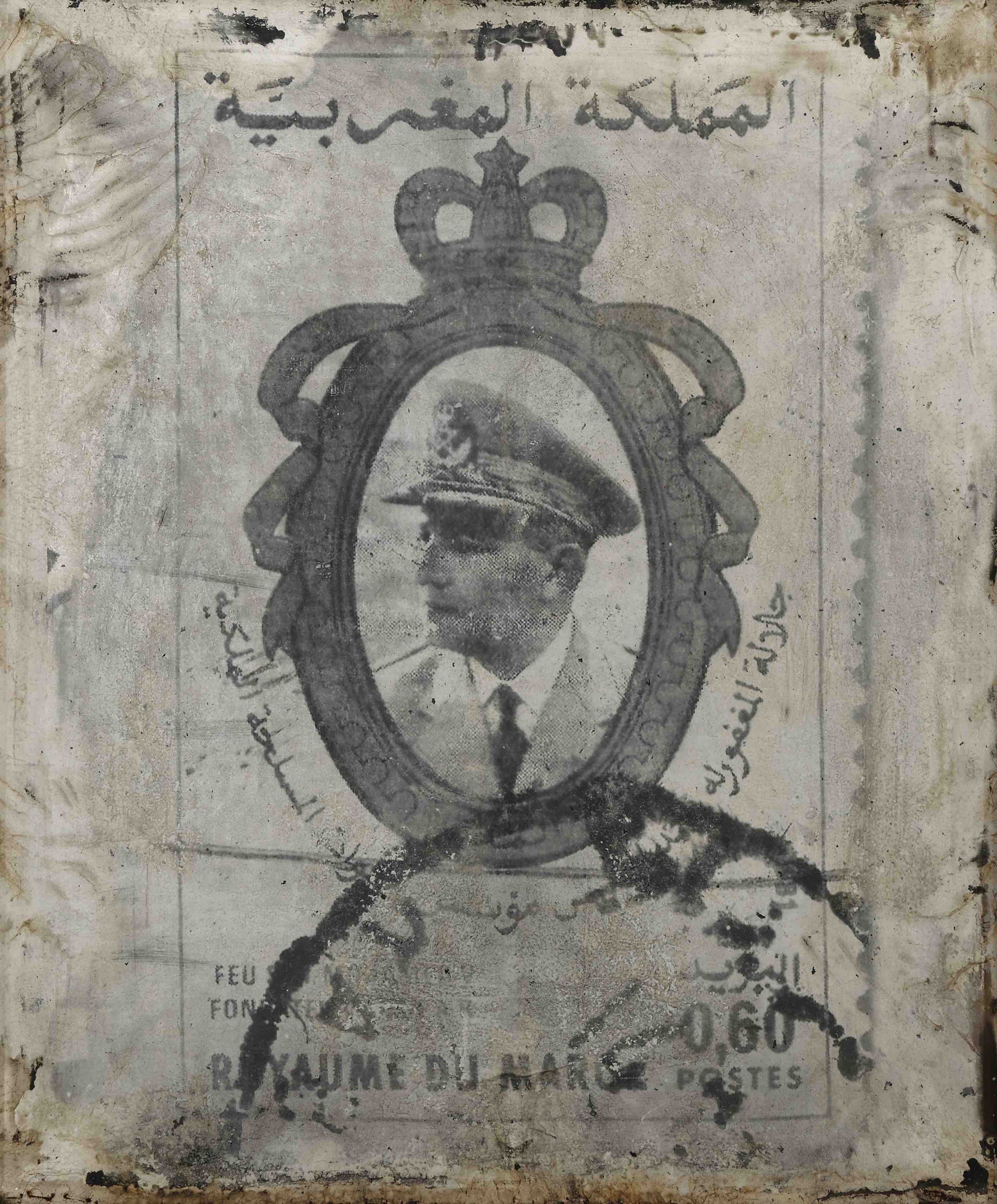
Mohammed El Mourid, from the series Royaume du Maroc. Courtesy the artist.
The central atrium, filled largely with Moroccan artists, places art from the North African kingdom within the wider context of the African Diaspora. Mohammed El Mourid’s series Royaume du Maroc, comprising 15 silver prints on goatskin with images taken from vintage and recent postage stamps, hang alongside Mustapha Azeroual’s Résurgences – Arbre #2, an arborescent mobile made of 200 porcelain slabs and bichromate monochrome rubber, wood shelf and nylon thread. Leila Alaoui (1982-2016) captures the cultural and ethnic diversity of the kingdom with photographs from The Moroccans series displayed opposite Maimouna Guerresi’s large-scale portraits entitled Throne in Black (2016) and Throne in White (2016), hanging majestically above the viewer.
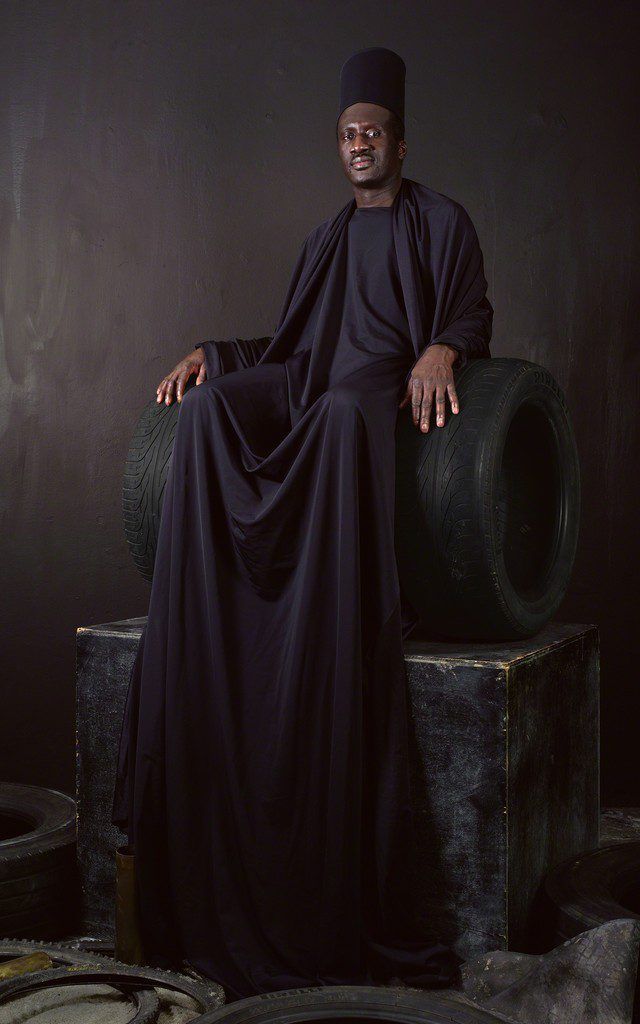
Maïmouna Guerresi, 'Black Throne', 2017, Mariane Ibrahim Gallery
From the intimate portraiture of Joana Choumali to Baudouin Mouanda’s depictions of Congo Brazzaville’s social circles to Joan Bardeletti’s representation of the middle classes in Kenya, the exhibition examines daily life and experiences within modern Africa, the artists touching on themes of tradition, spirituality, family, and environment.
Examining the history of his country, the Democratic Republic of the Congo, Sammy Baloji’s triptych of numerical prints on Baryta paper asks questions about what kind of images to archive, the values those selected represent, and the memory they are safeguarding.
Anna Raimondo, an Italian artist who has previously lived in Morocco, presents a sound installation re-creating and transporting listeners into a typical Marrakech souk – offering an encounter with the people and personalities in the famous marketplace while at the same time further engaging the viewer’s sense of a communal Moroccan experience.
Romuald Hazoumè, form the Series Cherry and Miss Rata, Benin 2011.Courtesy October Gallery.
On the second floor of the light-filled two-storey gallery, a semi-permanent exhibition comprised of artworks from the Fondation Alliances’ general collection is displayed.
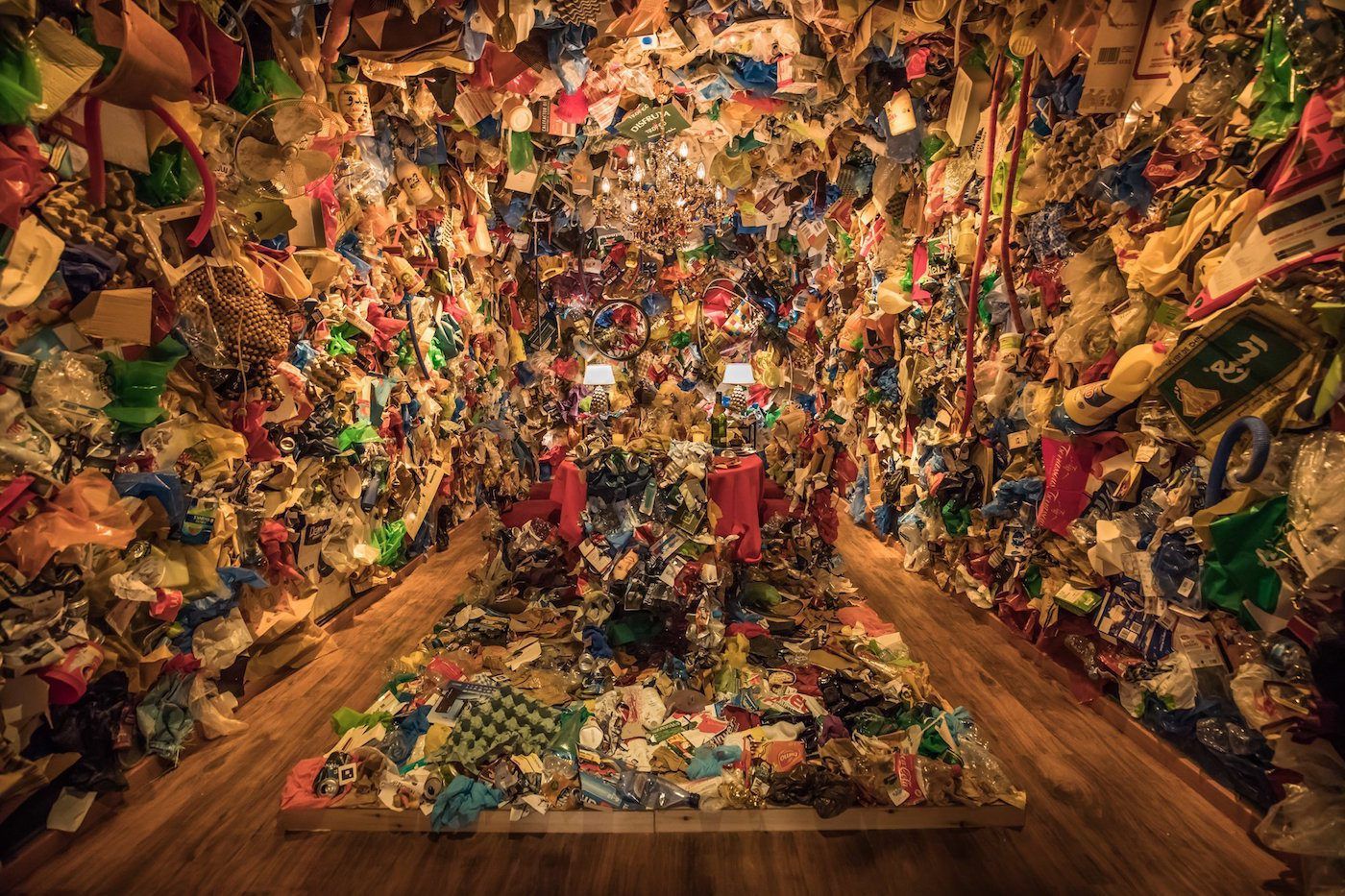
At the top of the staircase, viewers enter the encompassing installation Diner en ville (Dinner in the city) created by the Marrakech-based collective Zbel Manifesto using waste and recycled materials. The table of six is laid with fine serving ware and topped with disposed wine and water bottles, plastic containers, McFlurry cups and even electronic cables, bringing awareness to the disposable world we live in.
In keeping with the found materials theme, Romuald Hazoumè’s masks Cherry and Miss Rata made from jerrycans, a container typically used for transporting fuel, call attention to Benin’s illegal market for fuel.
Mandy Sinclair is a Canadian writer and travel consultant living in Marrakech, Morocco.
Portia Zvavahera’s House of Praise
The Heart of the Matter: Carrie Mae Weems au FOMU
The Re:assemblages Symposium: How Might We Gather Differently?
Werewere Liking: Of Spirit, Sound, and the Shape of Transmission
Paris Noir : surréalisme, abstraction et figuration panafricains