Portia Zvavahera’s House of Praise
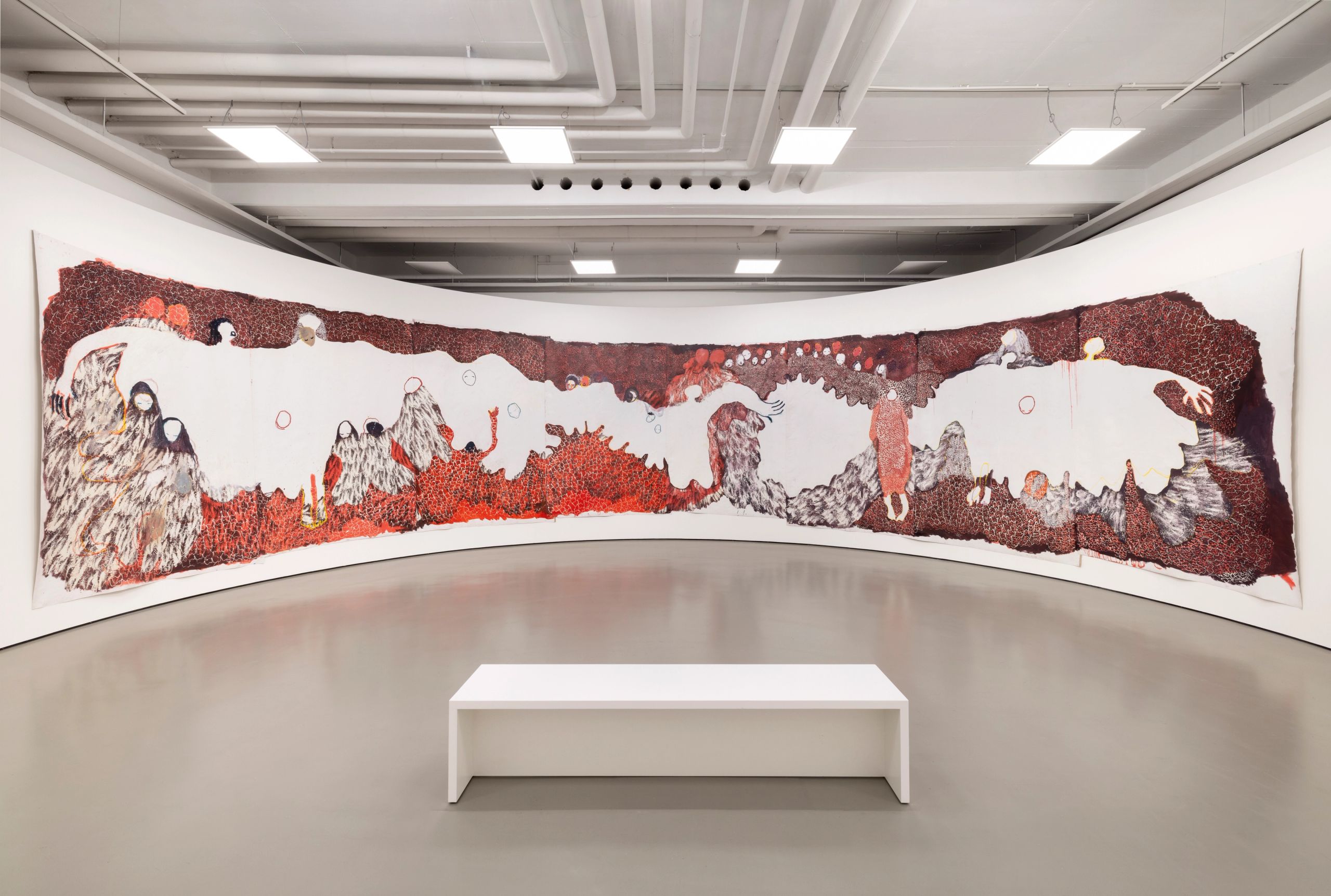
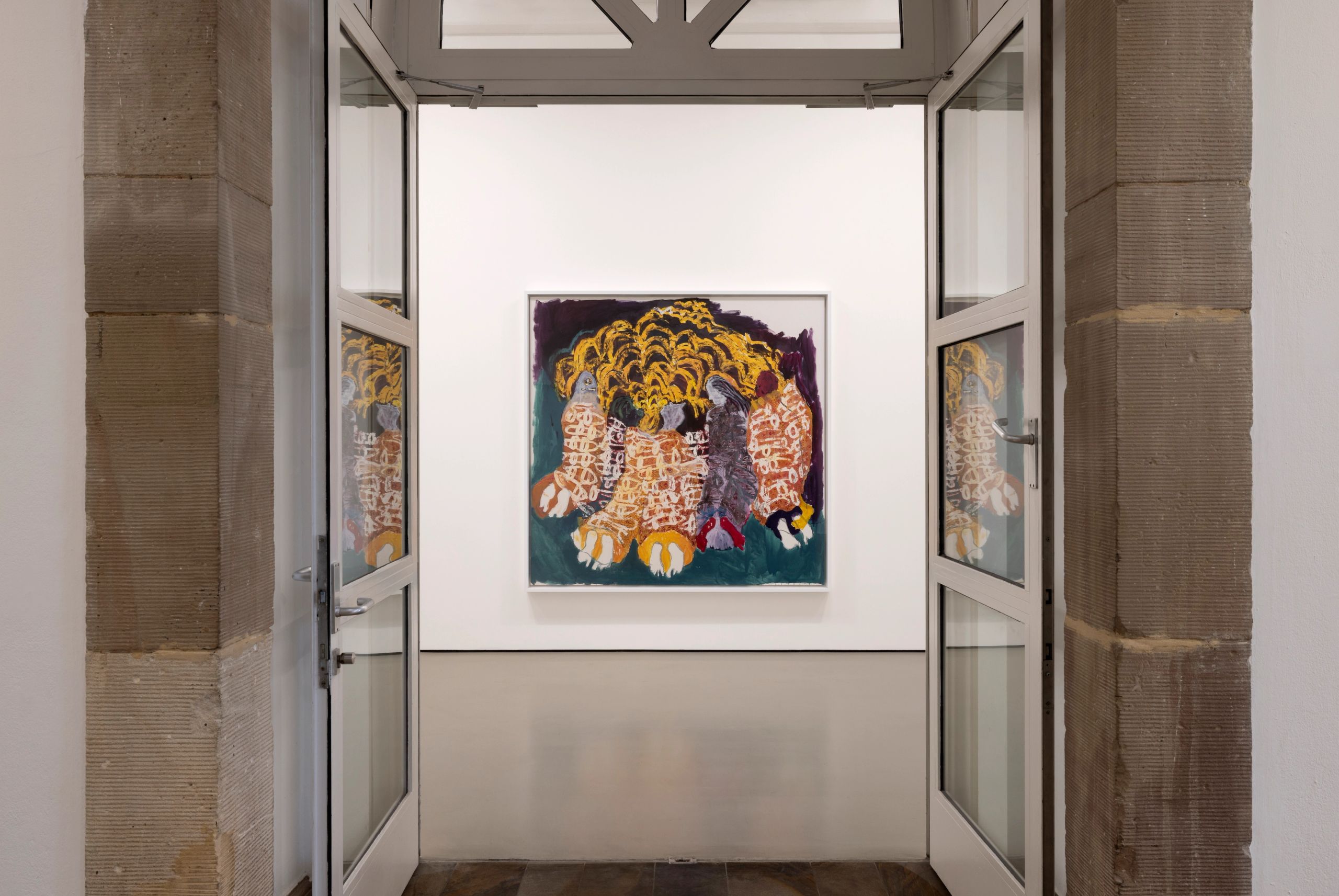
Portia Zvavahera: Imba Yerumbidzo, 2024 (Installationsansicht / Installation view Fridericianum, Kassel, 2025) Foto / Photo: Andrea Rossetti © Portia Zvavahera, documenta und Museum Fridericianum gGmbH
Zimbabwean artist Portia Zvavahera’s debut exhibition in Germany was on view between September 2025 and February 2026. Writer Eric Otieno Sumba lauds the artist's themes, technique, and eye for color, though he finds the conventional hanging of most of the works a missed opportunity by the city’s leading arts institution, the Fridericianum. In this belated review, Sumba also ruminates on curatorial, editorial, and commercial decisions that shape the state of mainstream art criticism today.
The ends of Portia Zvavahera’s disheveling dreams are often the beginning of her paintings. The artist has reported having frantically vivid dreams, regularly waking up rattled from encounters with sinister figures and curious scenarios. In the absence of her grandmother, who would talk through these visions with her, the dreamer has resorted to taking notes, making sketches, and painting records of their plotlines, characters, and ambiance. Two decades in, her dreamscapes have become highly sought-after at home in Zimbabwe as well as internationally.
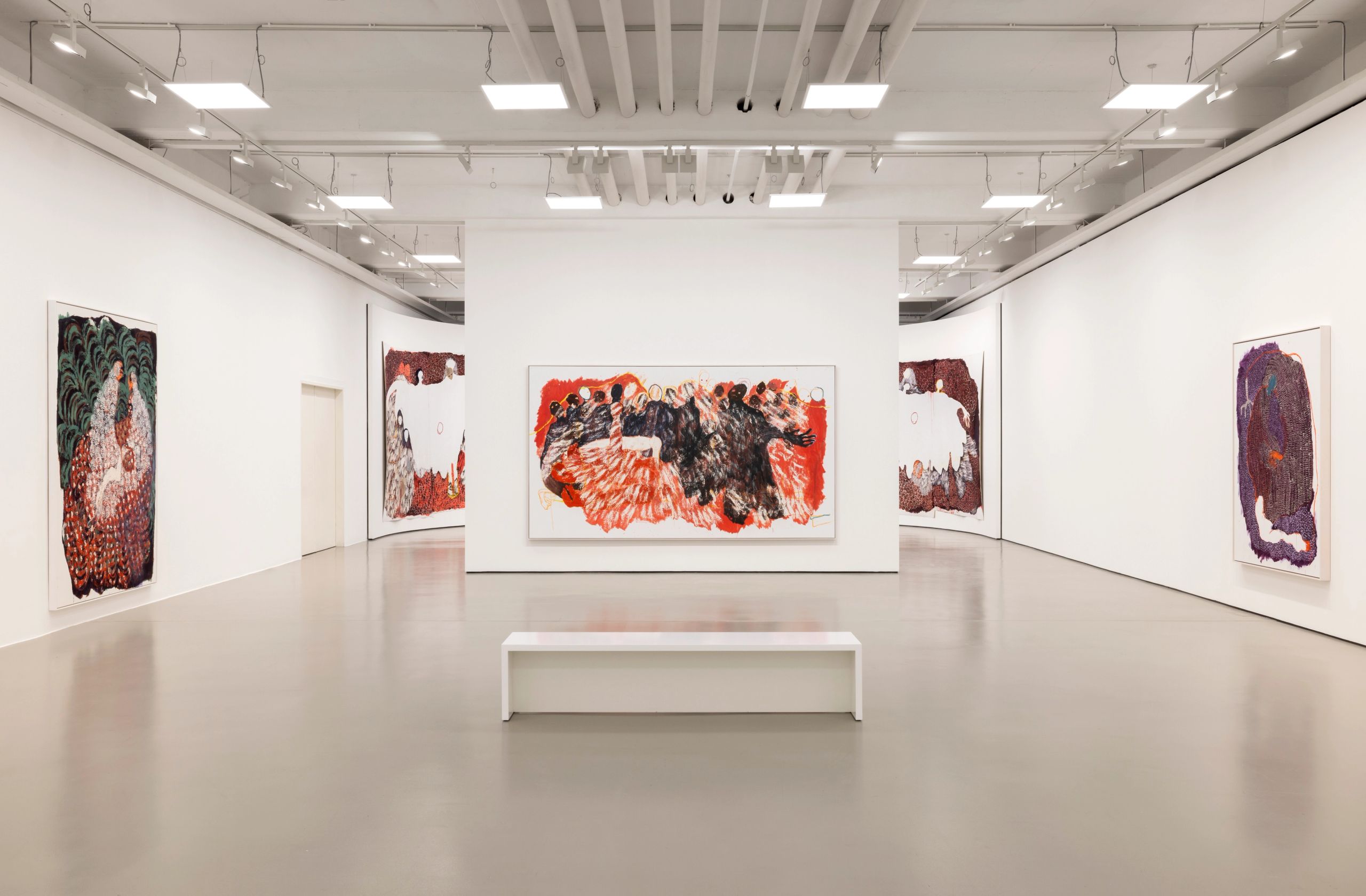
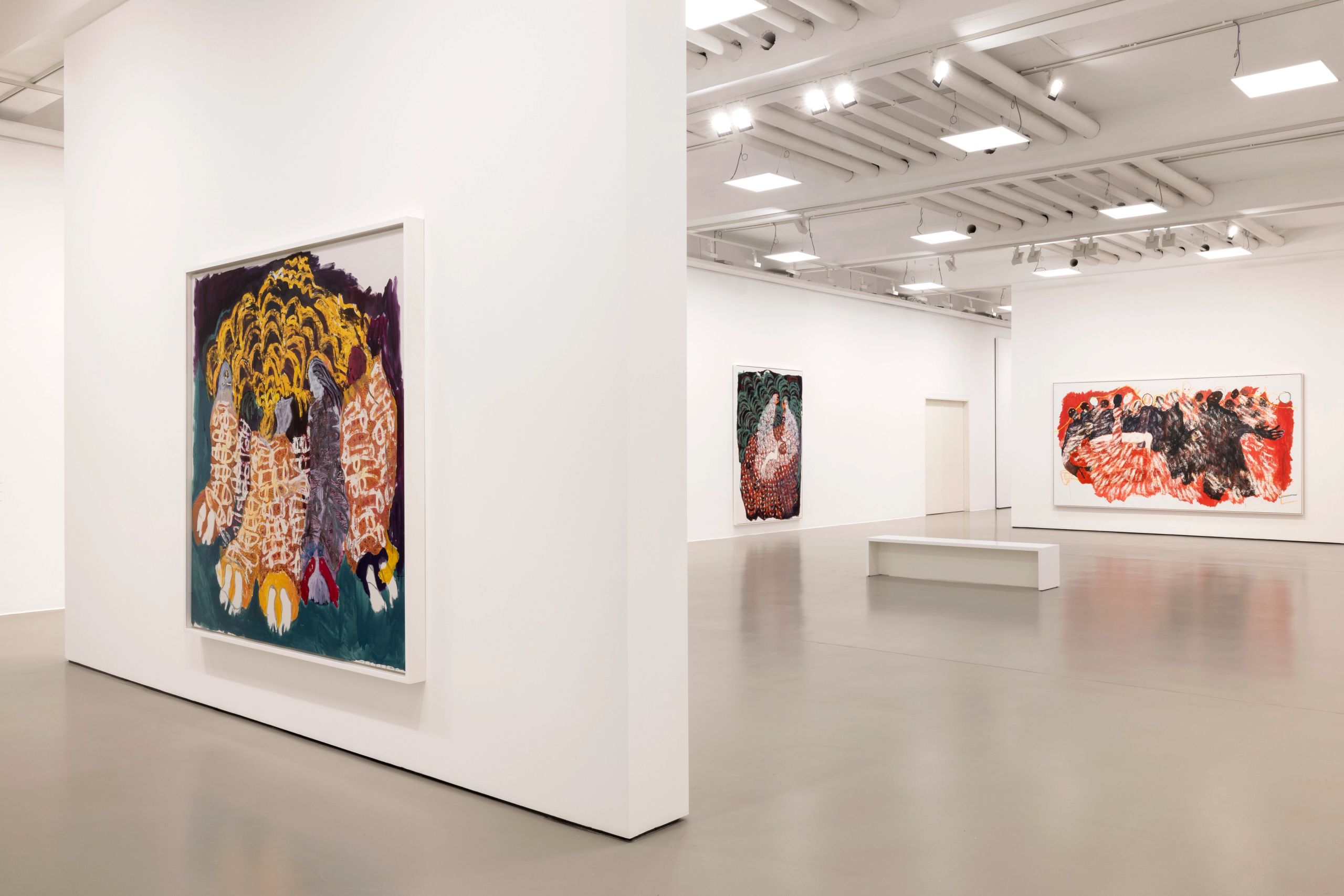
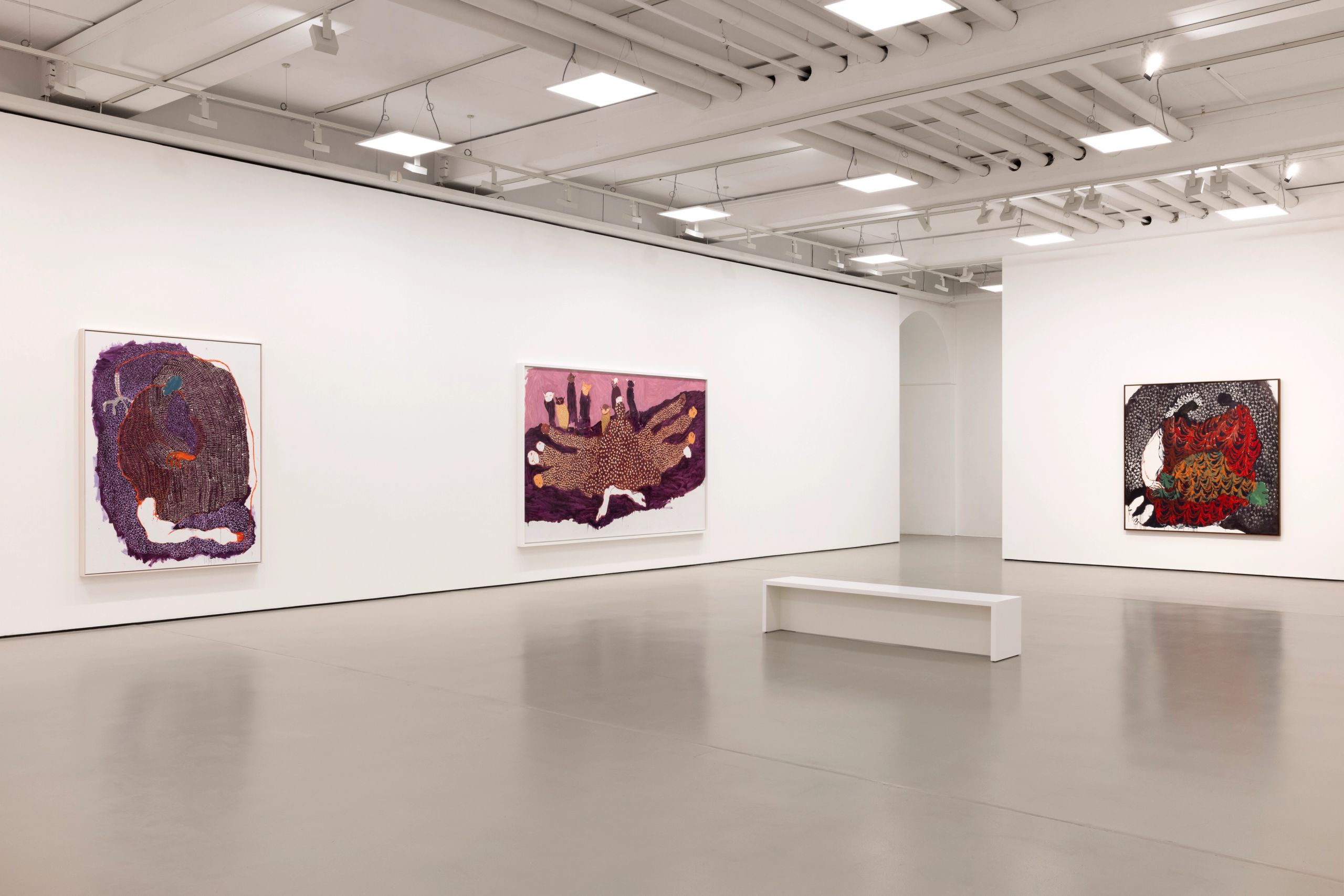
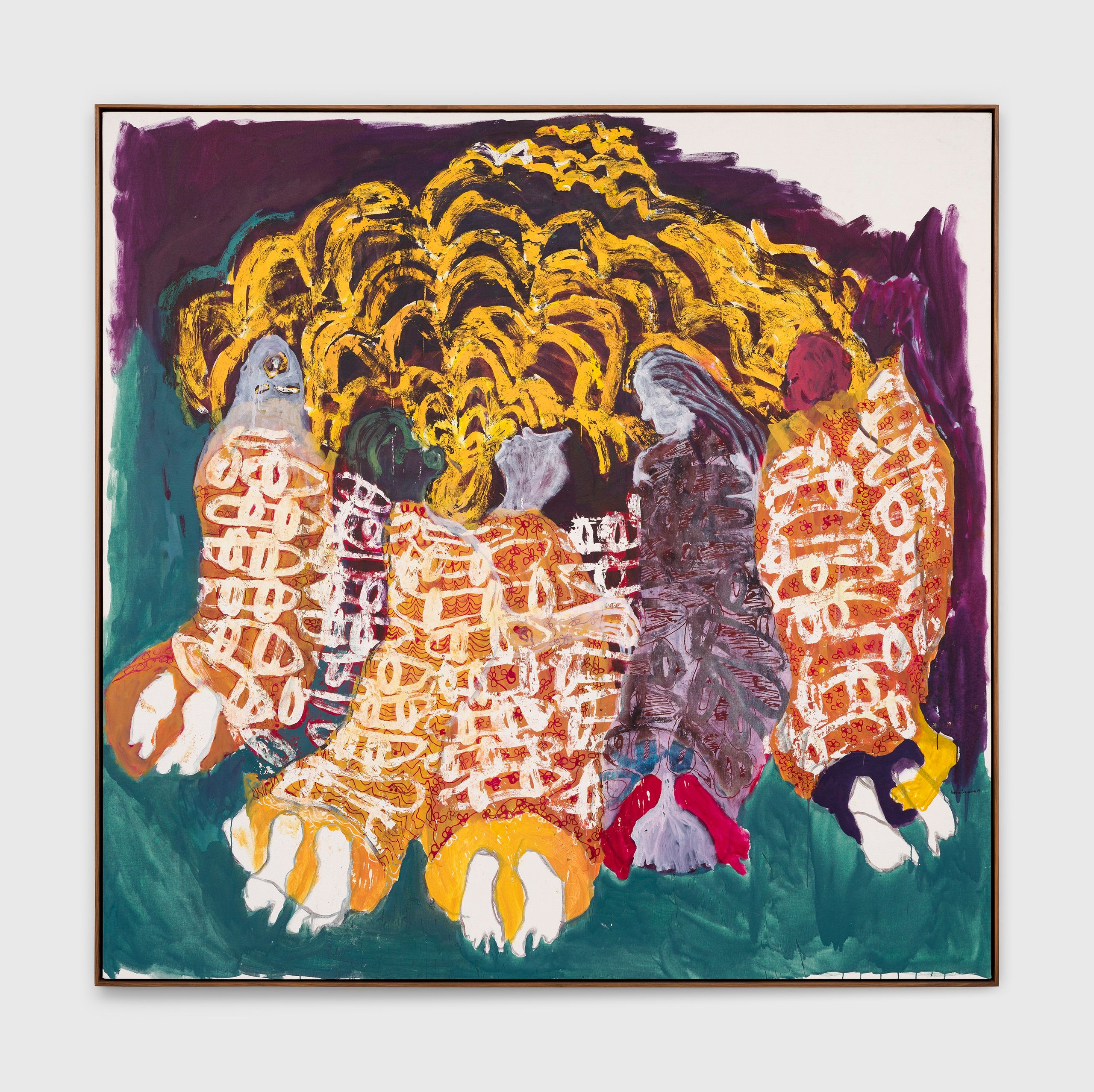
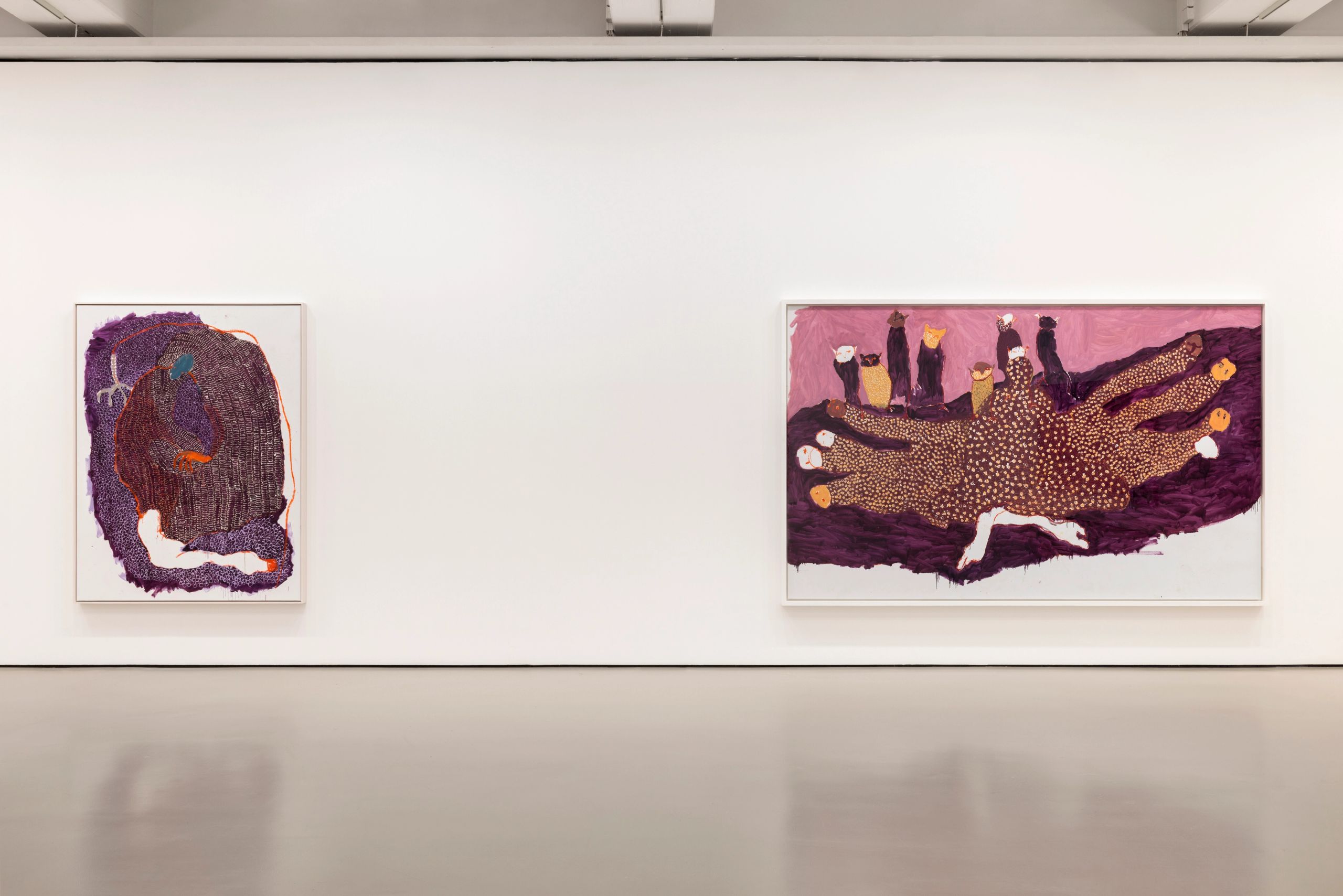
For Zvavahera, a typical studio session in Harare involves visually adapting dreadful scenes—experienced in transient black and white—into the colorful paintings she is known for. The paintings couldn't be further from the absurdist representations of the unconscious, common in the surrealist tradition that emerged after the birth of Freudian psychoanalysis. They often look exuberant from a distance, but “the devil is in the detail” is barely a figure of speech in Zvavahera’s work: she is a devout Christian. Of the white surfaces in her paintings, she told curator Helen Molesworth in a 2023 conversation that she “need[s] that empty space so that a higher power can fill it in. I feel I am not completely in charge of everything, I am seeking grace.” Against the plain white walls, the white surfaces in Woman in pain (2021) or Muchamupupuri (Into the whirlwind) (2020), for example, make them appear edgeless and almost three-dimensional.
I feel I am not completely in charge of everything, I am seeking grace.
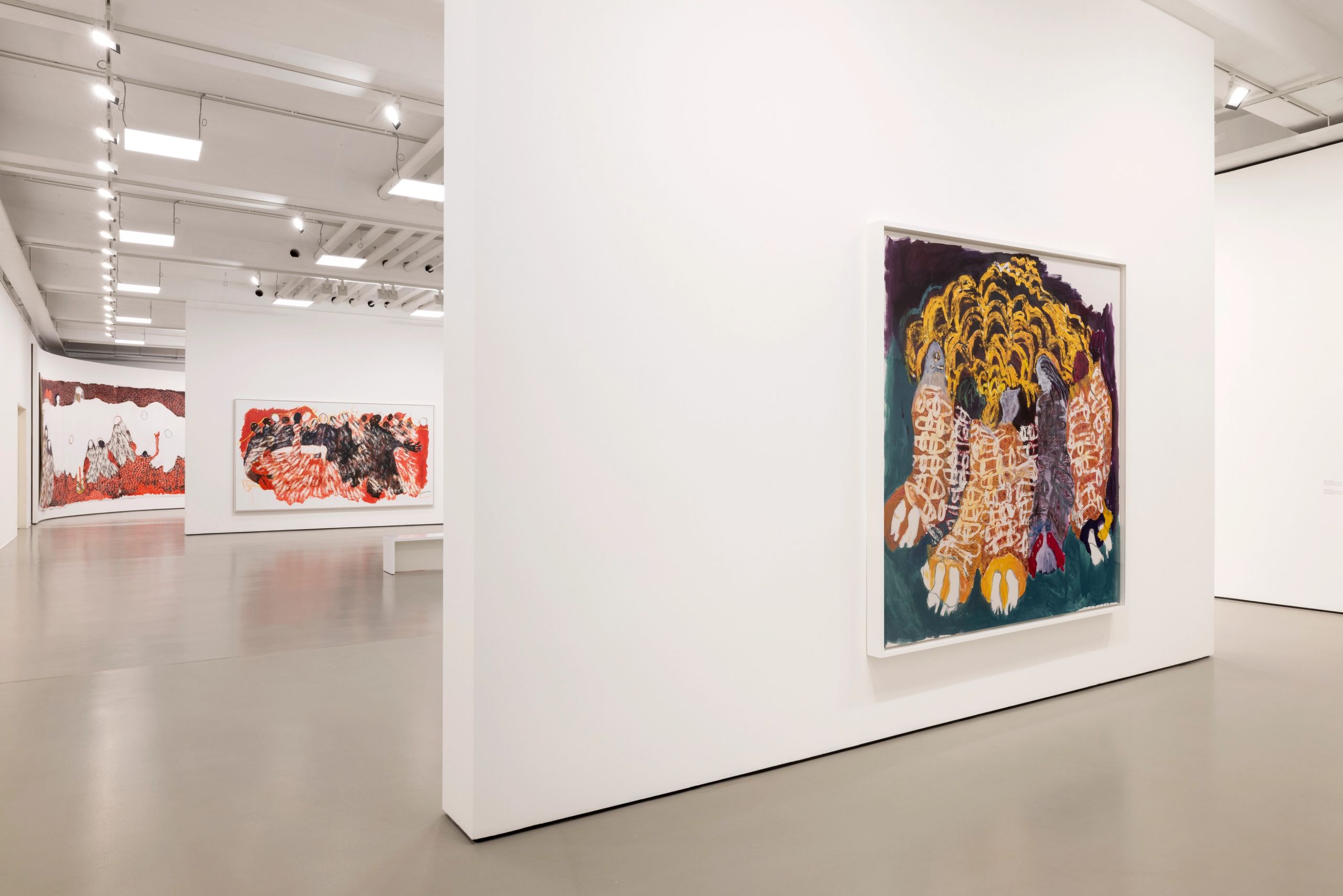
The centerpiece of her debut exhibition in Germany, however, was a large-scale unframed canvas installed on a curved wall at the far end of the gallery. With its vast, white-space center, Imba Yerumbidzo (House of Praise) (2024) looked unfinished. Along with the semi-circular installation, its ruggedly-applied shades of red and black paint emerged sculpturally, summoning a long piece of hung-up cloth, or the edges of a rocky creek as the ocean’s foamy waves come crashing. Alongside its vast size, I was soothed by its crusty textured surface and cavernous detail. Some of the figures that populated the canvas were feathered,others had scales like fish. All gathered around a conjoined multitude that had become one body. A nightmarish episode ending in sublime communion, deliverance, redemption, and lots of grace summoned. A friend I visited the exhibition with lingered in front of it, antennae out for the cacophony of energy fields it seemed to unleash: “Eish… there is something here,” she said, nodding pensively.
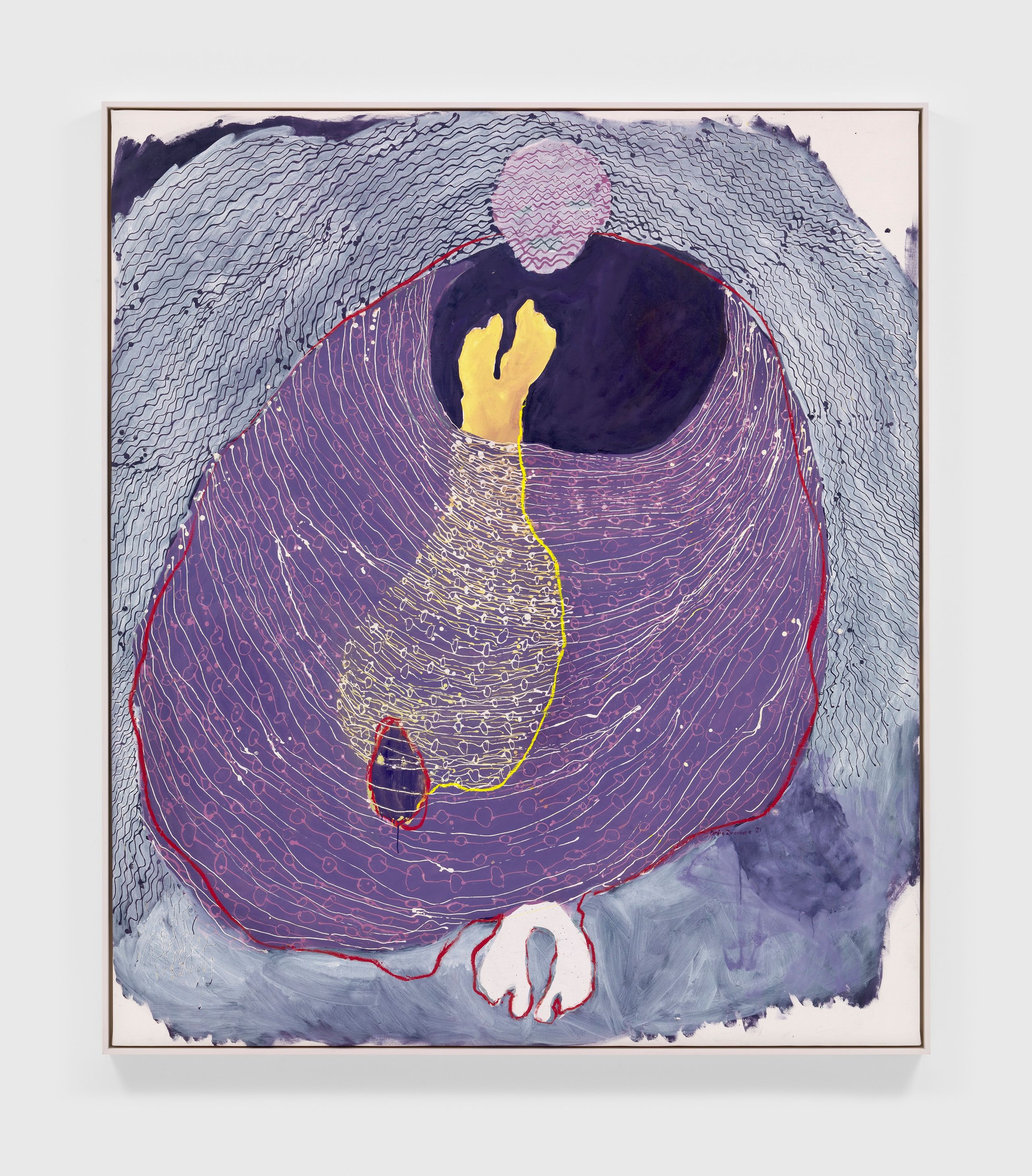
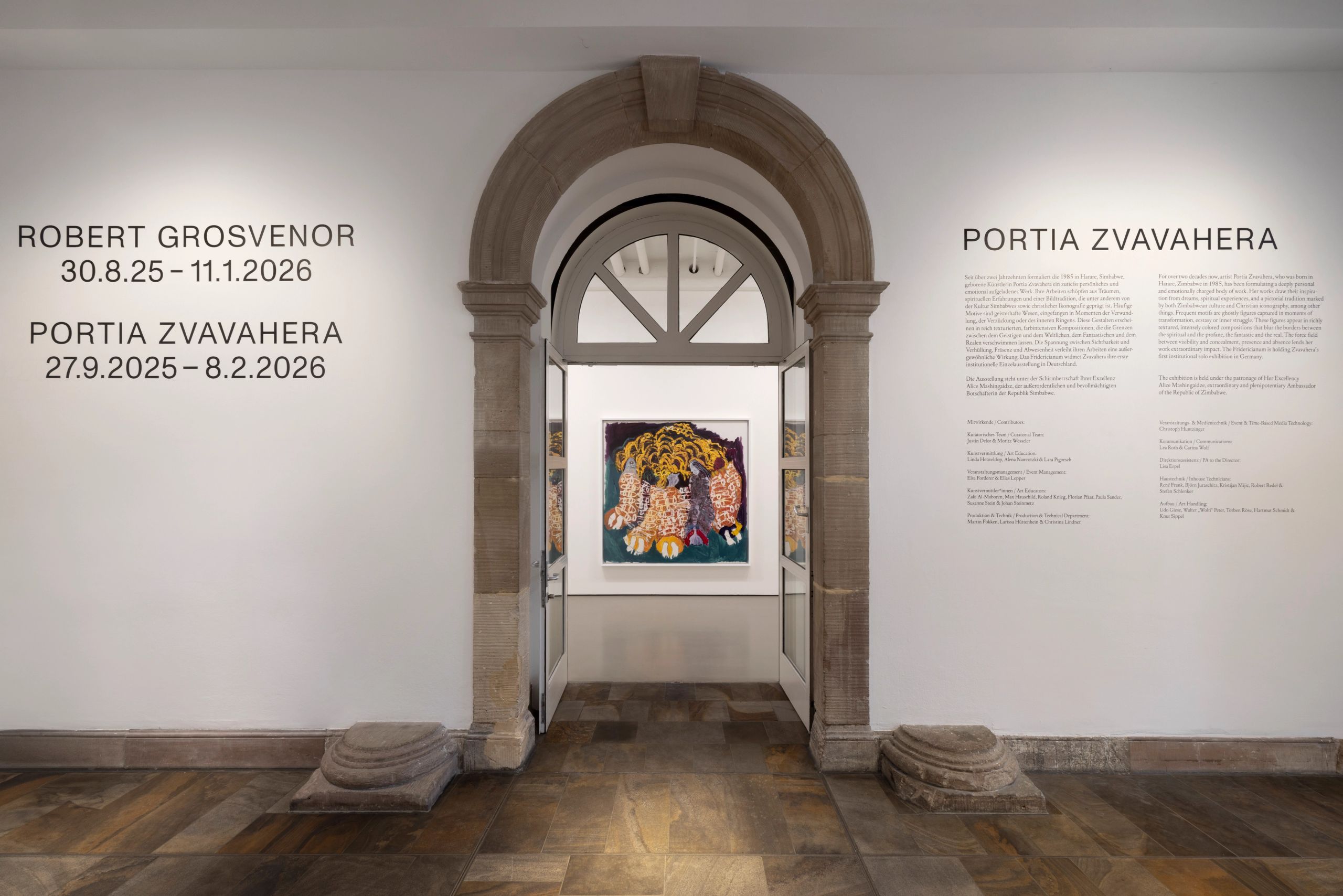
After Imba Yerumbidzo, many of the other works, all behind glass, seemed trapped by their frames. The conventional hanging and sterile lighting did little to help; on the contrary, they looked and felt unthought. In Ndirikuda kubuda (I want to come out) (2021), a solitary figure was held hostage upside down in a bulbous purple cocoon, while Fighting Energies 2 (2024) deserves honorable mention (despite the title) for its warm galactic night sky. Curators Justin Delor and Moritz Wesseler wrote to me that they “largely maintained the existing exhibition space (white cube) and only adapted the architecture in cases where it benefited the reception of the works”—such as for Imba Yerumbidzo.” They “chose—and continue—to take a step back, as the focus is on honoring the artist's work.” I was unconvinced. Moving some of the works away from the wall might have been an alternative strategy. Bare white walls were certainly fitting for a simultaneous show of Robert Grosvenor’s soberly minimal large-scale sculptures in the upper floor of the building; but Zvavahera’s was an invitation to give color and texture to the subconscious, no matter how charged its inner worlds may be.
Zvavahera’s was an invitation to give color and texture to the subconscious, no matter how charged its inner worlds may be.
Despite much acclaim, Zvavahera only just had her first institutional presentation in Germany at the Fridericianum. The occasion was momentous, warranting the patronage of “Her Excellency extraordinary and plenipotentiary ambassador of the Republic of Zimbabwe”. One can level numerous accusations against Zimbabwe, but a lack of support for their artists abroad can never be among them. In May 2026, with both Zvavahera and I among the audience at the opening of the Zimbabwe Pavillion in Venice, a ministry official soberly declared that art is “one of the pillars of our nation”.
Yet official support is often not enough in the voracious art worlds we find ourselves in. Though one might try to ignore it, there is always a looming market, and visibility is currency in an arena where representational gestures only indirectly (or belatedly) amount to concrete material benefit. As a critic, I am acutely aware of this dynamic. Although my first priority is, in the words of Emily Greenhouse, to “examine, ransack, and record” the world at a given moment via the art, film, or text I am inspired by or grappling with, I am not oblivious to the numerous other functions of reviews for art histories and markets. Reviews are important because they are tacit evidence that an exhibition has reached the public, that the show has been received by a public somewhere, and that said public is engaging with the work.
A previous version of this review went through two rounds of editing and was ready for publication in November 2025 at a separate publication. The holidays and the finissage came and went, yet the review never saw the light of day due to unrelated but irreconcilable differences between the commissioning publication and the Fridericianum. Much has been said and written about the death of art criticism in the last few years, but little has been done to determine what could have caused it beyond the shrinking editorial departments and the general decline of print. In his defense, the responsible editor was apologetic about having to pull the review, and since this was not the first time, I believe this points to wider structural publication issues. Zvavahera deserved a timely, critical, and public engagement with her debut exhibition in Germany while it was still running, and yet, she did not receive it.
Sobre o autor
Eric Otieno Sumba
Eric Otieno Sumba is a writer, editor, and independent researcher with a background in social theory, political economy, postcolonial studies, and art criticism. He is currently editor (publication practices) at Haus der Kulturen der Welt (HKW) in Berlin. With SPAZIO GRIOT, he has curated an artist residency (since 2024), and annual exhibitions and public programmes (since 2022) in Rome. His cultural criticism and essays have appeared in Berlin Review, frieze, The Guardian, Griotmag, London Review of Books, The Public Review, Texte zur Kunst, and Camera Austria, among others. Sumba’s most recent contribution to biennale criticism appears in the text ‘Lush Camouflage’, published in Dries Verhoeven: The Fortress (2026), the catalogue of the Dutch Pavilion at the 61st Venice Biennale, by the Mondriaan Fund and Jap Sam Books.
The Heart of the Matter: Carrie Mae Weems at FOMU Antwerp
The Re:assemblages Symposium: How Might We Gather Differently?
Werewere Liking: Of Spirit, Sound, and the Shape of Transmission

Paris Noir: Pan-African Surrealism, Abstraction and Figuration
Samson Mnisi: A Master Posthumously Receives His Due