Paris Noir: Pan-African Surrealism, Abstraction and Figuration
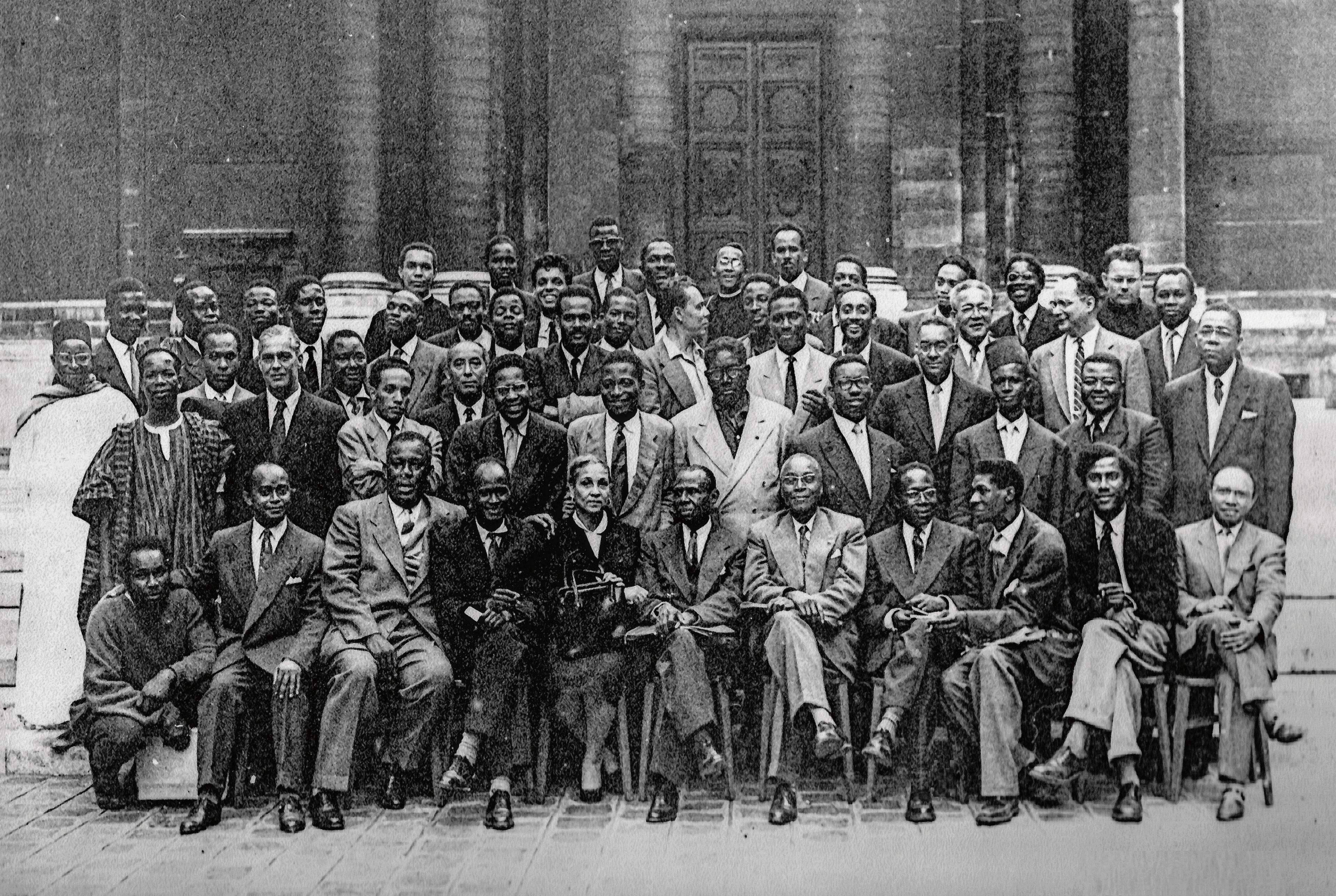
First Congress of Black Writers and Artists, Paris, septembre 1956. © Présence africaine Éditions, 1956. Photo: Lutetia.
In this experimental text, author Sherae Rimpsey responds to the poetics and interiority she experienced in a major Paris exhibition of works by African, African American, and Caribbean artists.
What I saw as the exhibition’s premise was very demanding: Paris as a site and sensor for Blackness, Black thought, Black creativity, a relational Black consciousness. The magnitude of impossibility embedded in the show – and the scope of what’s possible – became an invitation to live in that gap. The breach of Black longing can’t be quantified. Attunement. Attunement. Attunement. An entrance into place-making is one way of negotiating form, labor, collectivity.
Paris Noir was a major exhibition at the Centre Pompidou that featured more than 150 African, African-American, and Caribbean artists. Curated by Marie Siguier, Aurélien Bernard Laure Chauvelot, Eva Barois De Caevel and Alicia Knock, its presentation of Pan-African and transatlantic aesthetics comes as part of a wider attempt in recent years to review the histories of modernism and postmodernism, including abstraction, surrealism, and figuration.
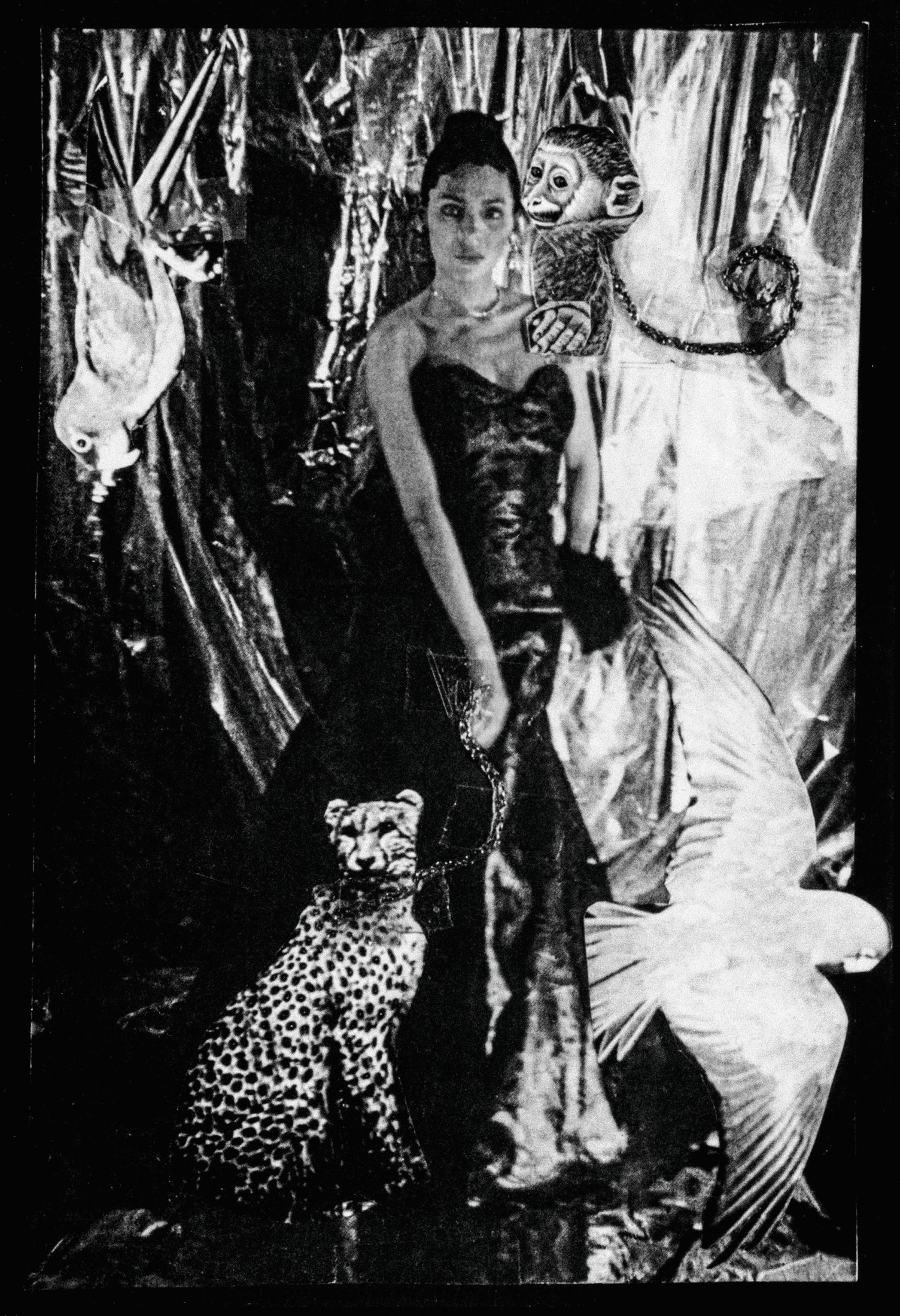
Ming Smith, Self-portrait as Josephine, New York, 1986. Archival pigment print, 91,4 × 62,9 cm. Courtesy of the artist and Jenkins Johnson Gallery, New York and San Francisco. © Adagp, Paris, 2025.
In Paris Noir there was no literalizing of the Black experience. The brutality of colonialism was addressed through the poetic, through subtext and subversion in the figurative, through direct address of abstraction, and by reorienting the viewer inside their own positionality. One of the most telling moments for me was a set of looped scenes from Ousmane Sembène’s film La noire de…(Black Girl), projected onto a wall across an abstract painting by Ed Clark. Diouana, the film’s heroine, is seen in moments of quiet reflection, getting ready for bed, and hopping along the perimeter of a balustrade. In this last image, we hear Diouana’s boyfriend yelling at her: “Descendez ! Descendez !” (Come down! Come down!).
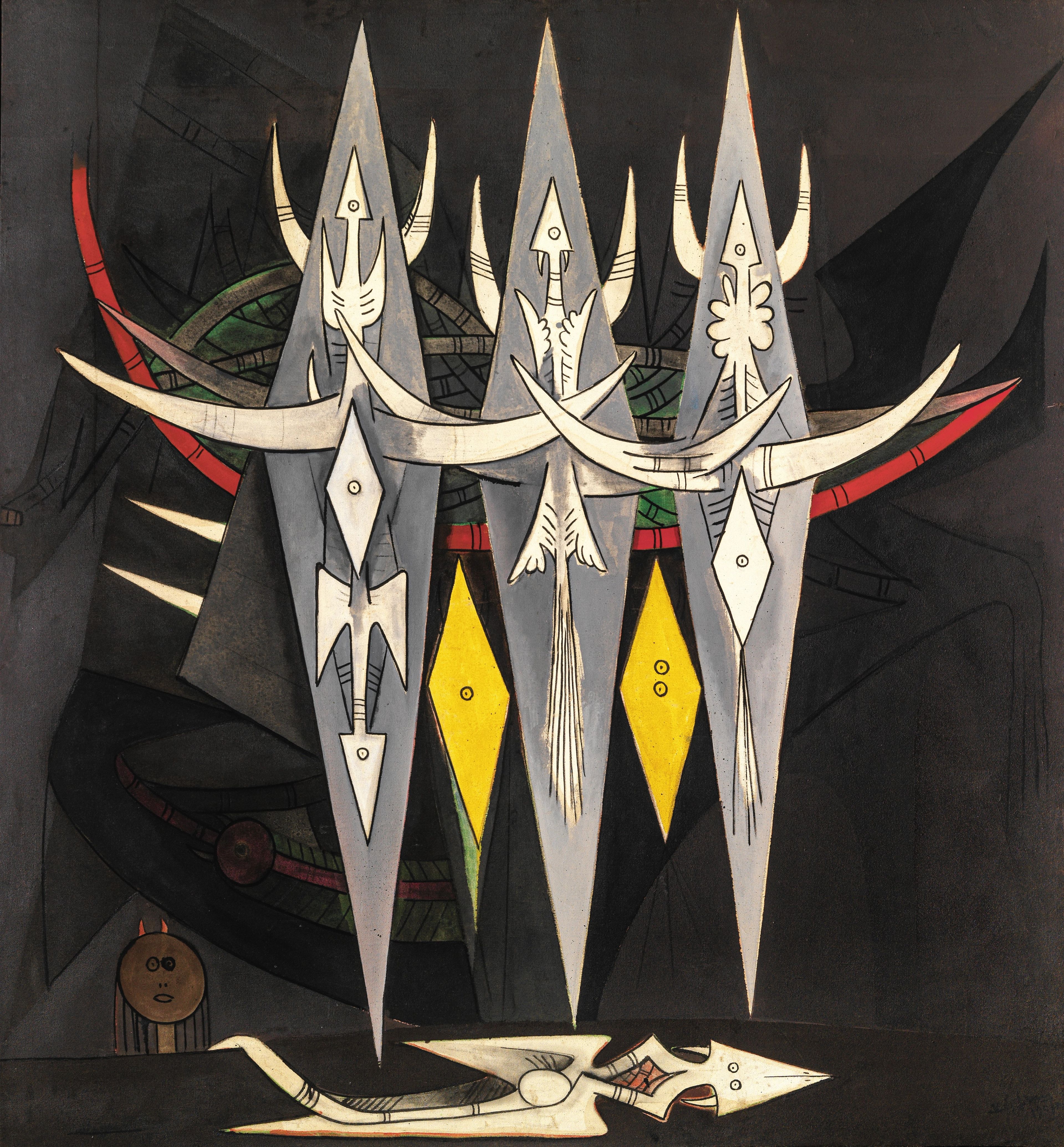
Wifredo Lam, Umbral, 1950. Oil on canvas, 185 × 170 cm. Centre Pompidou, Musée national d’art moderne, Paris. Acquired by the State, 1969. Attribution, 1976. AM 1976-990 © Succession Wifredo Lam, Adagp, Paris, 2025. Photo: © Centre Pompidou, MNAM-CCI/Georges Meguerditchian/Dist. GrandPalaisRmn
Standing in that room amid Black Girl, Iba N’Diaye’s vivid and deeply affecting painting Tabaski, la ronde à qui le tour? (1970) – part of his well-known allegorical series around ritual lamb slaughter – and the little cities erupting in the work of modernist sculptor Harold Cousins, I sensed painter Skunder Boghossian as an interlocutor and I saw through-lines in themes of revolutionary solidarity, syncretism, mapping, rétourné (return), affirmations de soi (self affirmations). Artworks by the late filmmaker Sarah Maldoror and textile artist Hessie traced neural networks of memory, the women keeping tabs on me. I floated between Senghor’s décalage and Glissant’s tout-monde. Black mediation as a means of rendering life. Total ontologies. Bold preoccupations. Tumult. Concluding structures. And if I could stay there, recalibrating, reorienting myself inside my own positionality, inside of the dripping nebula of Vicente Pimentel’s painting Triptych (1990), I could trace interiority and write to the work in a dance between language and worlds:
The painting is like a cloud burst or fog inside a tomb. Crying. The illusion of semblage or passage. It is on the subject of time. The flecks are an unveiling, a tritàn du mystique. The center storm is pulling in then outward. The pot is cooked. The outline, the ligne of constant swamping. Formations of the quotidian. Of the broken. Where is the barrage? Le temps. Les enfants. Phantasme. C’est la combustion de l’horreur. The blanked slate. The flesh erratique. The sensation of the pied, the head, burning. I submit to nothing. I am the inverse of death. Strafe – the arm penetrative, fortifying, numinous, palpatique. I was scarcely hidden inside the mark. A murmuring brought on by care. Pressing. I shed blood. I stenciled the effect this had on two prominent hearts. The mind’s shaft reverberated this is me emptied. The core of calm necessitates distance – drylongso. I am saturated by debilitating things – comfort. Right here in the pit of erasure was a bobbin. A pinwheel, I’ve had enough. Let the bottoming find me. Might I return to ruin. To rut. An inkling of the line merely stuff. A widening blue PART. Scrape. Scrape. Dash. Enfolding sum. A centenary maquette folding open; cartilage, sputum, punctum, missile, cope(d). Channeling form instigating PART. A limbless freedom. Flat rage nimble. I keep coming back to seven—complaint. In totality’s schism, I rushed to tell the story, a more yellowing arc. Sun kit bringer harbinger, I have the code. I need a kingdom – revisions of revisions. Revisions of the surface PART. Push past any armature oil put. Nodes, globules, bone. Pull PART landscape PART inertia PART la mème mème PART. I’ll settle for this – which constitutes systems. There’s a strong compulsion to haul ass. Or to aerate meaning out of so much.
Paris Noir: Artistic Circulations and Anti-colonial Resistance, 1950–2000 was at the Centre Pompidou, Paris, from 19 March to 30 June 2025.
This text was made possible with the support of the Newcomb Art Museum of Tulane University in New Orleans, Louisiana, USA.
About the author
Sherae Rimpsey
Sherae Rimpsey is a visual artist and writer. She has a BFA in technology and integrated media with an emphasis on visual culture and an MFA in writing. She is arts writer and editor for Newcomb Art Museum.
Review
The Power of Fabulation in the Black Cinema of Zózimo Bulbul
C&AL’s Highlights of 2025 You Might Have Missed
2025 in Review
Review
The Artists Forging Ecological Ties in Female Fugivity and Marronage
Macuxi Jaider Esbell: An Indigenous Life Cut Short by Epistemic Extractivism