THABISO SEKGALA: RUNNING
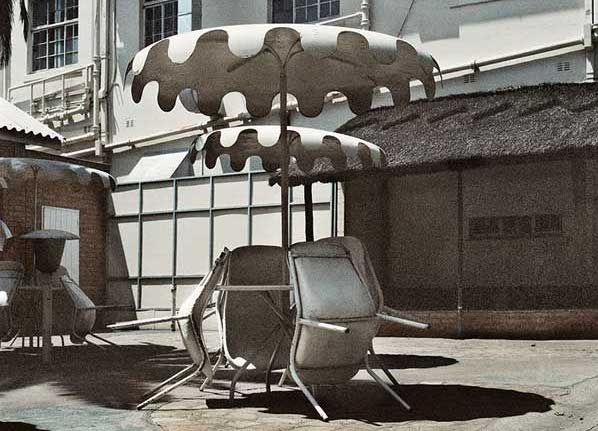
THABISO SEKGALA: RUNNING
24 April 2014
Closes: 31 May 2014
In his first solo show with the Goodman Gallery, Thabiso Sekgala presents Running, a photographic exhibition bringing together three series: Running Amman, Running Bulawayo and Paradise.
Although shot in highly disparate places – the cities of Amman, Bulawayo and Berlin – all three series are viewed by Sekgala as part of a similar trajectory of movement, displacement, transition; each photograph displaying a veneer of calm, that may or may not be on the verge of catastrophe. Considering both the notion of running towards and away from, Sekgala confronts perceptions surrounding place, influenced by sentiments such as aspiration and assumption, and ultimately destabilises these. Produced while Sekgala was on various international residencies, this is the first time these works are being exhibited in South Africa.
Running Amman was photographed in a city built around an old Palestinian refugee camp, which for Sekgala, “defines the idea of running... I was interested in the calmness, and the stillness of the place. I photographed these images during the period when America was still threatening to attack Syria, in my mind I was thinking if that could happen while I was in Jordan ‘will I have a place to run to’... In my work I am fascinated by conditions that define people’s home, that could be personal or political or economic.” Within the series Sekgala focusses on parked cars, influenced by Walid Raad's series on car bombings during the Lebanese Civil war. These, as well as images of quiet streets, void landscapes and lone pedestrians may suggest the calm before a storm, or nothing at all.
Running Bulawayo, a bit closer to home, takes into account a shared history between Zimbabwe and South Africa, and the strange relationship the two countries currently share. Bulawayo was founded by the people led by Zulu Chief Mzilikazi, who left Zululand in the early 19th Century and settled in what came to be known as Matebeleland. Two centuries later, there is an inversion of migration, with millions of Zimbabweans fleeing to South Africa. “The town has become what I would call a ghost town,” explains Sekgala, “because most Zimbabweans live between Bulawayo and Johannesburg. There are over 4 million Zimbabweans living in South Africa.” In a series of images that depict dusty streets, seemingly abandoned mannequins, solemn backyards and dreary shopping centre interiors, Sekgala intimates a forgotten place.
In Paradise, Sekgala confronts the notion of the the West as a place that many want to run to – a perceived paradise. “Here,” Simon Njami writes in his essay ‘Heaven can Wait’, “the light is gray and pale. It gives the feeling of a dying world facing its twilight. And even though there is one scene, in a park, in which we see two children running and smiling, one wearing a T-shirt where the word ‘love’ is apparent, and in the background, most of the images convey a certain feeling of sadness and despair. An homage to a lost young girl; small displays of oranges and plastic watering cans; public transportation showing the solitude and harshness of our modern times; old and lonely people… empty bars, terraces… everything seems to be photographed in order to reveal a contemporary misery. We are, as some billboards and inscriptions reveal, in Germany, the richest European country. And paradise is always associated with wealth, abundance, and eternal joy. What is depicted in these images through the South African photographer’s gaze, however, is a portrait that fully contradicts these common preconceptions.”
Njami goes on to explain that “being an African certainly plays a critical role in Sekgala’s perception, which he charges with irony. Photography being a way of writing stories, and a language in itself, we are aware of the fact that there is a hidden message behind any image. Sekgala’s take on the debate about developed and underdeveloped countries becomes clear when we realise that he is playing on the reversed gaze repertoire. He openly admits that, coming from Africa, there is nothing that he can expect from Europe but magnificence, beauty, and harmony. One would expect a poor African discovering Western magnificence to be overwhelmed by all those things that he is supposed to be missing back home. But here we are, confronted with a reality that has nothing to do with our expectations.” In this interpretation of Sekgala’s modus operandi, Njami encapsulates the photographer’s ability to morph perception, making us question what we run away from, and what we run towards.
OPENING AT GOODMAN GALLERY CAPE TOWN
SATURDAY 3 MAY AT 11H00
www.goodman-gallery.com
View more from
Beyond Representation
Dec 7, 2023–Dec 31, 2026
C& América Latina curates film program for Cinelogue featuring Films by Afro-Indigenous Directors
Jul 1–Dec 31, 2026
Dignidade e luta: Laudelina de Campos Mello
May 16–Nov 22, 2026
M’barek Bouhchichi: Les mains des poètes
Apr 24–Oct 17, 2026
Belkis Ayón: Mito y desobediencia
Jul 16–Oct 12, 2026

Cecilia Vicuña - The vanished glacier
Apr 30–Sep 20, 2026