The Re:assemblages Symposium: How Might We Gather Differently?
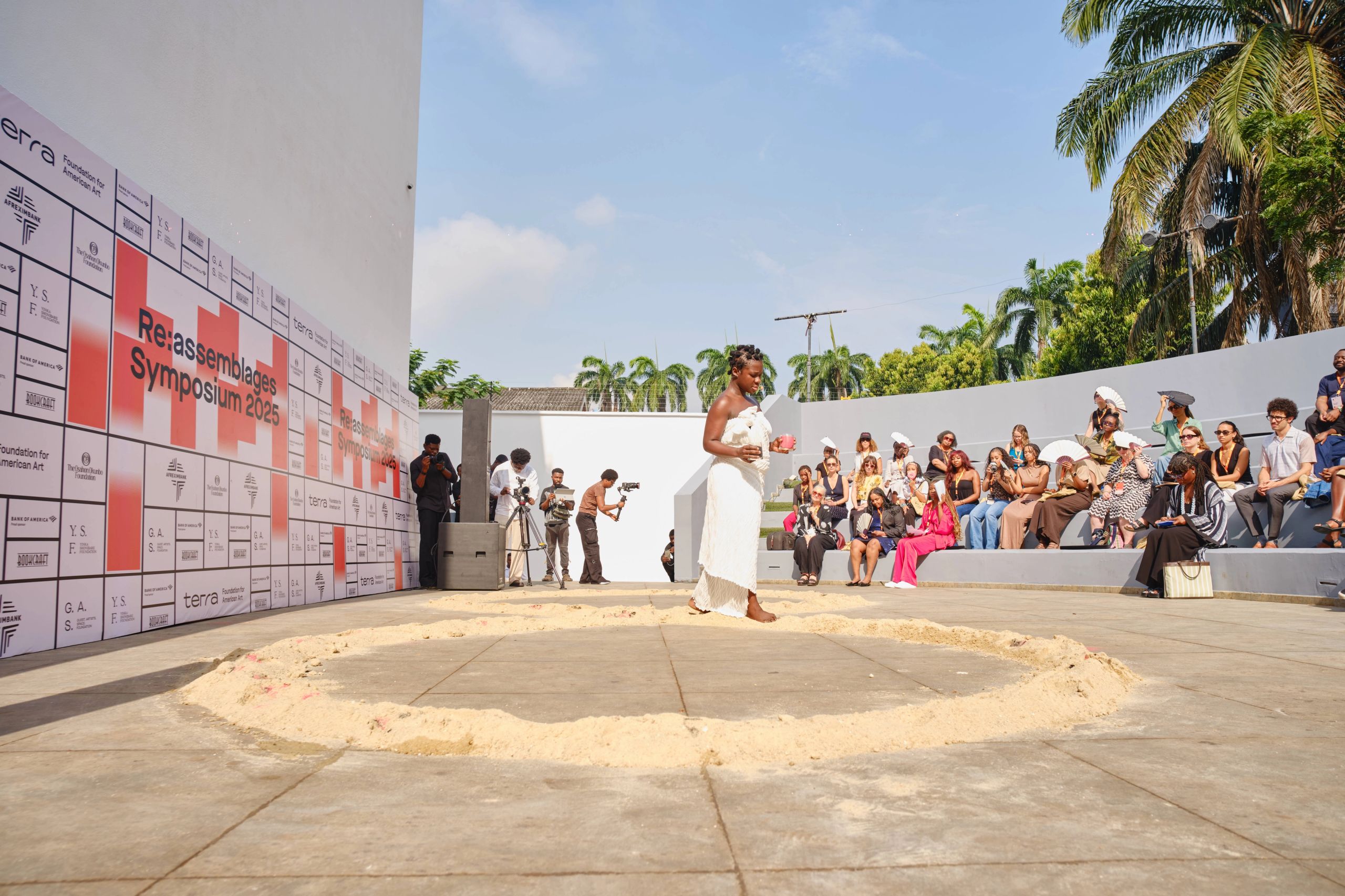
Re:assemblages Symposium, 4-5 November, 2025 | Alliance Française de Lagos. Courtesy of G.A.S. Foundation.
A two-day convening in Lagos to explore “African and Afro-diasporic art archives as living, contested, and future-shaping spaces,” the Re:assemblages Symposium became a gathering point of ideas and geographies. Jointly presented by Guest Artists Space (G.A.S.) Foundation and Yinka Shonibare Foundation (Y.S.F.) in early November, the symposium moved its participants towards other ways of seeing, remembering, and keeping that dismantle hierarchies between human and non-human, while laboring against historical amnesia. The occasion also launched the C& Cyclopedia station partnership in the new Reading Room at the G.A.S. Library and Picton Archive.
Adorned in a white wrapper tied across her chest, artist-performer Adjoa Armah traced the shifting textures of Badagry beach, sand sifting through her hands as she walked. Her words drifted into the air to reach us – soft, steady, tidal. The performance, untitled {for Badagry: after the head of the sand, an uncountable duration and/or a profusion}, part of Armah’s ongoing series Atlantic Marginalia, conjured the thresholds of Badagry’s shoreline through sound, recitation, and movement. It was an understated reminder that bodies carry archives, that places retain echoes, that sand keeps a record. This opening performance immediately unsettled the analytic neatness of the categories that composed the Re:assemblages Symposium.
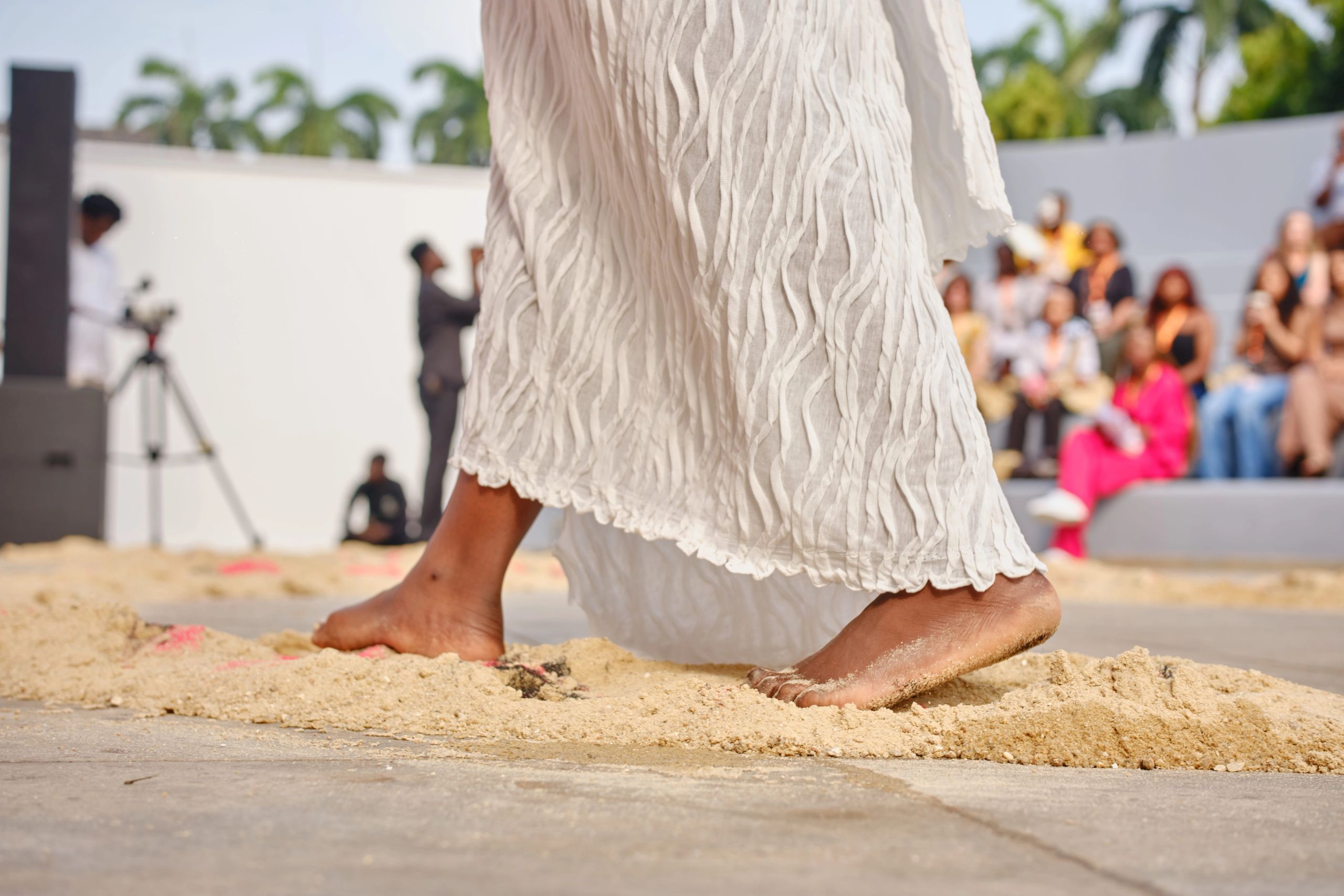
Re:assemblages Symposium, 4-5 November, 2025 | Alliance Française de Lagos. Courtesy of G.A.S. Foundation.
Re: /riː,ri,rɛ/
Prefix: once more, afresh, anew
Assemblages /əˈsɛmblɪʤ/
Noun: a collection or gathering of things or people
On the opening morning, as sunlight swept across the amphitheater at Alliance Française de Lagos, I thought about these two words – “re” and “assemblages” – that framed and set the intellectual and emotional terms of our encounter. To assemble again is to return to things we assume we know and to see what new life, new meaning, might be coaxed out of them. And that is what this convening attempted: to gather over fifty leading African and Afro-diasporic artists, curators, scholars, and thinkers into a shared reconsideration of the archive, of memory, of the future.
The symposium unfolded along four themes. Ecotones explored spaces where ways of living, knowing, and relating blur sharp boundaries. The Short Century revisited the role of liberation movements in shaping transnational cultural production between 1945 and 1994. Annotations looked at experimental literary strategies for alternative modes of reading history. And finally, The Living Archive emphasized artist-led, embodied archival methods that prioritize community and transformation.
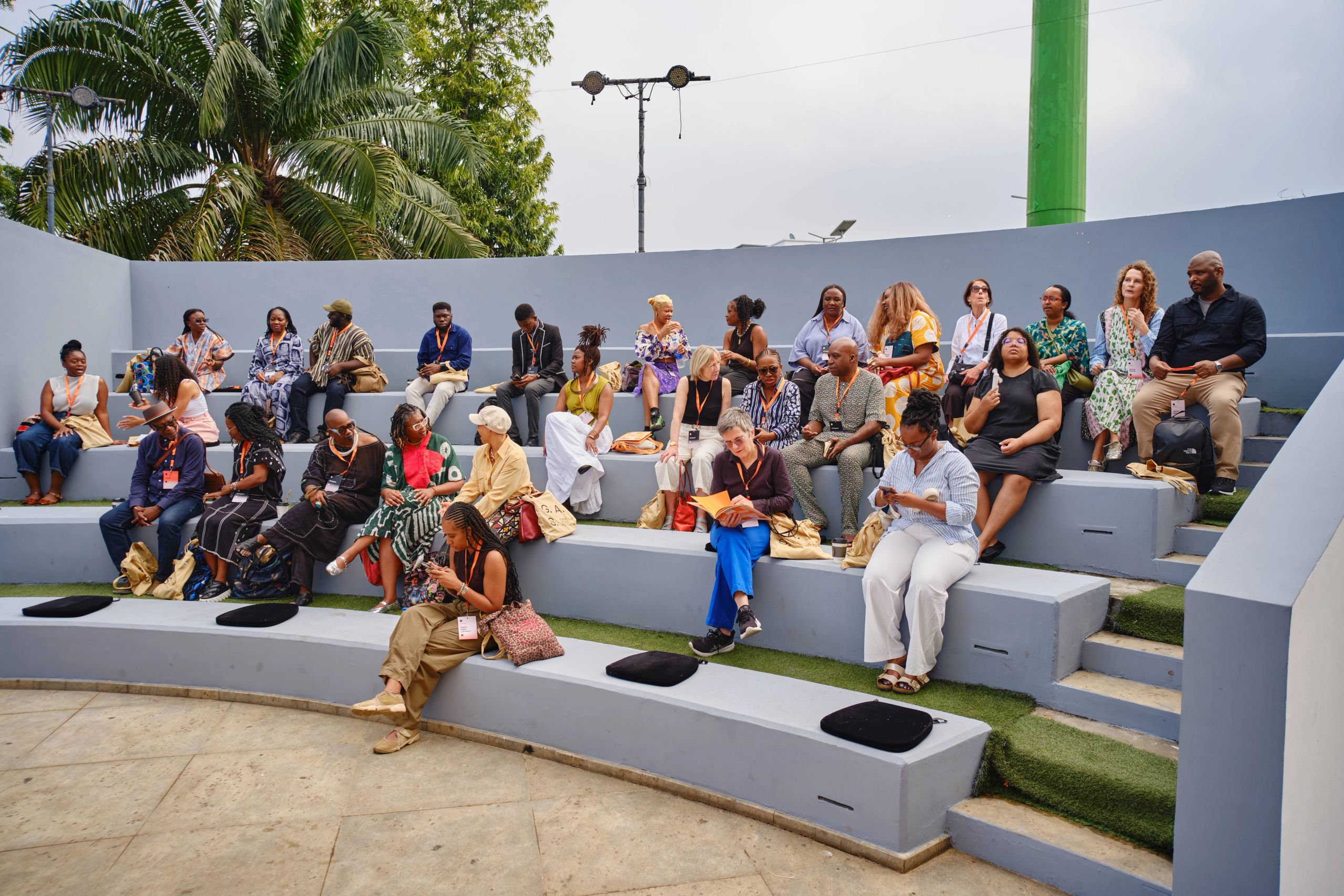
Re:assemblages Symposium, 4-5 November, 2025 | Alliance Française de Lagos. Courtesy of G.A.S. Foundation.
Re:assemblages Symposium, 4-5 November, 2025 | Alliance Française de Lagos. Courtesy of G.A.S. Foundation.
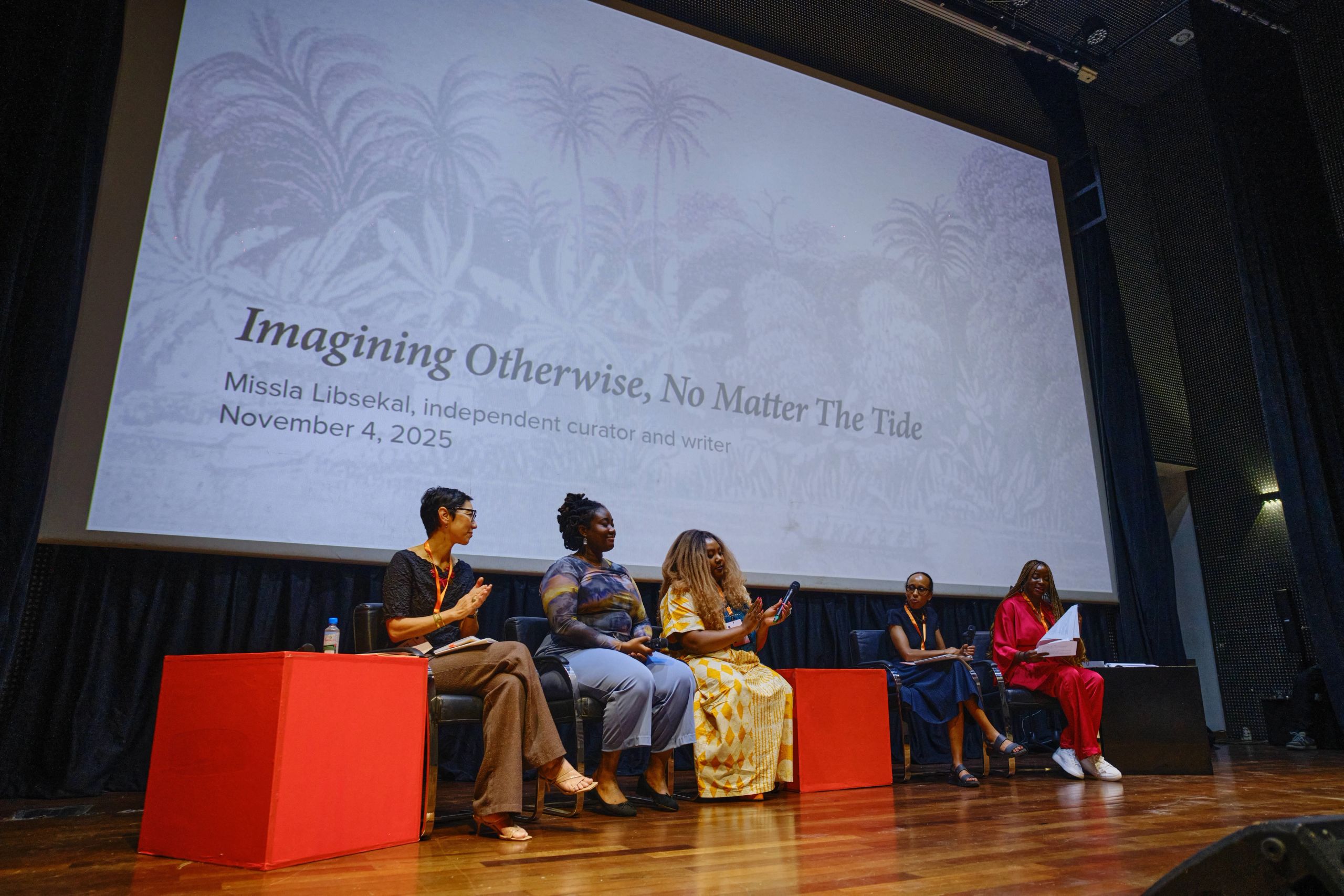
The first panel I attended was How Will We Share This Earth? Situating Afro-Ecotones Along the Atlantic, Indian, and Pacific Oceans. The question contained in its title felt almost impossible to answer, and the compelling presentations of panelists Missla Libsekal, Dr Janine Francois, Jadesola Olaniyan, and Dr. Eve Oishi, chaired by G.A.S. Executive Director Moni Aisida, offered provocations rather than resolutions. Yet Libsekal’s and Francois’s contributions lingered with me long after.
Libsekal began with Achille Mbembe’s insistence that Black people must imagine an open world at a time when so much of the world is closing itself against them. To share a world, she argued, requires confronting our archives not as static records but as clues to how we have lived with, used, and often wounded our environments. Drawing from her research on Lagos, she shared images excavated from the Museum of African Art showing Lagos Island in 1938 – then a fisherman’s coastline, not yet the extractive concrete it would become. Warri, my hometown, flashed across my mind: another mangrove city and ecology bent into new forms for the crude oil it carries.
Libsekal spoke of the mangrove’s asymmetric, entangled, resilient, and accommodating root system as a quiet metaphor for a possible future. She wove this into the works of artists like Nengi Omuku, who shifted from canvas to sanyan in pursuit of more intimate African narratives, and Temitayo Ogunbiyi who traces the botanical migrations that shape our daily lives – cocoa among them, not indigenous to Nigeria yet now one of its dominant exports. Archives, Libsekal implied, are ecological too; they reveal transformations of land as much as transformations of people.
To live into any ecological future, we must dismantle the hierarchies that place human above non-human.
Francois’s presentation, Sacred Black Ecologies – a gift she had received in a dream and was giving back to the world – struck an even deeper chord. Thinking through her British Caribbean and African heritage, she spoke of land as a site of negotiation: a space her ancestors were torn from and a geography that must be continually renegotiated and contested. Her short film began with her recital, “we begin in the hills of Accra,” which led us to Aburi Gardens, a place at once sanctuary and scarred land. Plants and people alike were reclassified; cocoa, coffee, and cinnamon, not indigenous to Ghana, were brought to these soils, tested and exploited not for locals’ nourishment but for global extraction. “Plants remember what empires forget,” said Francois. If plants retain memory, if they were moved before humans were forced across the Atlantic, then what does it mean to read land as archive? She also asked how we might cultivate ethical research with the land – research that does not repeat the violences of extraction. Plants, she reminded us, can also be traumatized. To live into any ecological future, we must dismantle the hierarchies that place human above non-human.
Re:assemblages Symposium, 4-5 November, 2025 | Alliance Française de Lagos. Courtesy of G.A.S. Foundation.
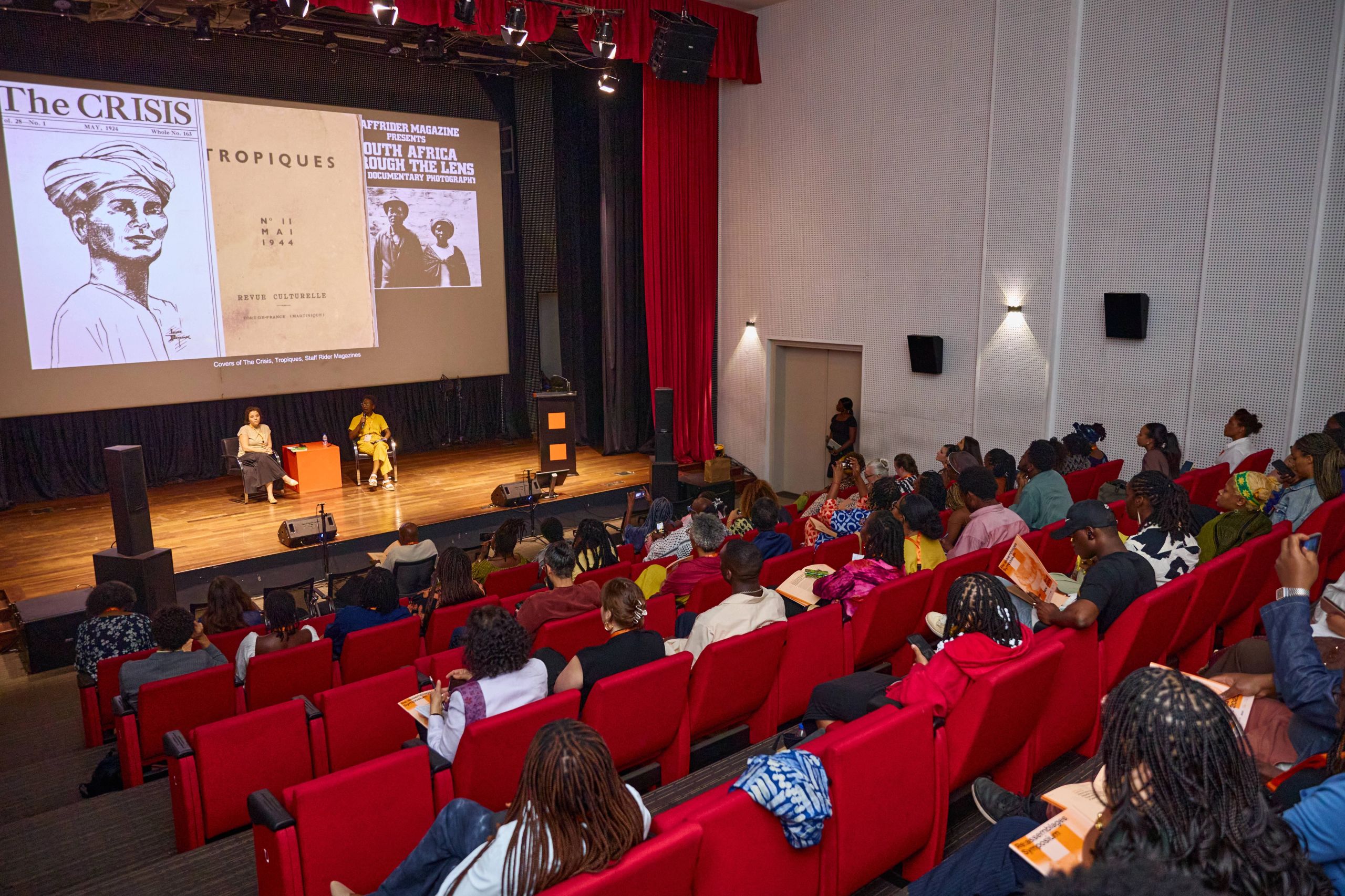
Another moment of revelation arrived with Josie Roland Hodson’s presentation on the Hatch-Billops Archive. In a loft in 1970s New York, Camille Billops and James V. Hatch built an extraordinary archive of 13,000 slides of artworks, thousands of photographs, recordings, books—an entire cosmos of Black cultural life. Out of pedagogical concern for students who wanted to learn about Black artists, Billops and Hatch began gathering. Hodson described their practice as an archival methodology rooted not in the cold logic of preservation but in sustaining life in what she termed “historical amnesia.” Archives, she reminded us, have often excluded or misrepresented Black lives. Black feminist scholars from Alice Walker to Toni Morrison to Daphne Brooks have labored against this amnesia. Billops and Hatch joined in by refusing hierarchical forms of “keeping.” Their methods were unconventional but purposeful, oriented toward circulation not possession.
Listening to Hodson, I thought of Afi Ekong, one of the most influential women artists and collectors in Nigeria’s art history. She participated in Nigeria’s Independence Exhibition in the 1960s alongside Ben Enwonwu, Uche Okeke, and Bruce Onobrakpeya, but she is too often missing from our narratives, a figure caught in the shadows of archival neglect. Mbembe has said that archives are repositories of the dead. But Billops and Hatch, whose collection now lives at Emory University and the City College of New York, teach us that keeping can also be a practice of resurrection.
Re:assemblages Symposium, 4-5 November, 2025 | Alliance Française de Lagos. Courtesy of G.A.S. Foundation.
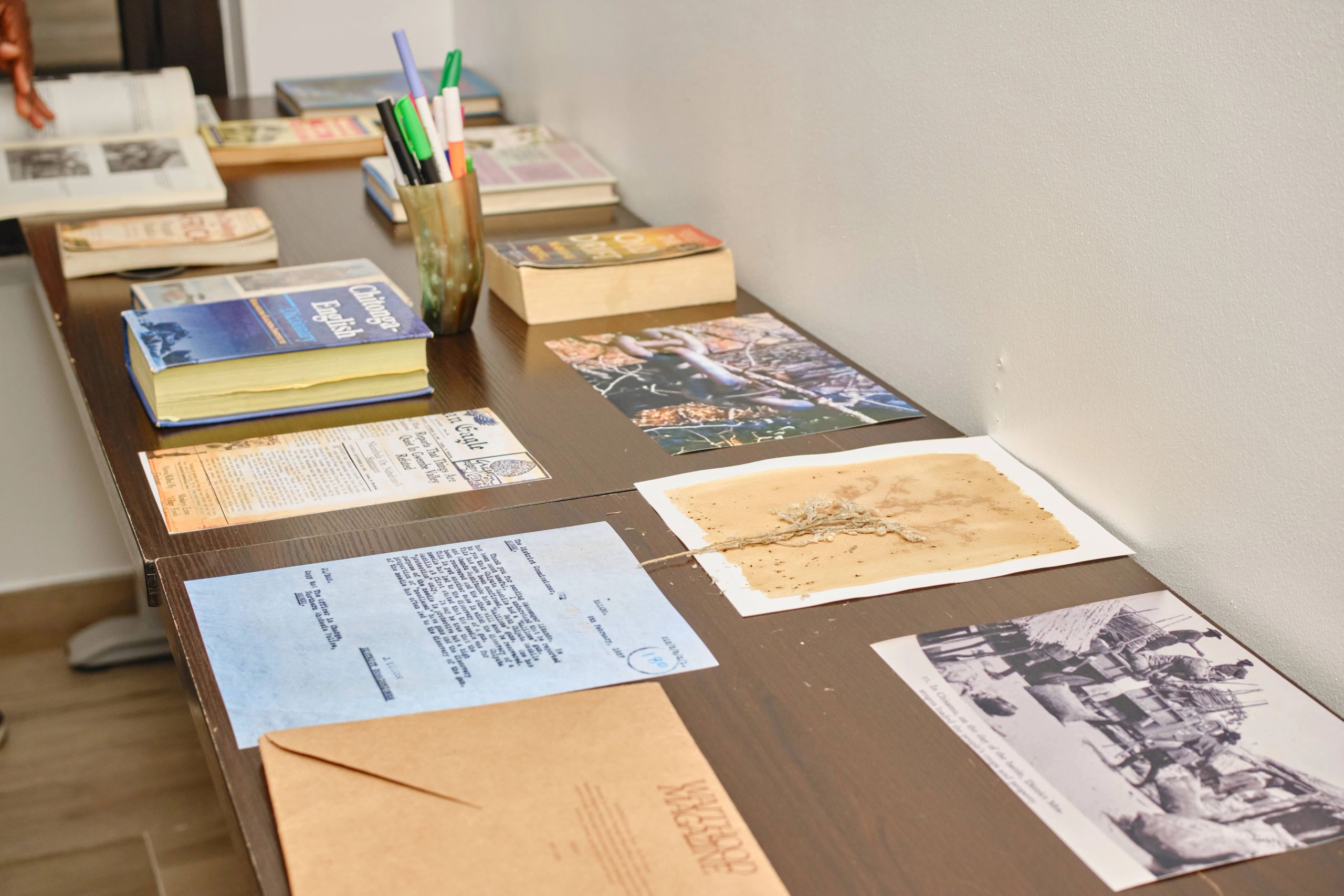
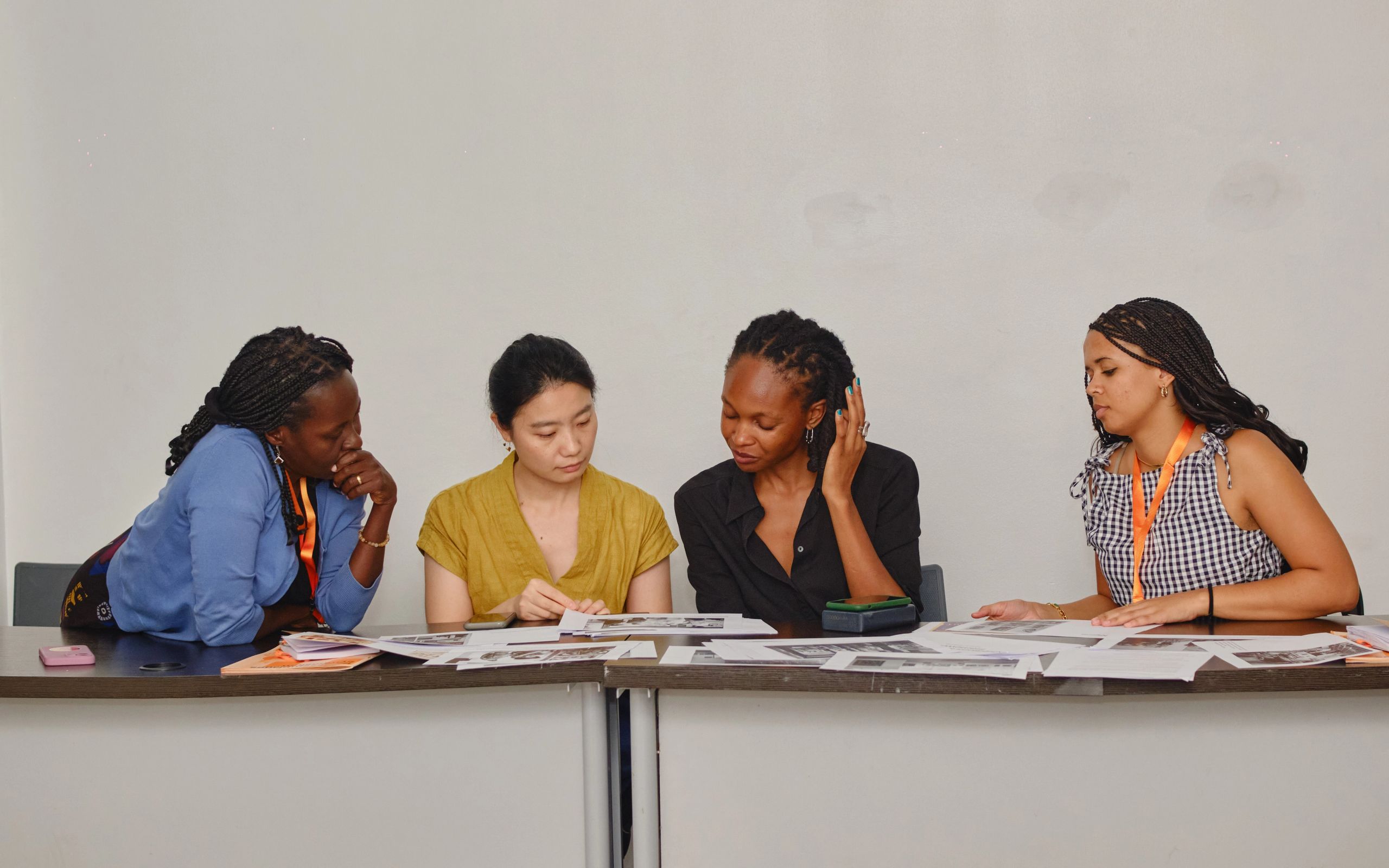
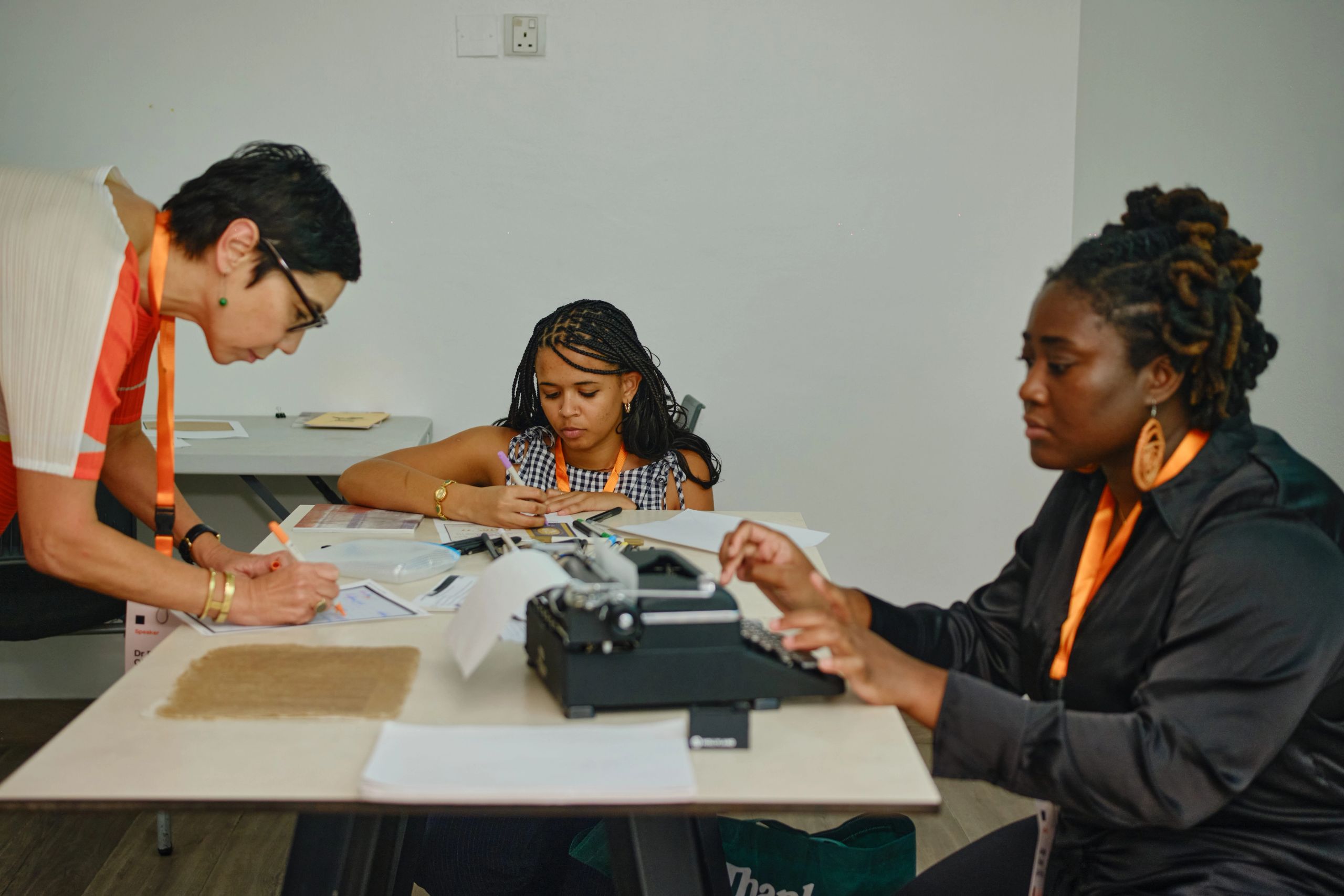
Across the parallel sessions, the symposium allowed participants to experience the archive as lived rather than observed. In Miatta Kawinzi’s workshop, movement and sound became tools for imagining freedom, linking bodily memory with pan-African histories. Participants in Mapping Malcolm collectively constructed a diasporic lexicon, revealing how words can become archival vessels. sadē powell’s poethic rehearsal created archives through erasure—blackout choruses, typewritten gestures, and material interventions that articulated subtraction as a mode of preservation. Achille Tenkiang’s speculative exploration of mania expanded the archive into the psychological and ancestral, demonstrating that what we inherit is not only material but emotional.
By the end of the symposium, something had shifted in all of us. Across its two days, Re:assemblages offered a series of thresholds—ecological, archival, historical, and embodied. It asked us to consider how we might gather differently: across disciplines, across geographies, across the fragile seams of memory that connect us. Differently as in other ways of seeing, remembering, and keeping. Seeing might mean turning our attention to gestures, footnotes, margins, and ecologies—to the trembling bodies of archives that resist containment. Keeping might reorient us toward care, kinship, and shared custodianship, toward archives that live through rather than lie inert before us.
By the end of the symposium, something had shifted in all of us. Across its two days, Re:assemblages offered a series of thresholds—ecological, archival, historical, and embodied. It asked us to consider how we might gather differently: across disciplines, across geographies, across the fragile seams of memory that connect us. Differently as in other ways of seeing, remembering, and keeping. Seeing might mean turning our attention to gestures, footnotes, margins, and ecologies—to the trembling bodies of archives that resist containment. Keeping might reorient us toward care, kinship, and shared custodianship, toward archives that live through rather than lie inert before us.
Re:assemblages also launched the African Arts Libraries Lab (AAL Lab), a pioneering network connecting arts libraries and publishers across Lagos, Dakar, Marrakesh, Nairobi, Cairo, and Cape Town, signifying an exciting era for research and scholarly access on the continent.
… and if the archive is a body, may it breathe through what it cannot heal. for to build a future archive is to practice resurrection – to breathe again through what refuses to die…
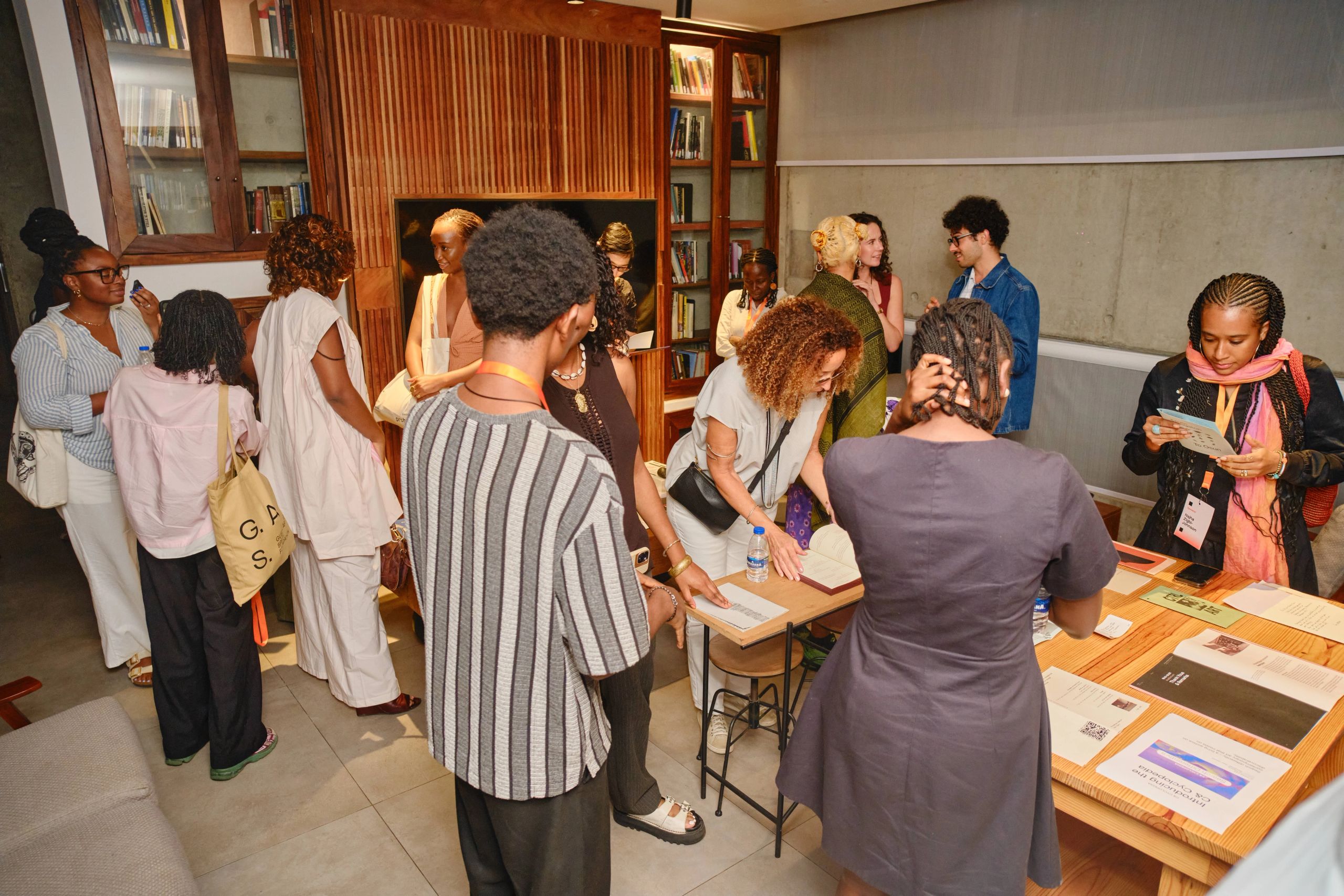
During the opening remarks, Belinda Holden, founding CEO of Yinka Shonibare Foundation, mentioned her excitement for “the sharing, the thinking together” that would unfold – not only within the sessions but in the spaces between them. She was right. The most resonant moments often happened on the fringes: in conversations over tea, in the quiet after a presentation, in the syncopated hum of collective thinking. They were the symposium’s ecotones, where ideas rub against one another and something new emerges.
Moni Aisida, too, offered a reorientation in her opening framing archives as: “dynamic living infrastructures for research, cultural production, and exchange.”
Curator Naima Hassan reflected on the early beginnings of G.A.S and Y.S.F in her welcome address, emphasizing how African residency institutions can serve as vital new sites for archival work through radical hospitality – an infrastructure that foregrounds practices of care, accessibility, and ethical engagement.
As I now move through my own life and work, I keep returning to lines from Achille Tankiang’s presentation, which I scribbled quickly but now read slowly:
“…and if the archive is a body,
may it breathe through what it cannot heal.
for to build a future archive is to practice resurrection—
to breathe again through what refuses to die…”
About the author
Roli O’tsemaye
Roli O’tsemaye is a Nigerian writer, critic, curator, and cultural producer working across contemporary art, literature, and culture. She has published widely, including in World of Interiors, TSA Art Magazine, Sugarcane Magazine, and other publications. She is Program Director at Angels and Muse, where she leads initiatives that expand artistic practice, critical discourse, and cultural exchange across Africa and its diaspora.
Portia Zvavahera’s House of Praise
The Heart of the Matter: Carrie Mae Weems at FOMU Antwerp
Werewere Liking: Of Spirit, Sound, and the Shape of Transmission
Paris Noir: Pan-African Surrealism, Abstraction and Figuration
Samson Mnisi: A Master Posthumously Receives His Due