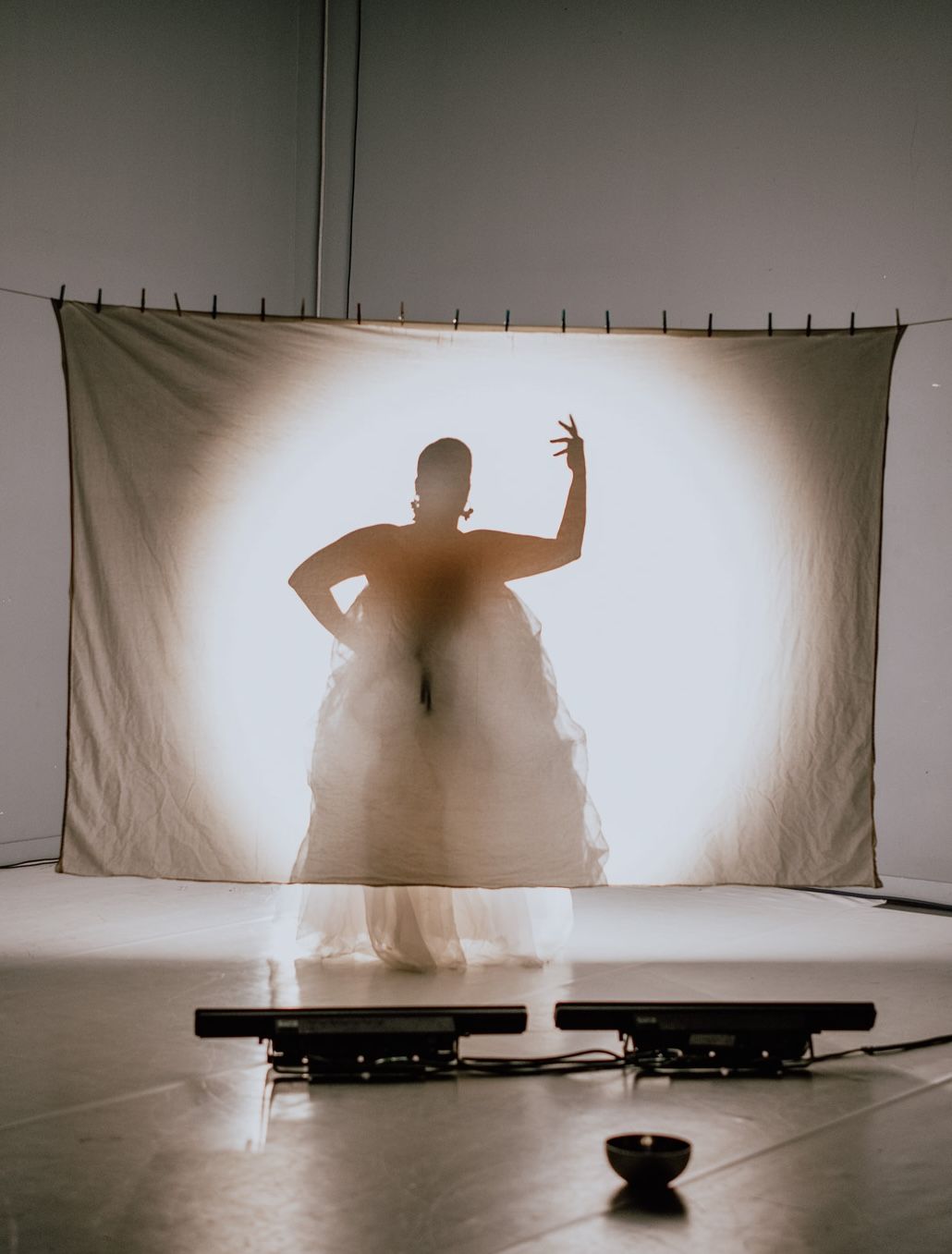
Public Fiction: How Art Drafts Realities
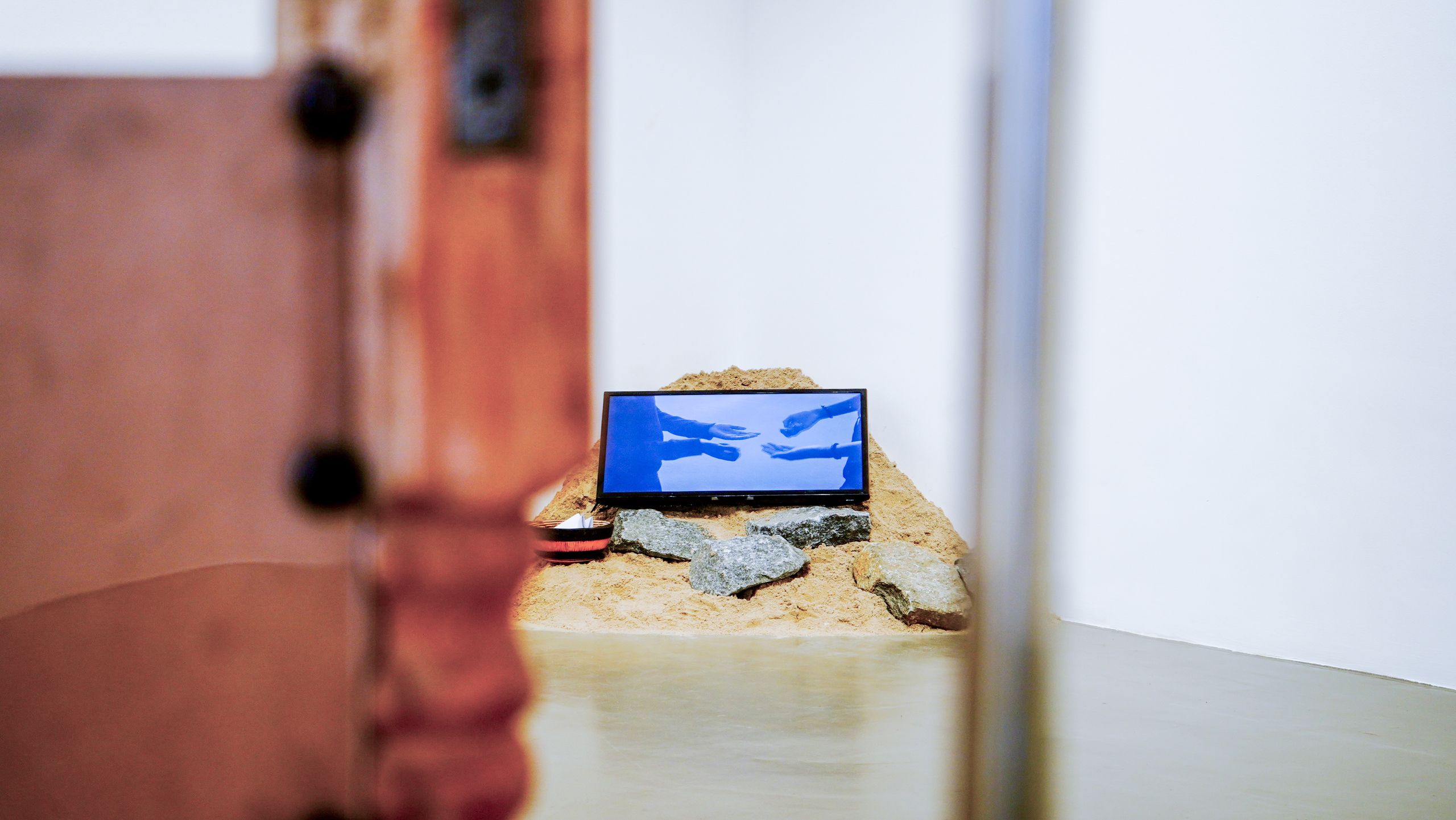
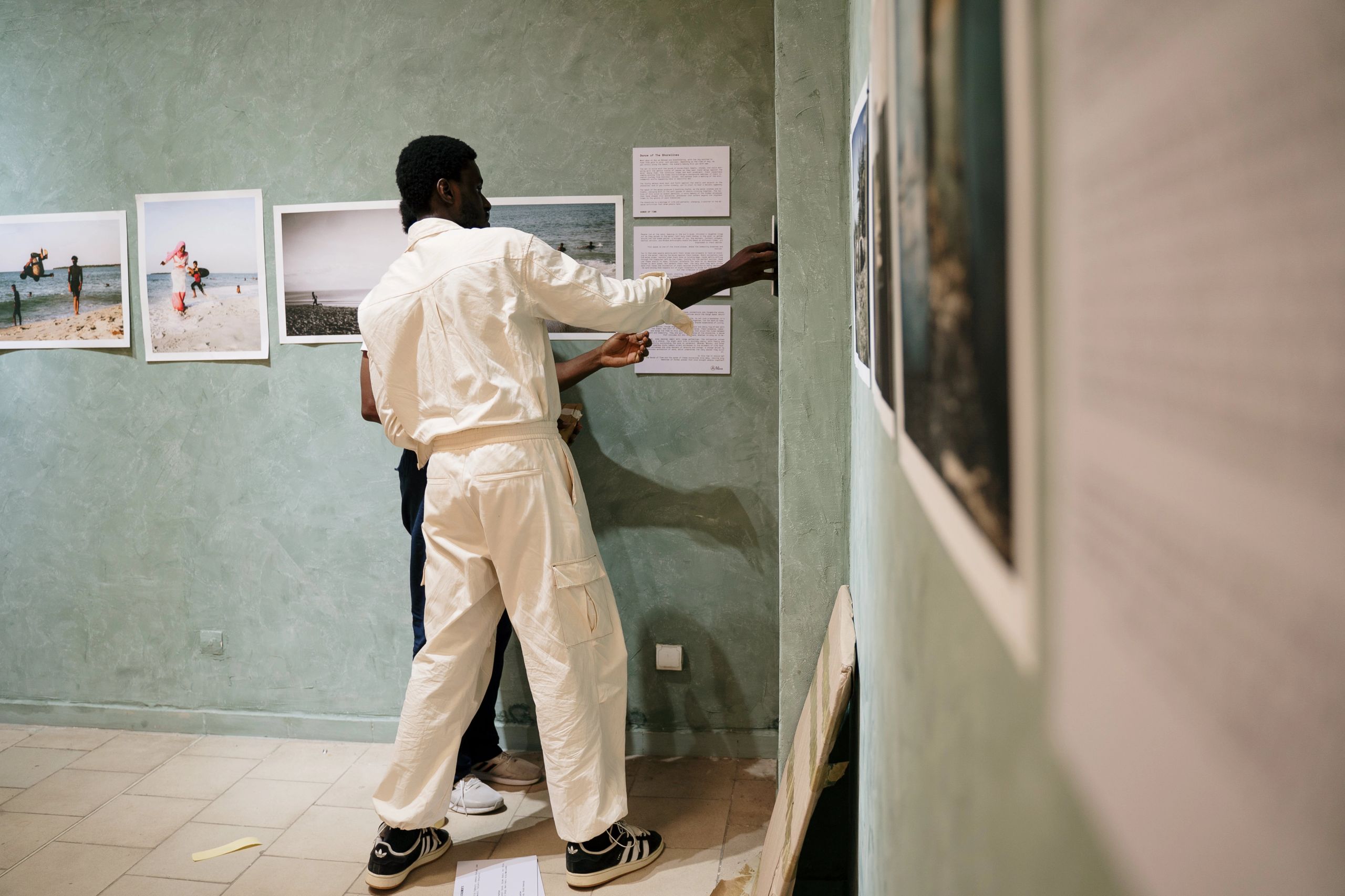
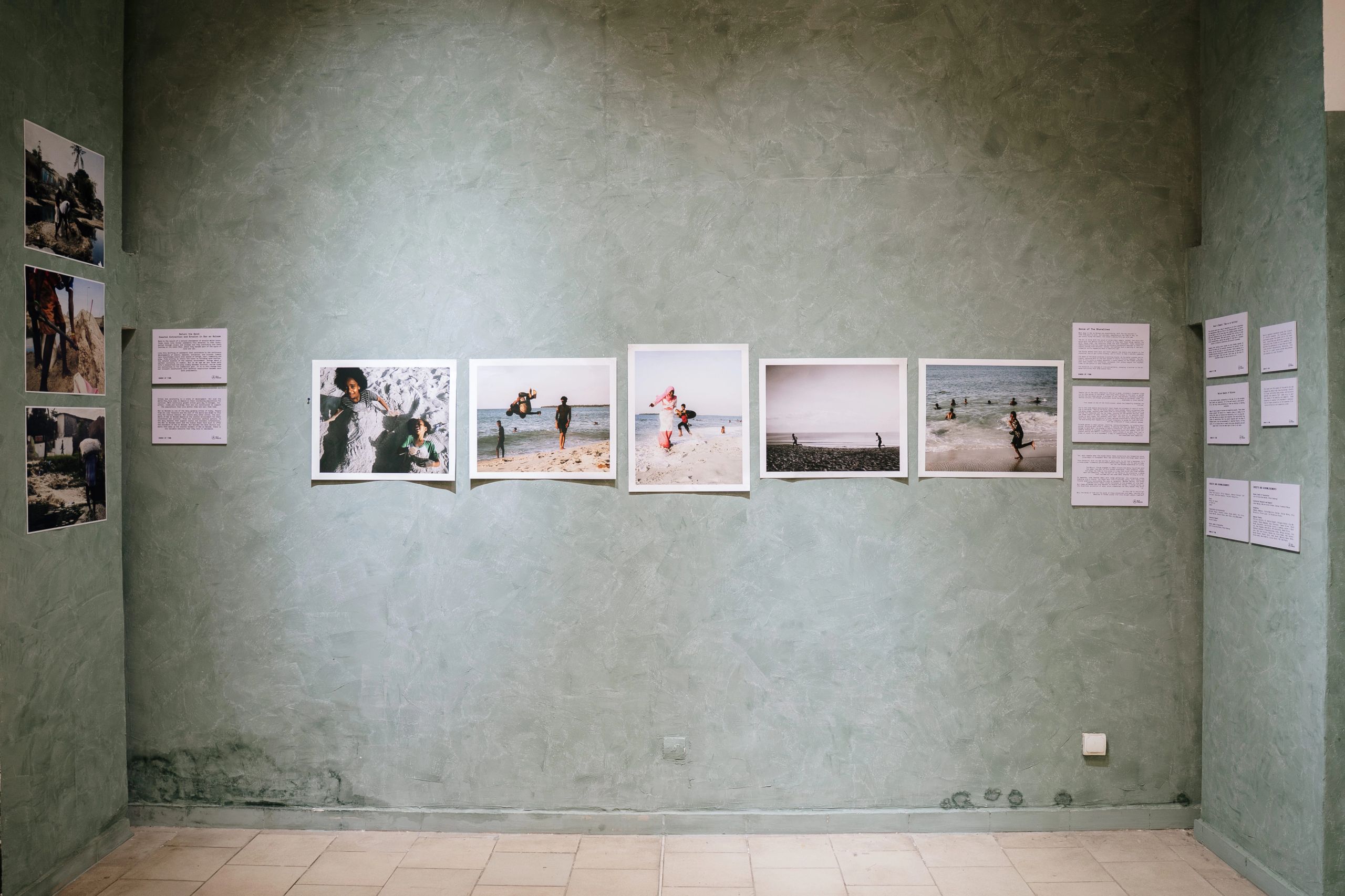
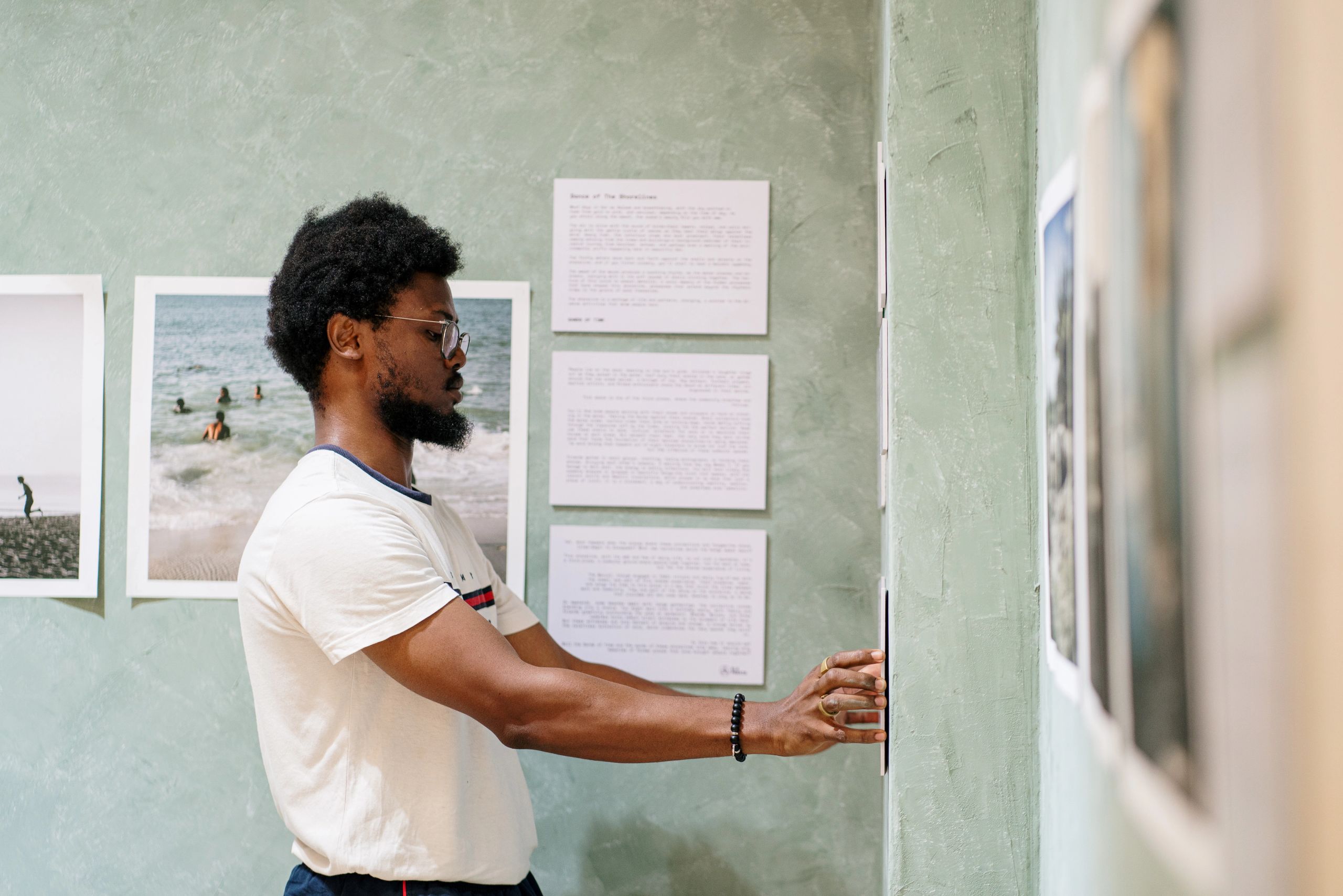
Ala Praxis, Installation View, Sands of Time, Lagos, July 2025. Photo: Tilley-Gyado Bemuter Victor. Courtesy the artists and Goethe-Institut Nigeria.
When state infrastructures erode and political systems fail, what can art actually do? Moving between Zurich and Lagos, writer Ann Mbuti traces a lineage of art that refuses to be mere commentary — from the historical anchor points of the Négritude movement and the Zaria Art Society to two contemporary initiatives Mangrove Arts Foundation (MAF) and Ala Praxis. They believe art does not operate alongside reality in a fictional field but is an integral part of it. The lens for this exploration is Mbuti's concept of "public fiction": the idea that art disseminates drafts of reality, and that those drafts become real when enough people believe and activate them. This text is part of the C& and Pro Helvetia Fieldnotes Arts Writing Exchange 2025–2026.
These notes from a field of research are numbered not by importance but by order of appearance. Written in November 2025 during a visit to Lagos Art Week, as well as in preparation for and in the aftermath of the trip, the text is supplemented by reflections from my recent art writing practice, which increasingly asks: How can we continue to engage with art in the face of the social structures undergoing massive transformation?
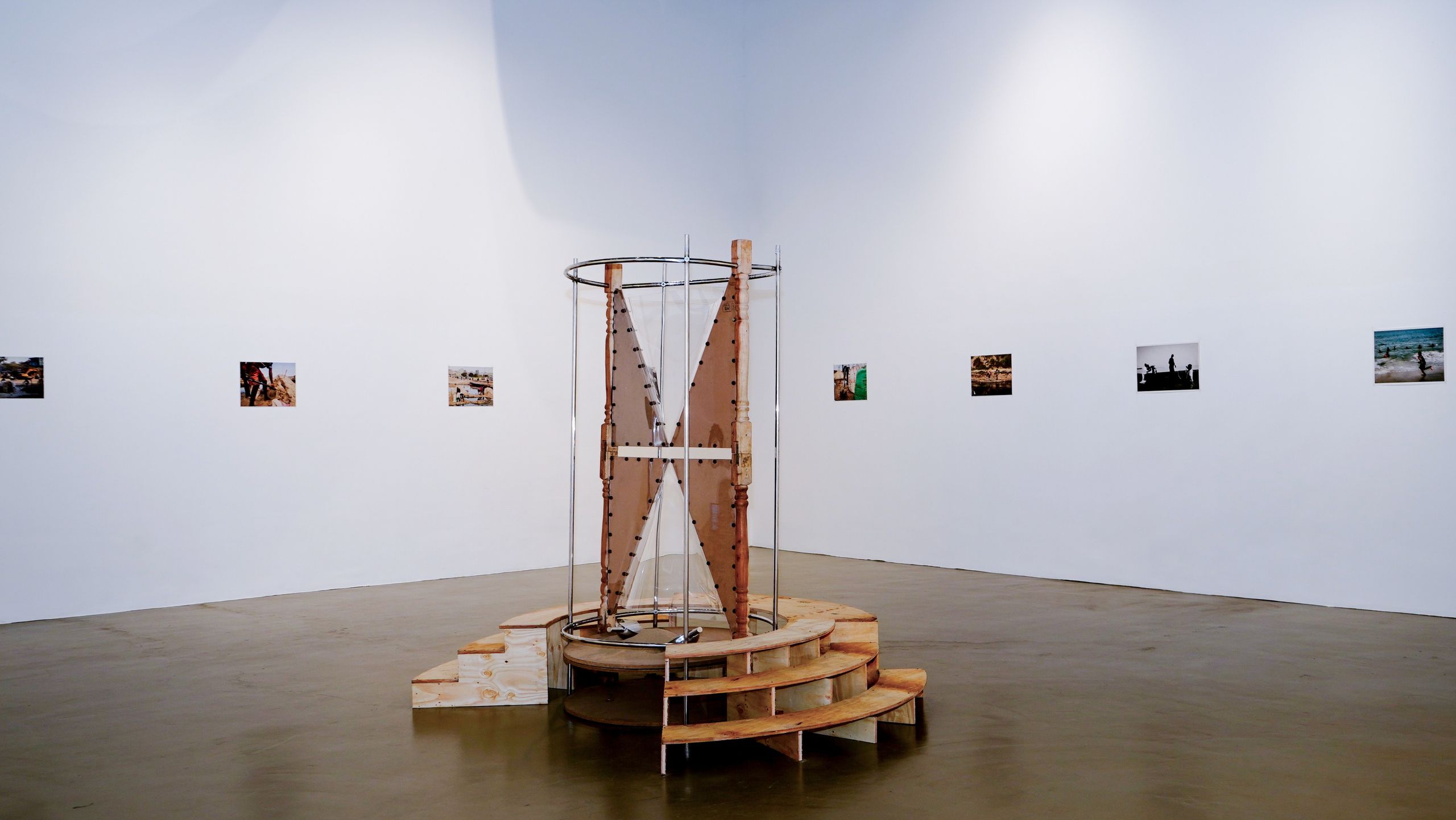
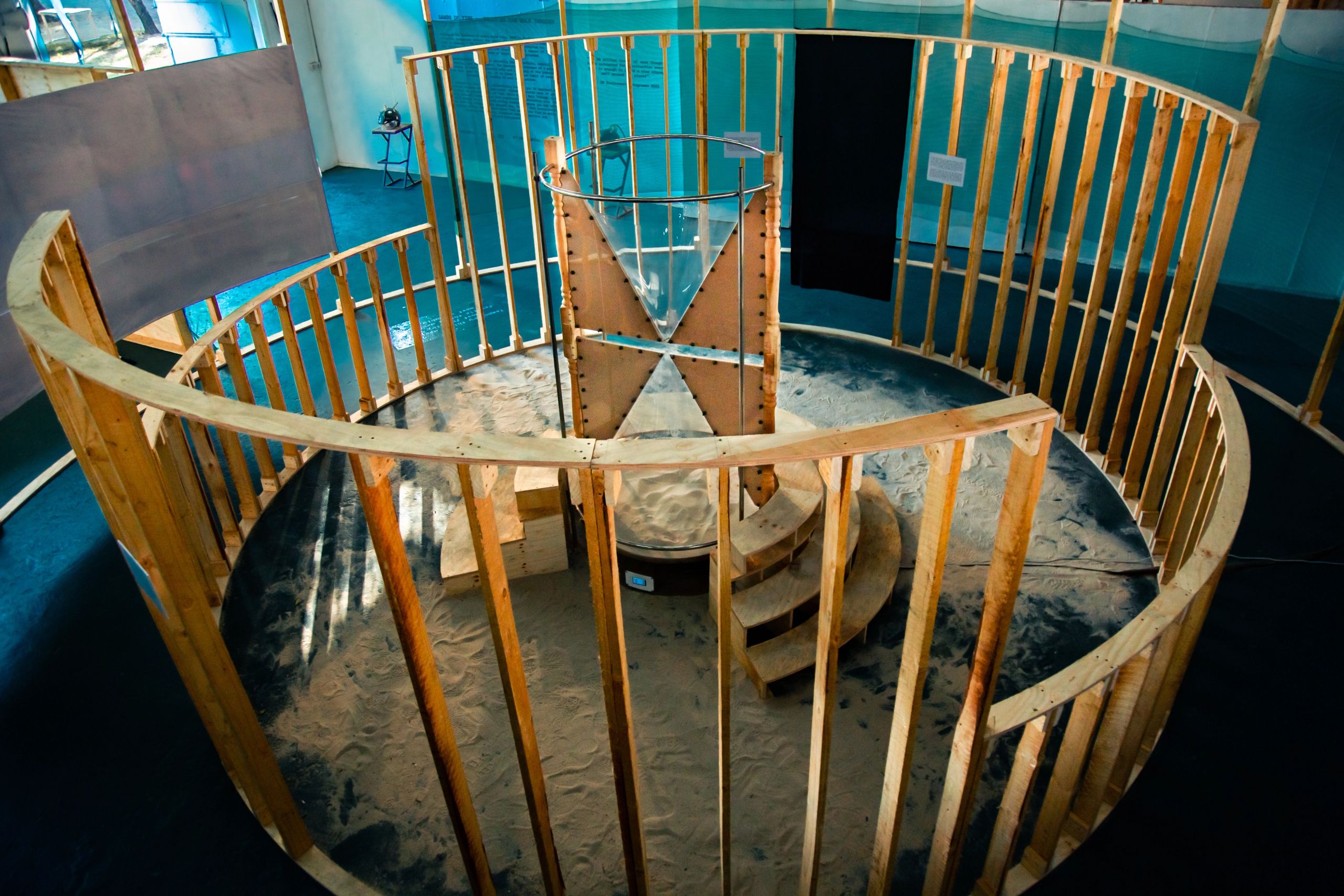
Ala Praxis, Installation View, Sands of Time, Lagos, July 2025. Photo: Tilley-Gyado Bemuter Victor. Courtesy the artists and Goethe-Institut Nigeria.
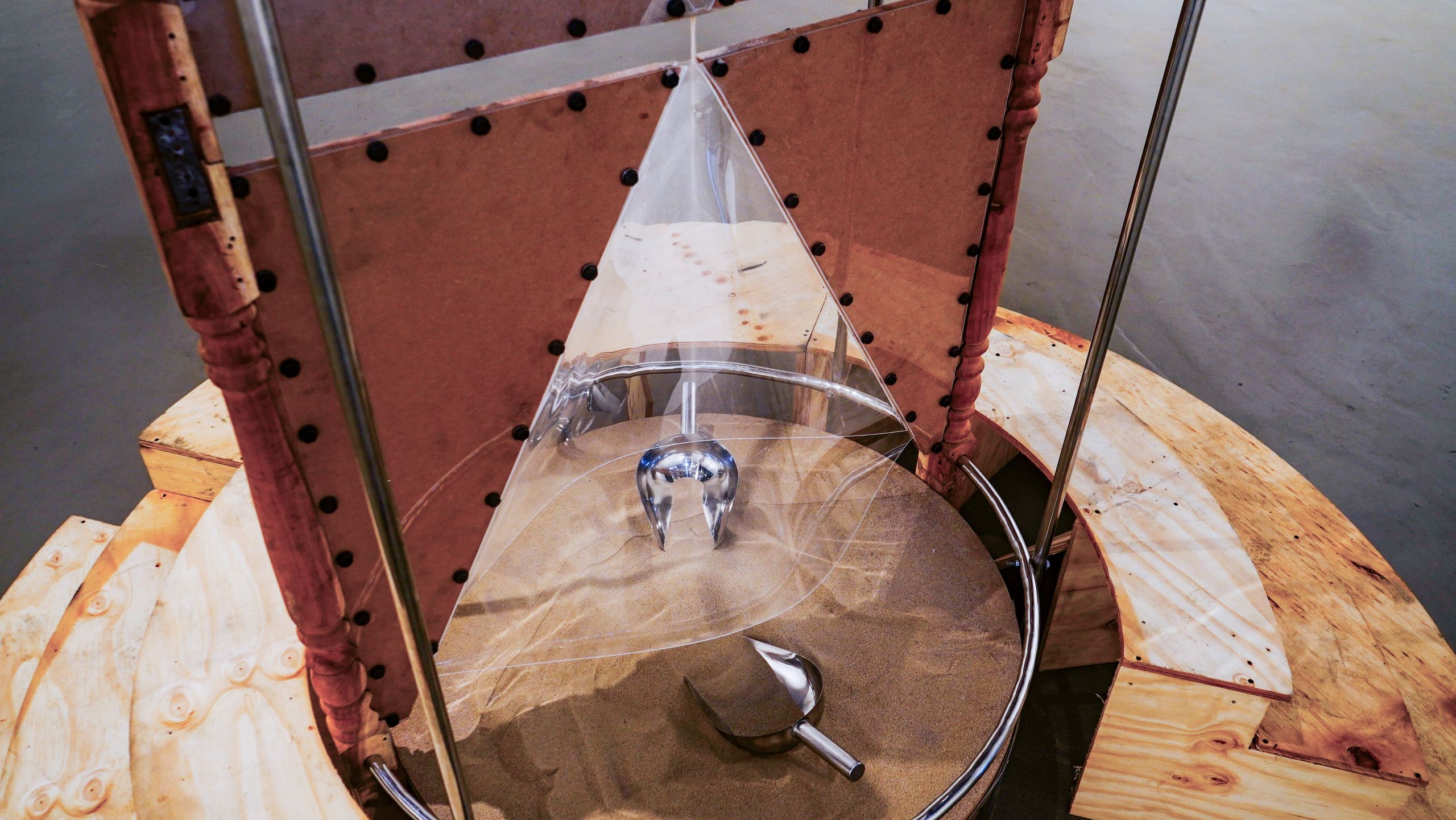
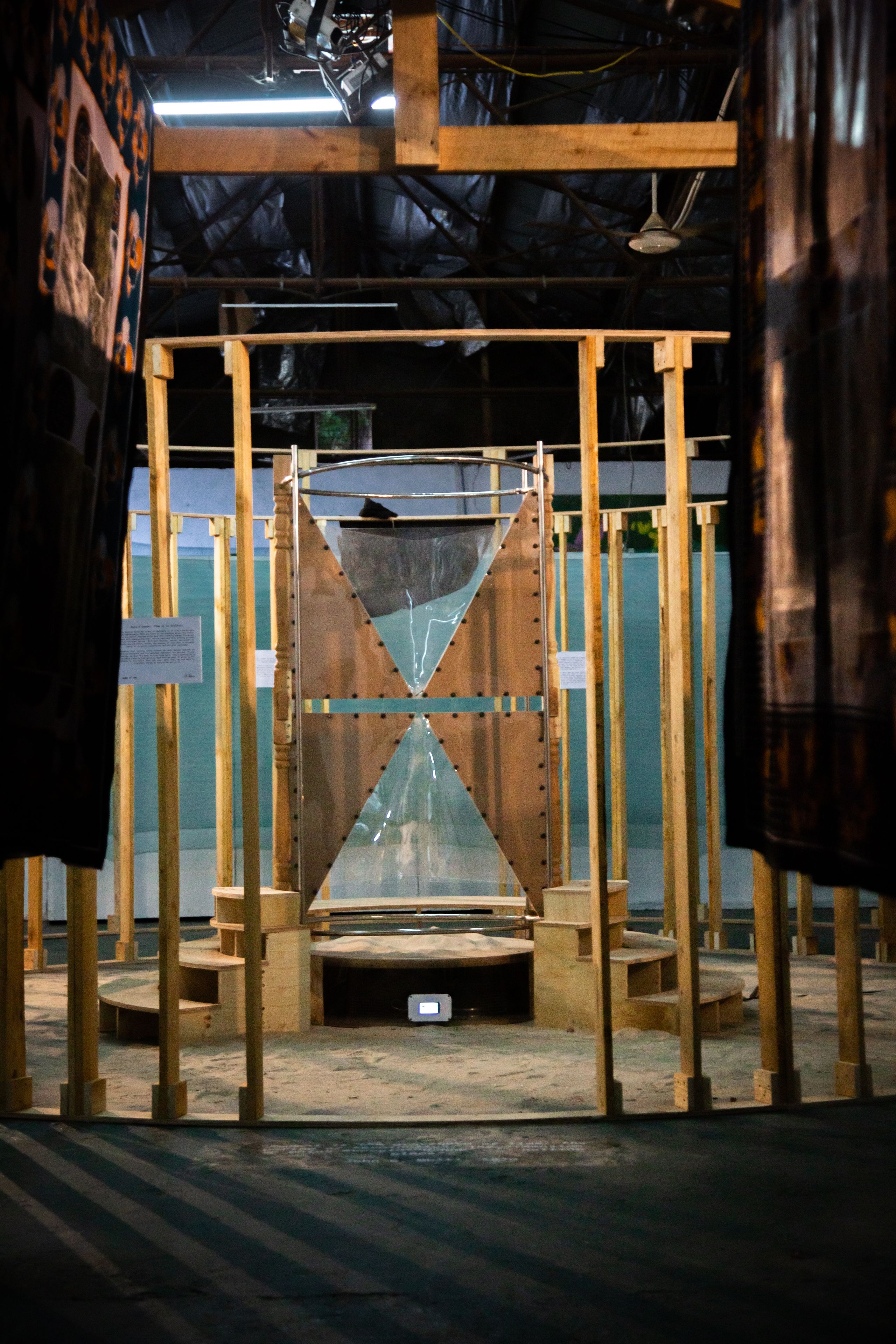
Ala Praxis, The Hourglass, 2025. Detail, Sands of Time, Lagos, July 2025. Photo: Tilley-Gyado Bemuter Victor. Courtesy the artists and Goethe-Institut Nigeria.
I. 2024, Zurich, Switzerland — Departure Point
At a time when state infrastructures are eroding worldwide, when political systems are reneging on their promises to populations that they never really included, a more urgent question arises: How can art not only reflect but initiate change?
II. No Date (n.d.) — Past Anchor Points
Art history has known moments when this question of art and transformation was not rhetorical. The Négritude movement of the 1930s and 1940s developed literature and art as an infrastructure for decolonization: Aimé Césaire, Léopold Sédar Senghor, and their comrades-in-arms formulated a different self-image as part of a wider aesthetic program. Art became the foundation of a political subjectivity.
In Nigeria, the Zaria Art Society developed its concept of “natural synthesis” in the late 1950s as a combination of Western techniques and Nigerian pictorial traditions. Shortly before independence in 1960, they went beyond mere aesthetic decision-making to draft a postcolonial identity that would reject the predominantly British faculty at their art academy. The Pan-African Medu Art Ensemble, which emerged in exile in Botswana in the late 1970s, produced posters, music, and theater not for galleries but for the movement of resistance to apartheid and colonialism. Art became its logistical and emotional infrastructure. In all these moments, art was a structuring force and not decoration, commentary, pure aesthetics, or art for art's sake.
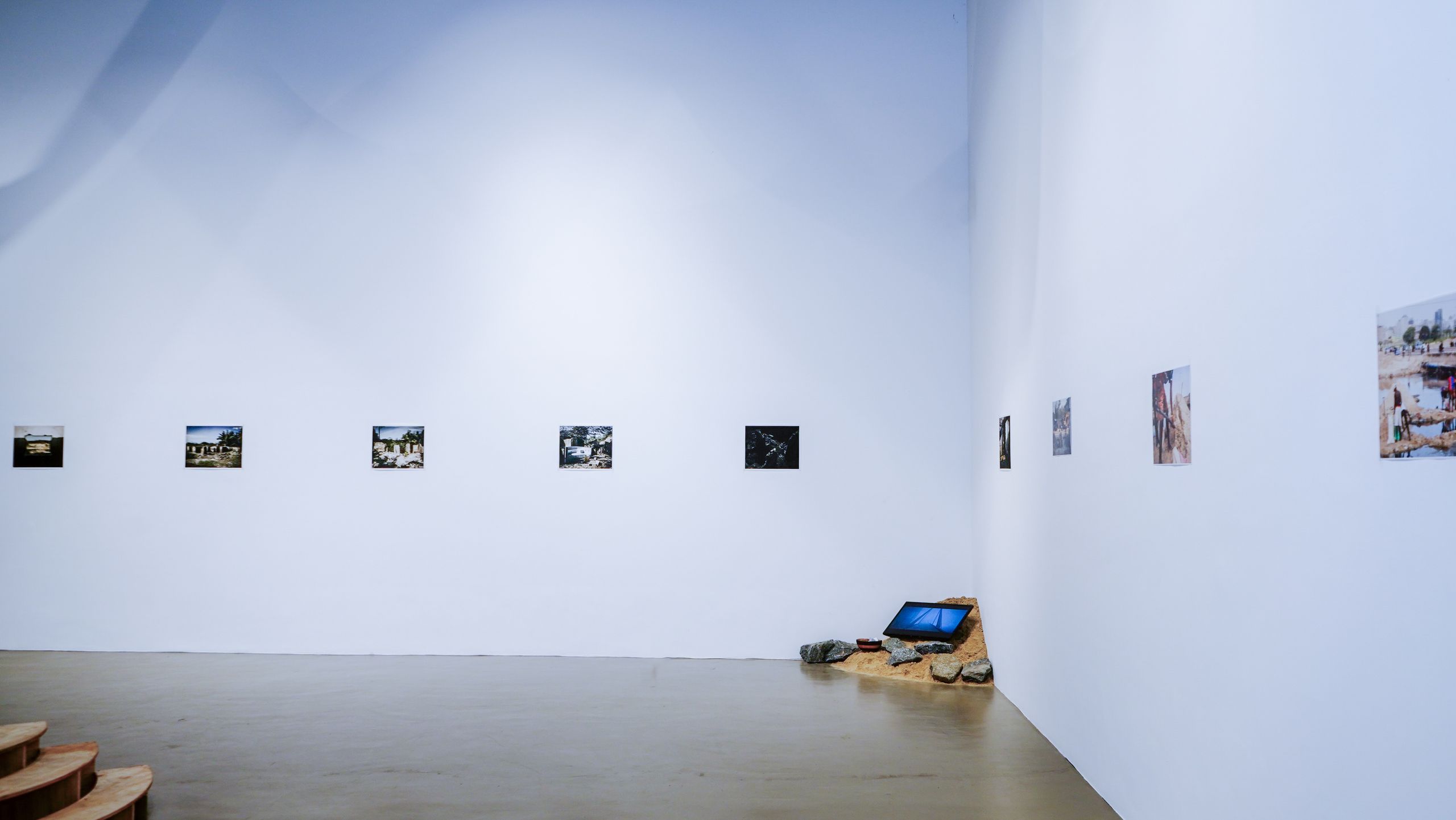
Ala Praxis, Installation View, Sands of Time, Lagos, July 2025. Photo: Tilley-Gyado Bemuter Victor. Courtesy the artists and Goethe-Institut Nigeria.
III. Ongoing — Public Fiction
Art does not stand above the social, but supports, organizes, and permeates it. Art can either stabilize what is or speculate on what could be. It disseminates drafts of realities; it suggests what a world is like, who and what appears in it and who and what does not. In doing so, it works on what I call ‘public fiction,’a concept that I have been researching for several years. Drawing from the intersecting fields of arts and media studies to examine the emergence and dissemination of these drafts of reality, I work on the premise that a draft has an effect when it becomes connectable. In other words, when it docks onto the ideas, expectations, and needs of an audience that already exists or creates new ones. Narratives, images, and ideas have an impact primarily through resonance: they are taken up, repeated, and retold. Public fictions are shared narratives that gain credibility through their dissemination and thus begin to become real.
Public fictions are shared narratives that gain credibility through their dissemination and thus begin to become real.
IV. Fall 2025 — Port Harcourt, Nigeria — History Lessons
In November 1995, Ken Saro-Wiwa was executed by the Nigerian military dictatorship. He had fought peacefully against the destruction of the Ogoni land by international oil companies and was sentenced to death for it, along with eight other activists. Thirty years later, the ecological disaster in the Niger Delta is not over. The soil is contaminated, the water poisoned, but what has changed is the way the region is talked about and by whom. Initiatives such as the Mangrove Arts Foundation (MAF), founded by Ken’s daughter, artist and filmmaker Zina Saro-Wiwa, have driven this shift by using contemporary art as a platform for memory, community engagement, and cultural resistance.
On 12 June 2025, Nigerian Democracy Day, acting President Bola Ahmed Tinubu posthumously pardoned Ken Saro-Wiwa and the eight other Ogoni activists. The gesture came thirty years too late and did nothing about the destruction the group fought against. Members of the Movement for the Survival of the Ogoni People (MOSOP), founded by Ken Saro-Wiwa in 1990, rejected the pardon, saying the nine were innocent and should be fully rehabilitated, not pardoned.
V. November 2025 — Lagos, Nigeria — Serendipity
On day one of our stay in Lagos I learn about Ala Praxis, an art collective that emerged in Lagos in 2022 from a curatorial program, organically forming through a joint project and from asking similar questions. Their first project as a collective was initially open-ended and exploratory. In the Igbo language, Ala means earth; in Yoruba, it means dream. Praxis refers to lived, repeated action. Dream praxis, earth praxis. The six members are artists, architects, and curators, bringing disciplines such as music, anthropology, and design to the table.
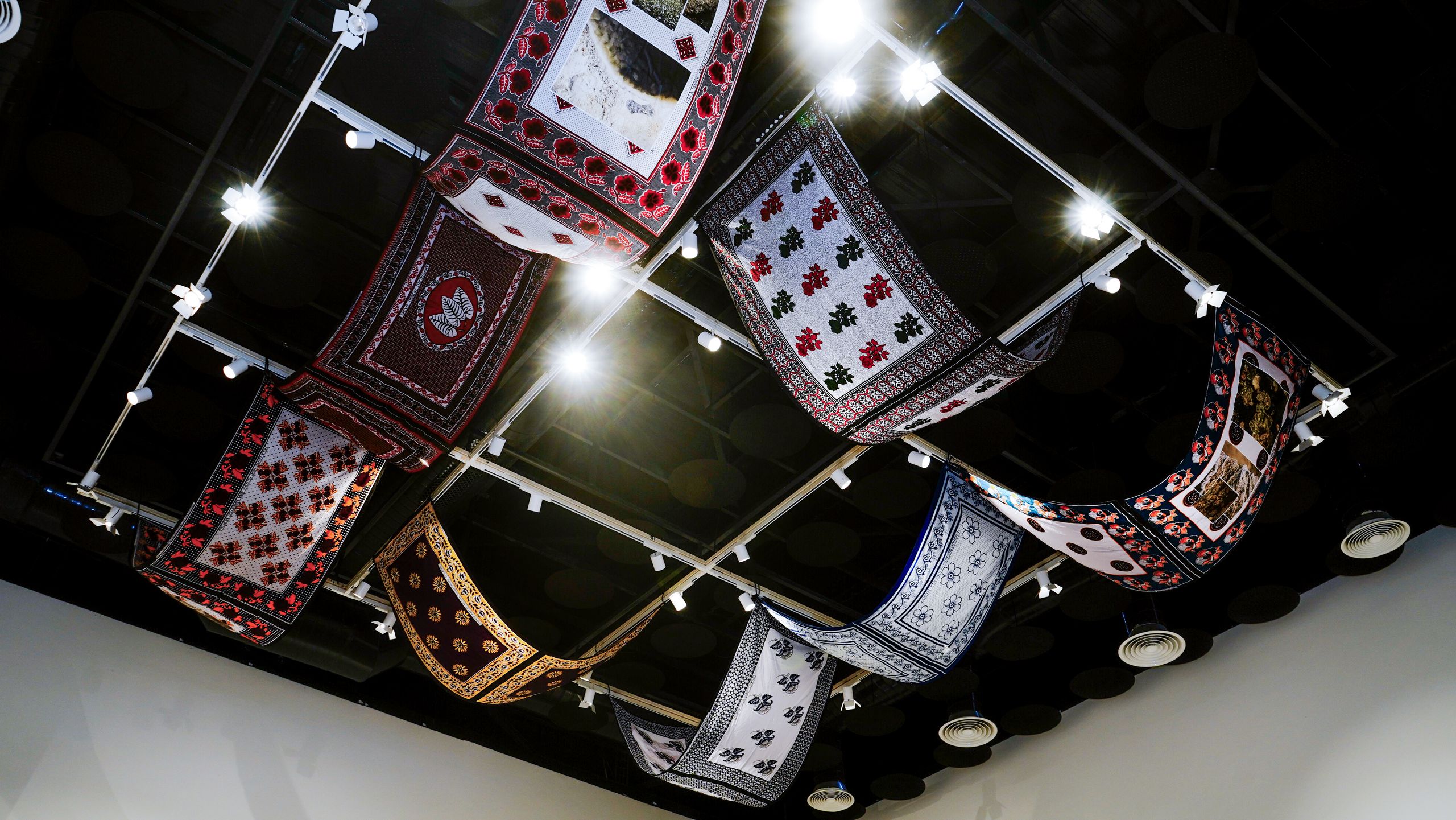
Ala Praxis, Installation View, Sands of Time, Lagos, July 2025. Photo: Tilley-Gyado Bemuter Victor. Courtesy the artists and Goethe-Institut Nigeria.
VI. November 2025 — Lagos, Nigeria — Interview with Ala Praxis
It is 10 November 2025, and the thirtieth anniversary of the execution of the Ogoni Nine. The latest MAF initiative opens in Port Harcourt, 450 km from Lagos. The Ken Saro-Wiwa Rooms, a museum and research space housed in a building he once owned, approaches his legacy through a contemporary inquiry into activism, environmental justice, grief, culture, and collective healing.
In Lagos I meet two members of Ala Praxis, Timilehin Osanyintolu, a multimedia artist, and Philip Fagbeyiro, an architect, writer, and artist, to talk about their work. During a residency in Dar es Salaam Tanzania, they conducted an investigation into sand mining — which is literally pulling the ground from under communities' feet — on East African coasts. Ala Praxis wove this into a tapestry of research, sound, video, and a VR game that makes the disappearance tangible. Their installation Sand of Time (2024), shown in an exhibition of the same name, depicts a post-sand-mining apocalypse. “The fact that we're many really allows us to tackle different things,” says Timilehin. The group divided into teams for the production to ensure parallel knowledge production. One topic, many approaches.
VII. November 2025 — Ala Praxis Reflections
Timilehin and Philip are well aware of the limitations of the logic of a primarily visual art system. Alongside the proposal for Sand of Time, Ala Praxis had developed another project called Buka74, which sought to rethink the informal roadside eateries found across Nigeria, locally known as ‘buka’. Instead of an exhibition-oriented artwork, the collective wanted to introduce simple, sustainable interventions into these social spaces, experimenting with accessible ecological practices embedded directly into daily life. However, Sand of Time was selected for funding instead — a decision the artists understood pragmatically. As Timilehin puts it, it was “a more visually striking and engaging project for people as an artistic experience.”
This is a tension that must be endured. Art as infrastructure must be visible enough to generate credibility, while at the same time intervening deeply enough to be more than a fleeting image. The question of how to do this is still being asked at Ala Praxis.
VIII. January 2026 — Research Trip Reflections
Mangrove Arts Foundation (MAF) and Ala Praxis represent very different moments and forces. MAF emerged from a painful chapter in Nigerian history and within its grief it carries anger, the weight of a name, and a landscape that combines both exploitation and a will to resist. Ala Praxis begins at a different point: the productive unrest of a city, the joy of collaboration, of the attempt to think big with limited resources. What connects them is a shared fundamental belief: art does not operate alongside reality in a fictional field of the imaginary, but is an integral part of it. Art disseminates, tests, and puts drafts of reality up for discussion, very much in the spirit of public fiction.
Art does not operate alongside reality in a fictional field of the imaginary, but is an integral part of it.
IX. May 2026 — The Ongoing Discourse
“Infrastructure” is derived from the Latin word “infra” (below, underneath). Infrastructure remains mostly invisible while making collective life possible: roads, cables, water systems, but also institutions, the social agreements and imaginaries that hold societies together. Public fictions work differently. They cannot remain hidden beneath the surface. They must circulate, be seen, heard, repeated, and collectively inhabited, to gain force. Perhaps this is where the political potential of art lies today: not merely in representing crises once they have unfolded, but in producing shared imaginaries capable of orienting people within these unstable realities. Art cannot replace eroded state infrastructures or failed political systems — but it can create provisional frameworks of meaning, relation, and possibility. Drafts of reality that, once collectively believed in and acted upon, begin to structure the world they once only imagined.
Art cannot replace eroded state infrastructures or failed political systems — but it can create provisional frameworks of meaning, relation, and possibility. Drafts of reality that, once collectively believed in and acted upon, begin to structure the world they once only imagined.
About the author
Ann Mbuti
Ann Mbuti is a professor of process design and an independent writer specializing in contemporary art and pop culture. Her work focuses on artistic projects with the potential for social, political, or environmental change.
Black Orpheus: Who Gets to Frame a Black Cultural Canon?
When We Gather: On the Not-Yet-Become in Lagos
The Aftercycle: Speculations on Responsive Touch and Restituted Objects
Sounding the Ocean: Spiral Networks of Remembrance and Elation
Notes on Editorial Dis/Continuities