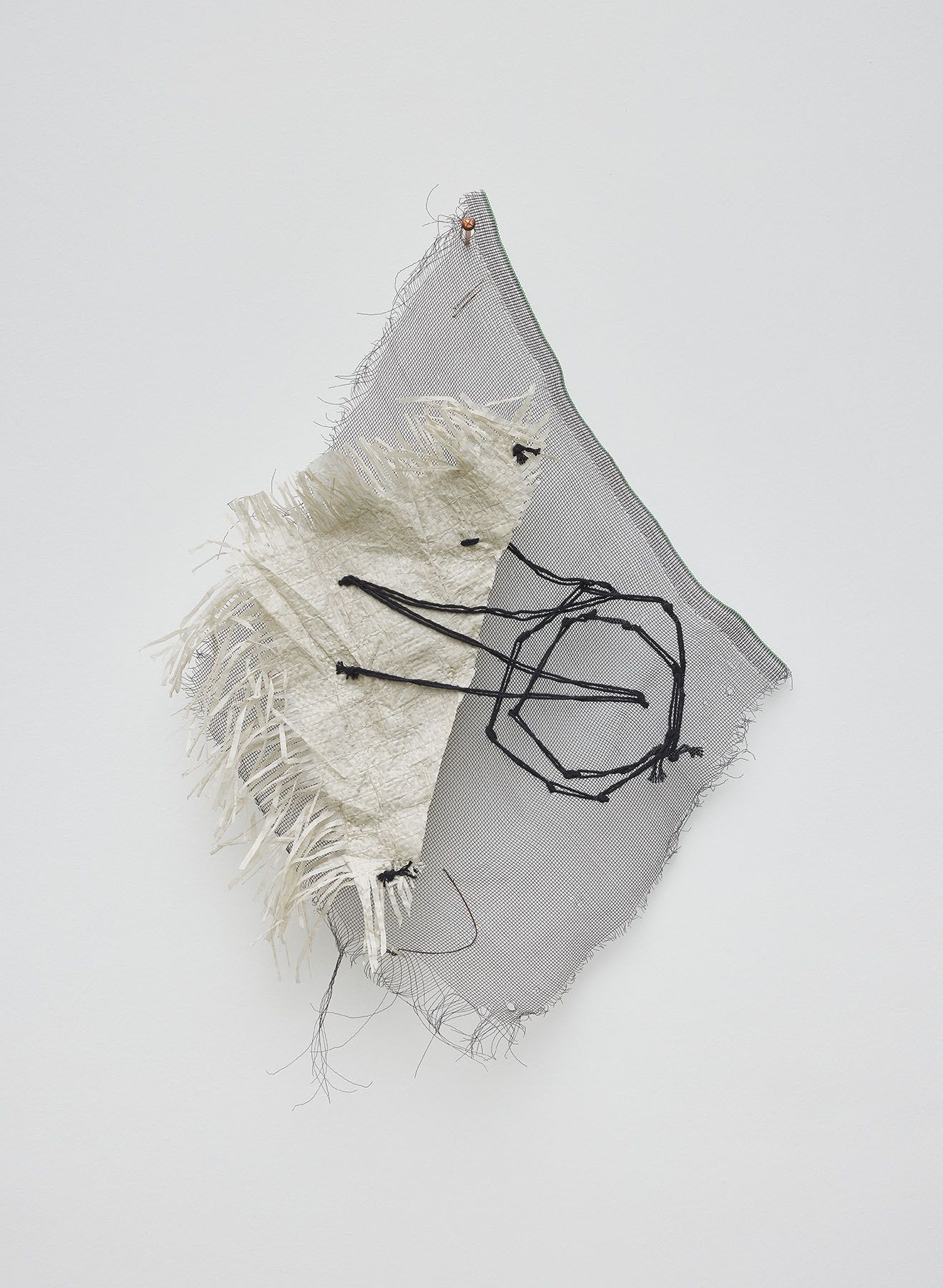
Transforming Memories of State Violence through Poetic Justice
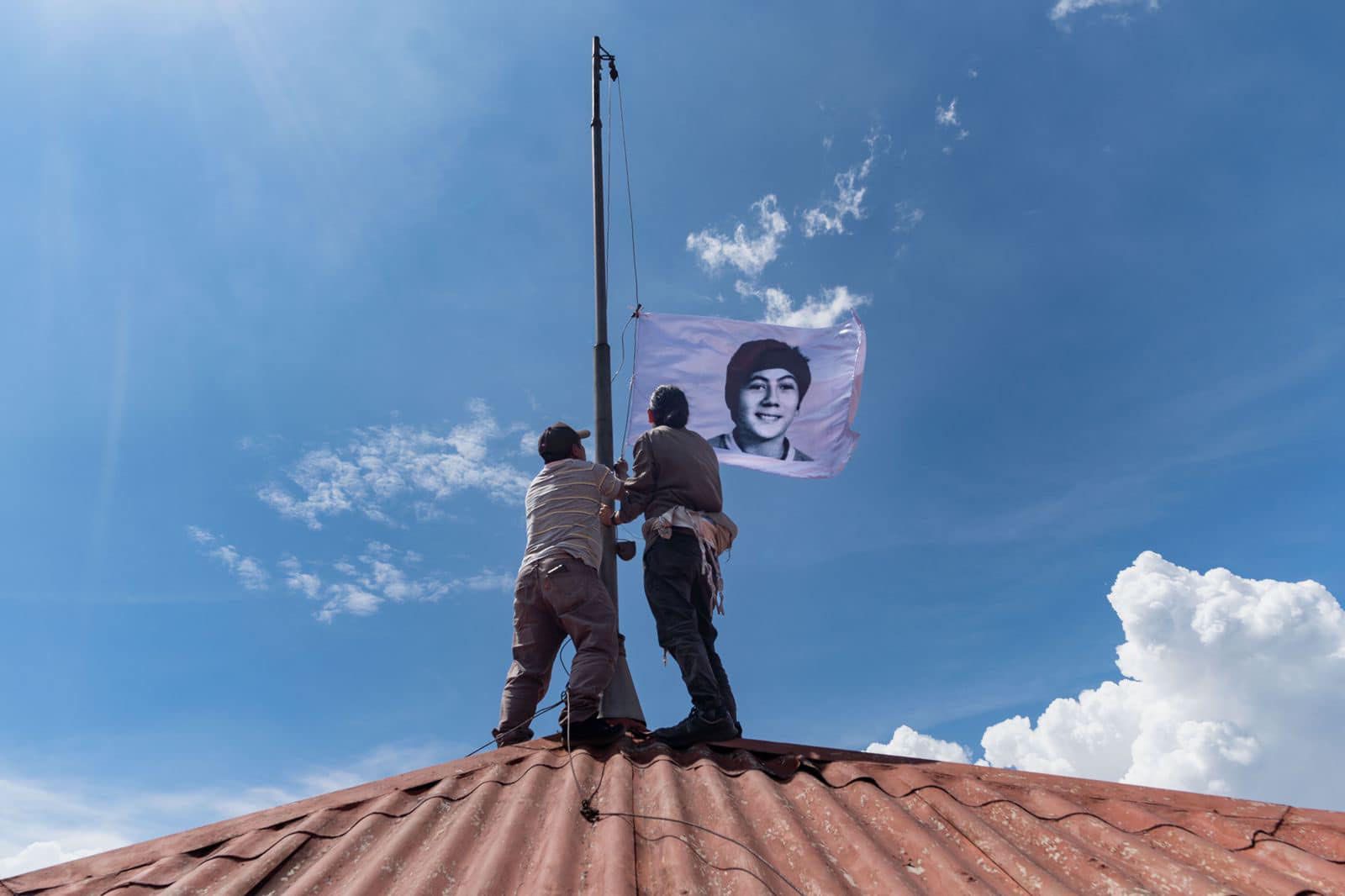
Bandera, Marco Antonio, collective action. Photo: Courtesy
Located inside a former military facility where hundreds of people were tortured and disappeared during Guatemala’s Armed Conflict (1960-1996), the Intercultural Park and its Memory Museum form a unique museum in which art turns memory into inclusive futures. Employing the concept of “poetic justice,” the Park hosts collective actions that incorporate perspectives of both artists and victims to forge bonds of trust.
The Armed Conflict in Guatemala was a genocide perpetrated by the Guatemalan State against indigenous peoples, peasants, workers, land defenders and human rights activists in Guatemala between 1960 and 1996. In September of 1981, Emma Guadalupe Molina Thiessen was 21 years old when she was captured for her activist work. When she refused to collaborate with the army on its base in Quetzaltenango, she was deprived of her liberty, suffering torture and sexual violence while incarcerated. She only managed to escape by slipping through the window of the officers’ quarters—because she had lost weight from food deprivation— where she had been forcibly confined. She is still alive today and lives in exile.
Four decades later, in 2018, four former Guatemalan high-ranking military officers were found guilty of the abuses committed against Emma. They were also convicted for other crimes against humanity, including the disappearance of Marco Antonio, Emma’s 14-year-old brother—one of the more than 5,000 children who disappeared during Guatemala’s Internal Armed Conflict. In 1996, after signing the Peace Accords, the Guatemalan State mandated various reparations, including converting the base where Emma was tortured into a space for art, culture, creative industries, and sports—a space that would dignify historical memory.
That Museum opened in February of 2024 with the art and archival exhibition “Habitar los Archivos” (Inhabiting the Archives), sponsored by the Office of the United Nations High Commissioner for Human Rights in Guatemala. “We worked to revive and bring new meaning to the space (Intercultural Park) through art, collaboration with artists, citizens, survivors and victims of the war,” Branly López, a cultural manager specialized in the visual arts, tells me via videocall.”
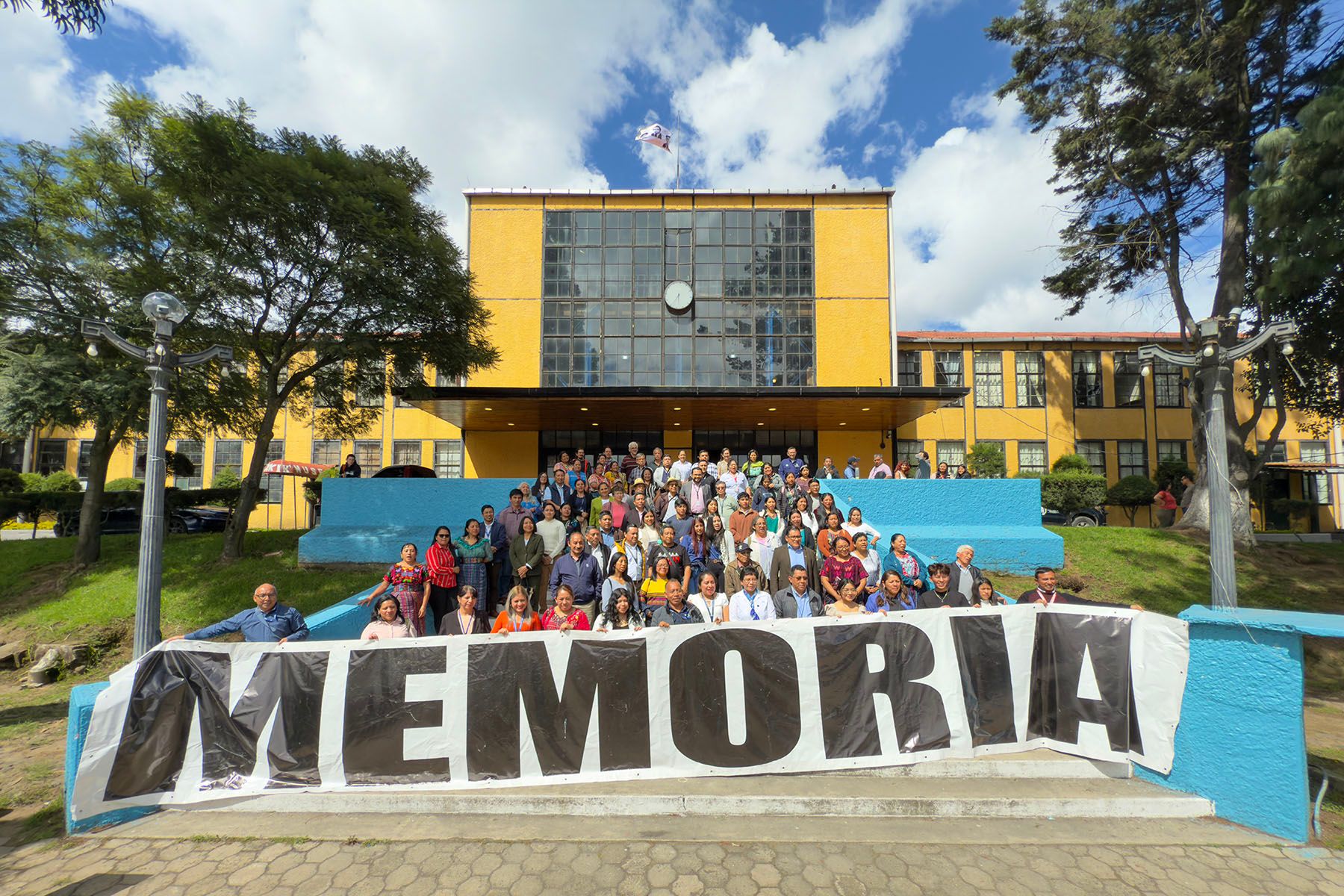
Memory Site. Photo: Juan Esteban Calderón
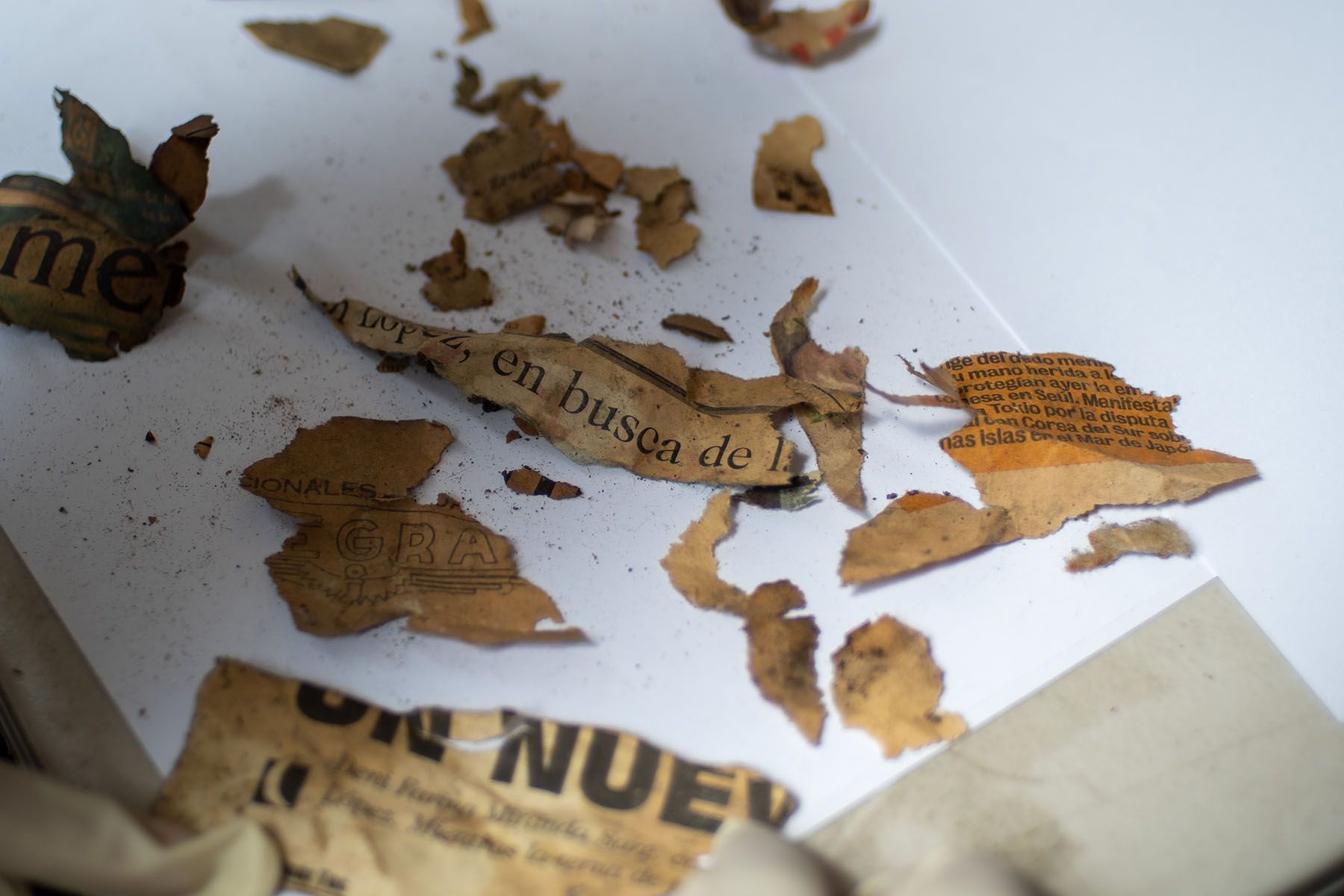
Document remains. Photo: Juan Esteban Calderón
A Museum that Honors All Its Stories with Poetic Justice
Bringing new meaning to this space plays an incredibly important role because it seeks to honor its origins without concealing its more sinister past. In pre-Hispanic times, it was known as Chom Juyub Hill (Fat Hill) which housed Mayan ceremonial centers. From 1903 to 1933 it served as the Los Altos Railway Station. Years later it was converted into a wheat mill. And from the 1960s until 2004, the site functioned as a military zone where numerous heinous crimes were committed against students, professors, activists and citizens. “The documentation of what was here is very scattered,” says Pablo Retana, the cultural management assistant whose background is in theater. “So, I have taken on the task—together with student volunteers—of gathering testimonies and researching in books, campaign plans and military archives.”
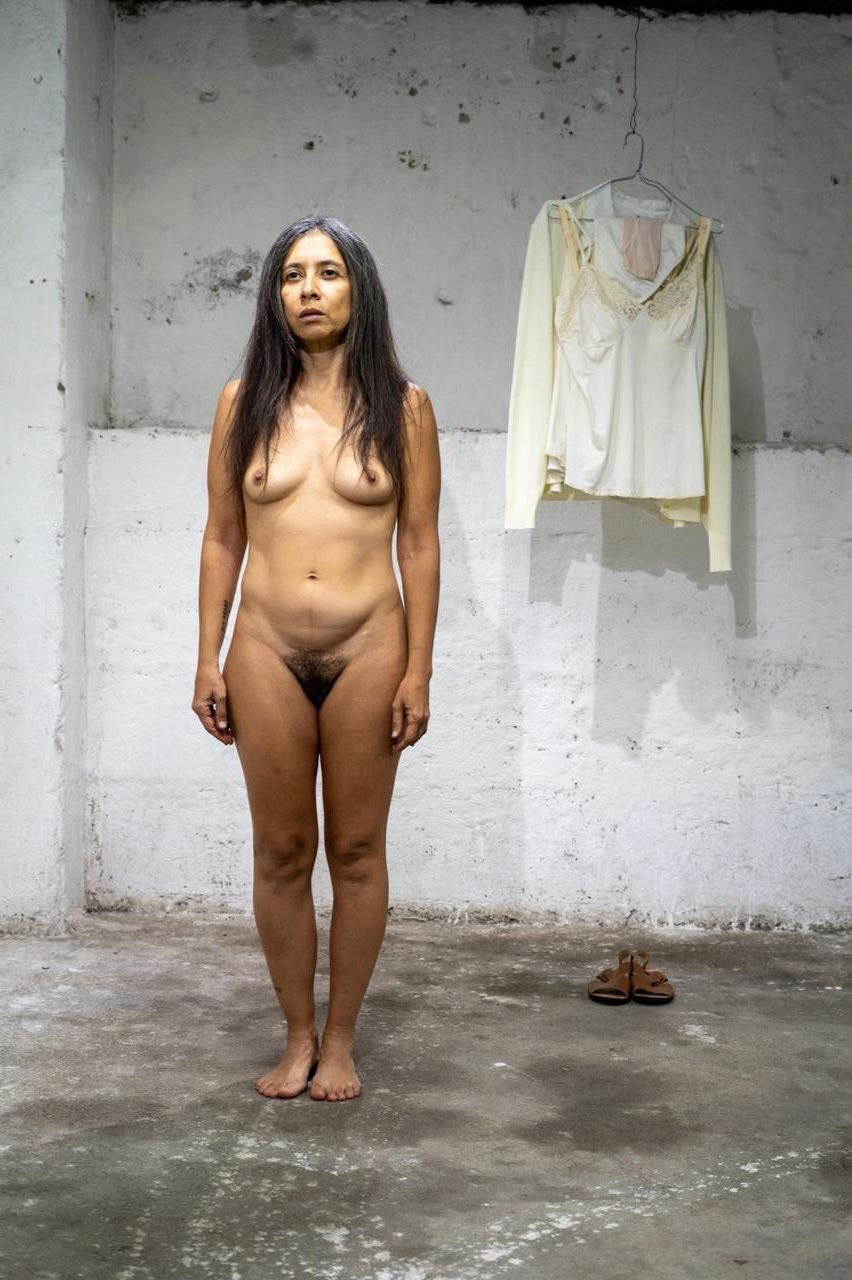
Aura performance, Regina José Galindo. Photo: Juan Esteban Calderón
Many of the artistic projects undertaken at Quetzaltenango’s Intercultural Park operate under the concept of “poetic justice.” It is a concept of care that aims to engage with painful memories and places without retraumatizing or revictimizing. “Poetic justice” requires collective actions that incorporate artists’ perspectives as well as—and perhaps even more important—those of the victims. “In May 2024, here, in what were torture and detention chambers,” Branly tells me, “Regina José Galindo presented her performance Aura.” In her performance, the Guatemalan artist known for stirring up repressed memories of state violence, appropriates her mother’s physical presence, thereby denying the latter’s loss of bodily control due to progressive illness.
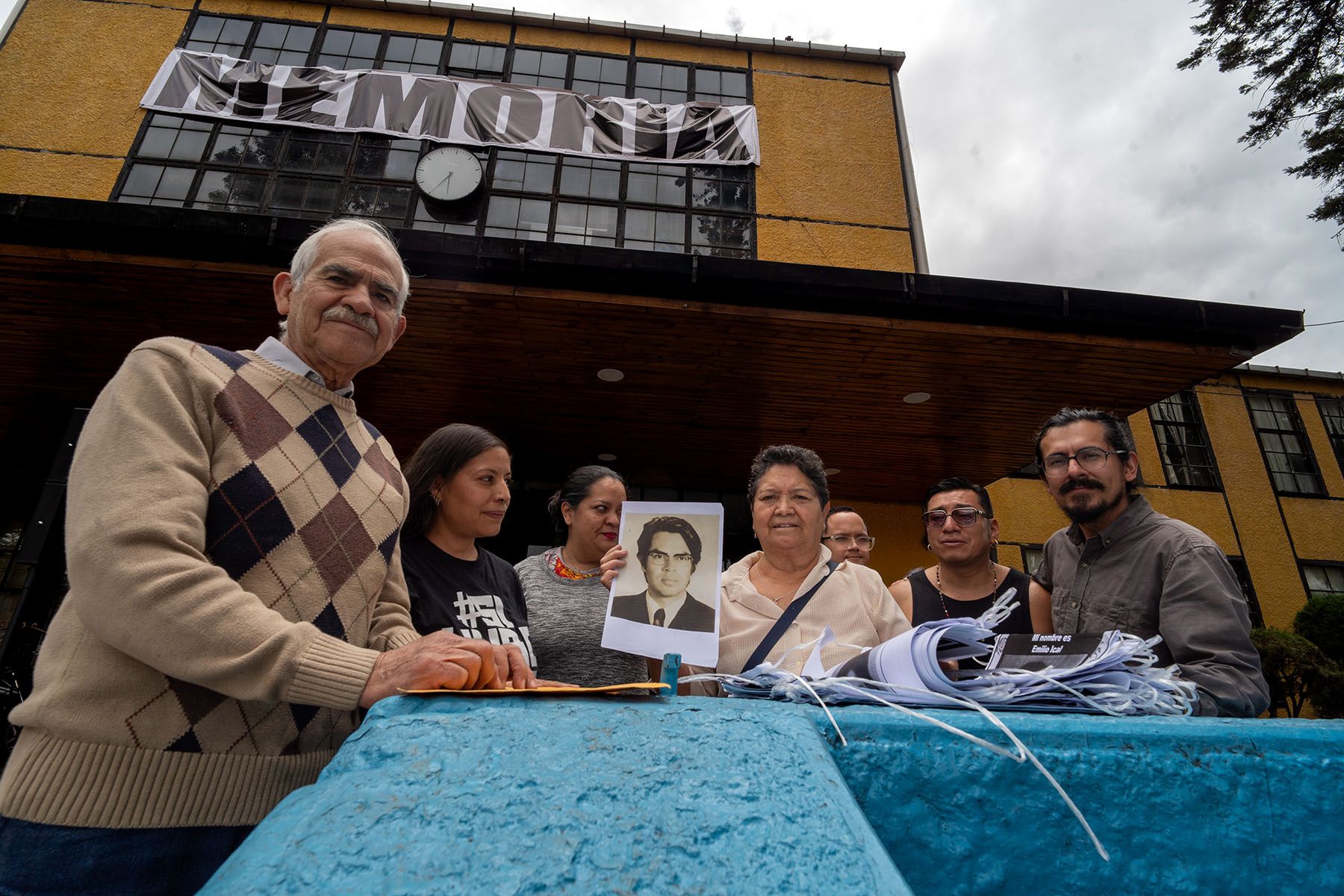
Sona Encendida with relatives. Photo: Juan Esteban Calderón
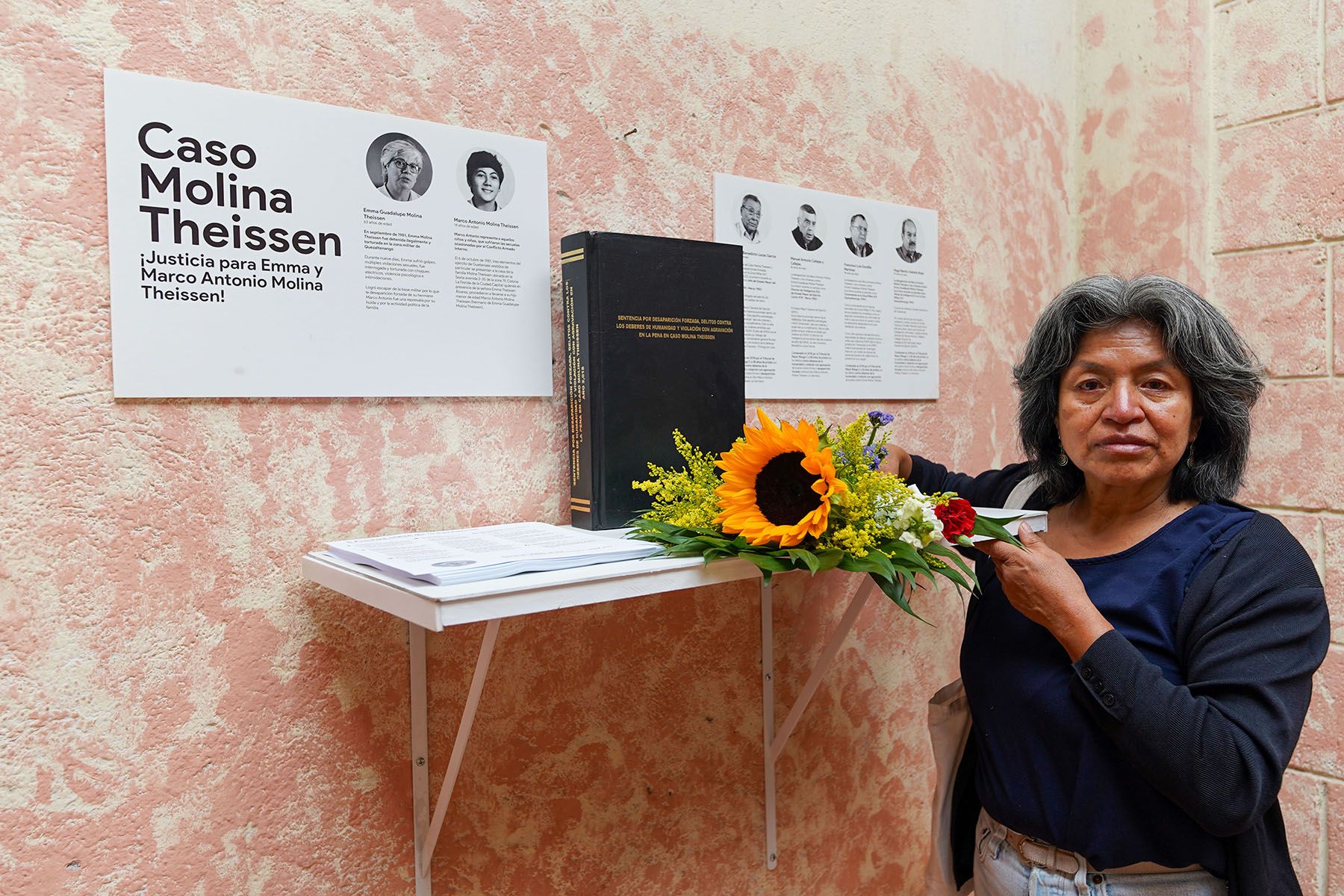
Molina Theissen Case, court ruling, Mayari de León. Photo: Juan Esteban Calderón
Connecting Art and Community
Also active on site is La Sona Encendida, a collective of artists and cultural practitioners whose aim is to support the Intercultural Park’s artistic and cultural revitalization. Among them are Bryan Castro, Pablo Retana, Branly López, José Velásquez, Juan Esteban Calderón, Isabel Mendoza, Leslie Debus, Mariana García and Valeria Leiva. In one action to commemorate Marco Antonio Molina Thiessen’s disappearance, La Sona Encendia—in collaboration with the Molina Theissen family—displayed Marco Antonio’s face on a white flag, and they hoisted it onto the site’s main flagpole. It was at once an artistic and a political act.
Tribunal X is a performance by Pablo, who also lost a family member during the war. The piece plays testimonies and involves the audience and the community. “We were intentionally very careful not to limit our involvement to artistic actions,” Branly explains. “It seemed irresponsible not to do it together with the victims and survivors. You know? Without even considering the information, the testimonies and all the research related to this place. Because the commitment and the responsibility entailed in working with historical memory is precisely that.”
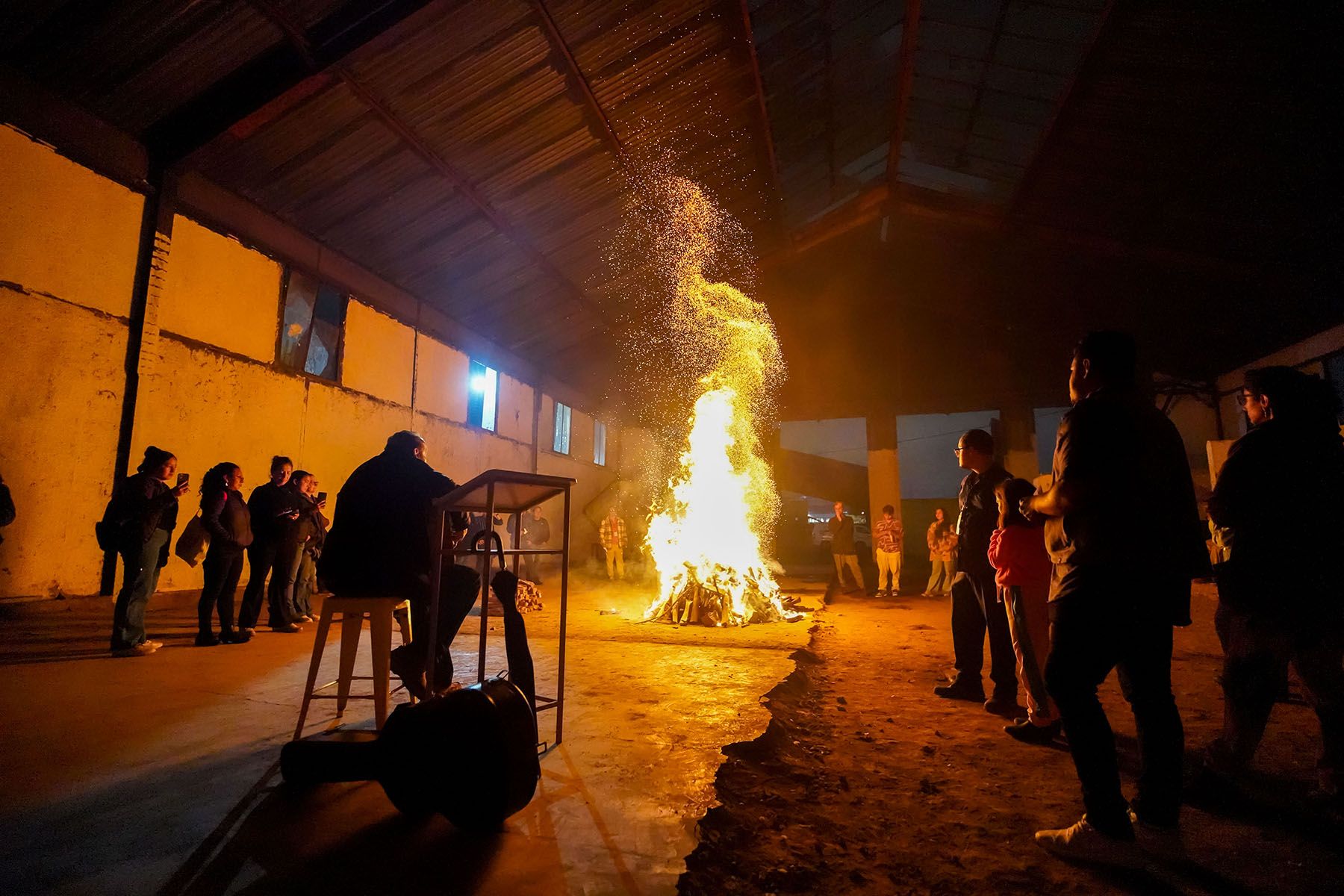
Salvar el Fuego del Olvido (Saving the Fire of Oblivion), collective action at Parque Intercultural, 2025. Photo: Juan Esteban Calderón
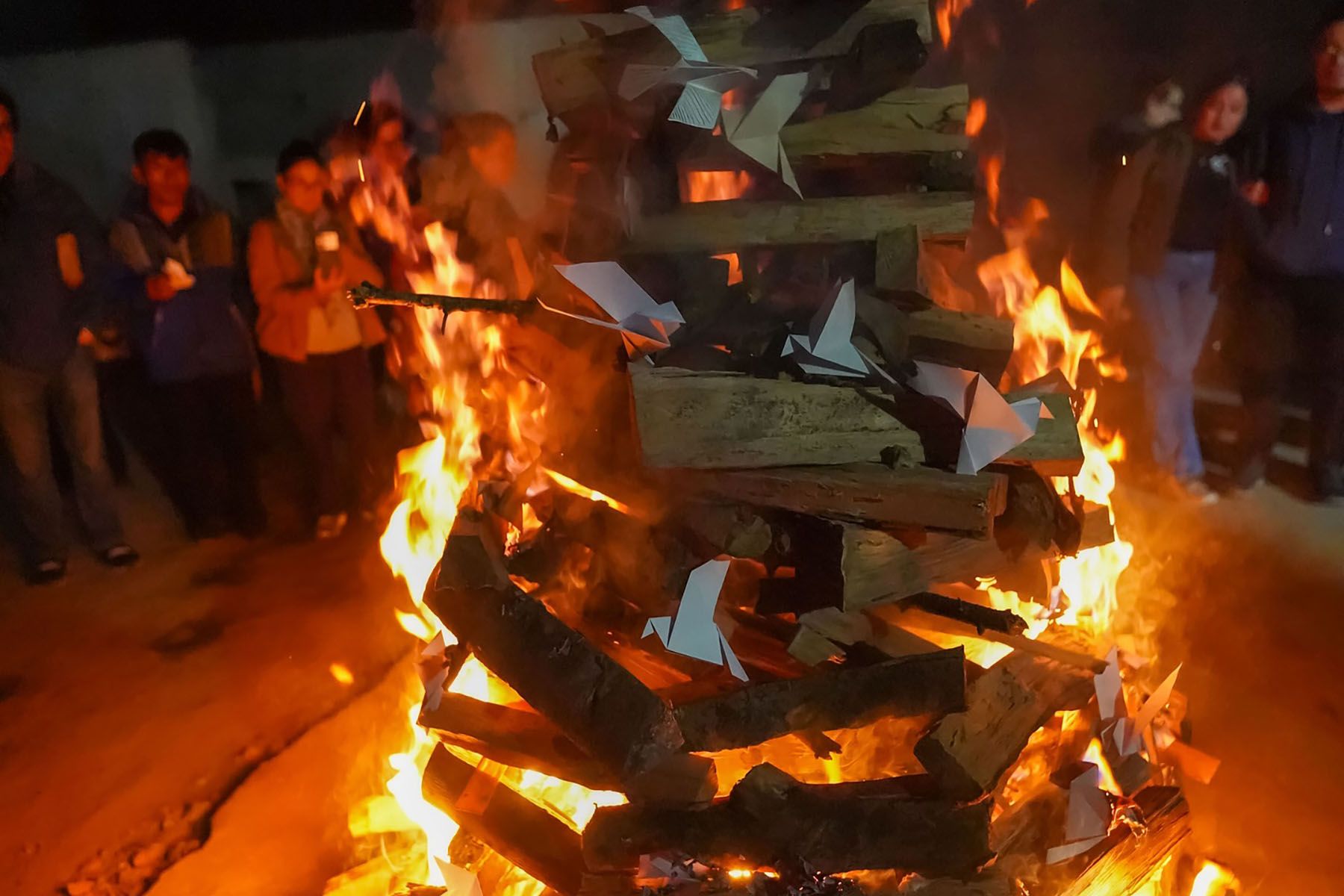
Accountability to the people and the connection between art and community are indispensable to the work at the Intercultural Park’s Memory Museum. Alienation, trauma and estrangement are just some of the consequences of war, which often result in society’s silence on the subject because of fear. “The idea is to be able to forge those connections to work directly with people in order to build trust and community,” says Branly Lopez. “Because collectivity can be achieved through discussion, by exploring ideas and making suggestions; but community can only be built based on trust between artists, between people.”
The Memory Museum is a project located in the Park comprised of 10 exhibits spanning an area of 30,000 square meters. Each exhibit is a space where different actions are carried out to commemorate the disappeared. “On October 25, 2025, we built a memorial for a person who had disappeared, whose family approached us about working together on a joint initiative,” Branly explains. “This is not your typical museum where objects or installations are merely on view. This is a living museum: one that people inhabit through their stories and experiences.”
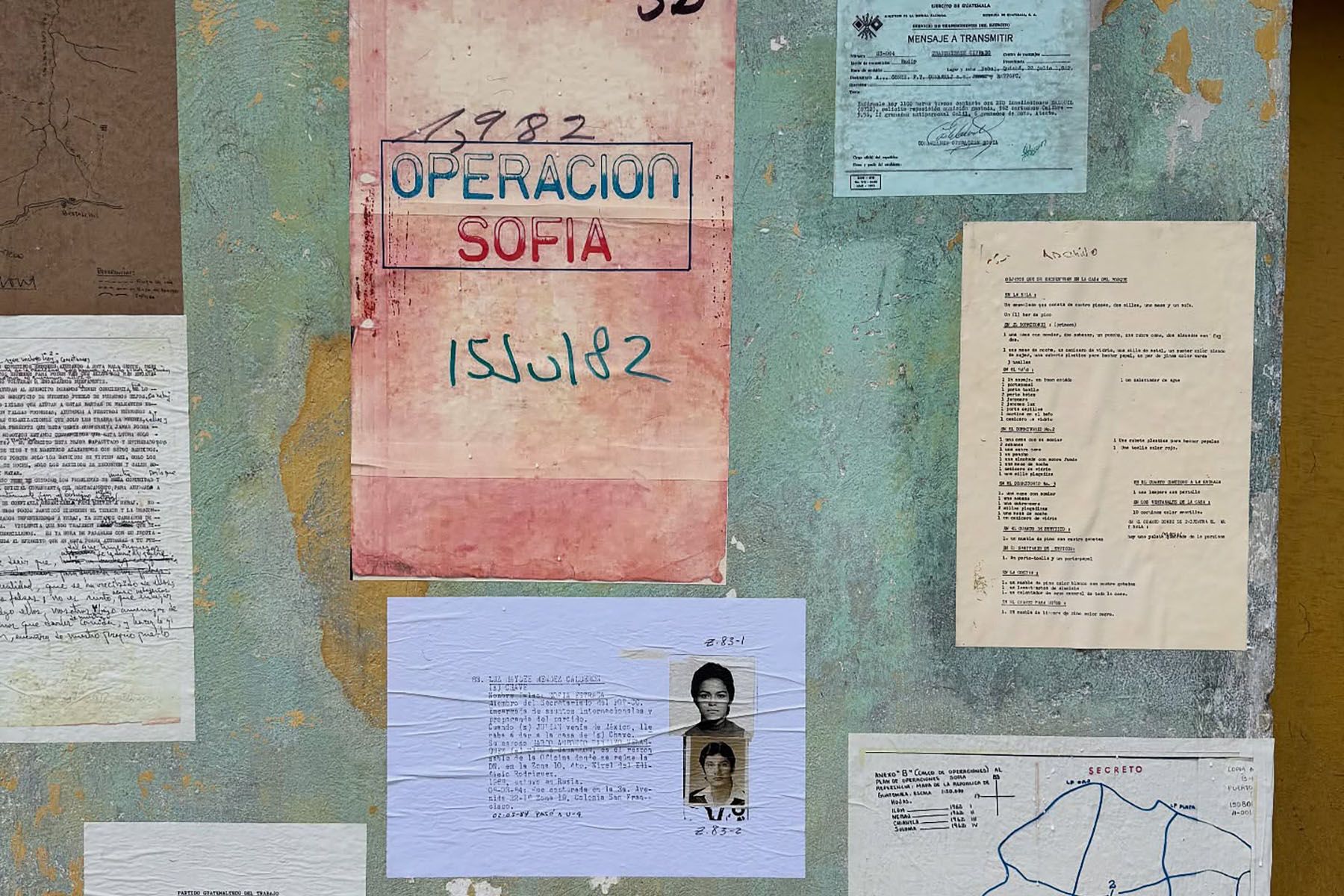
A pesar de las Balas (Despite the Bullets). Wallpaper made of copies of military plans from the war. Photo: Courtesy
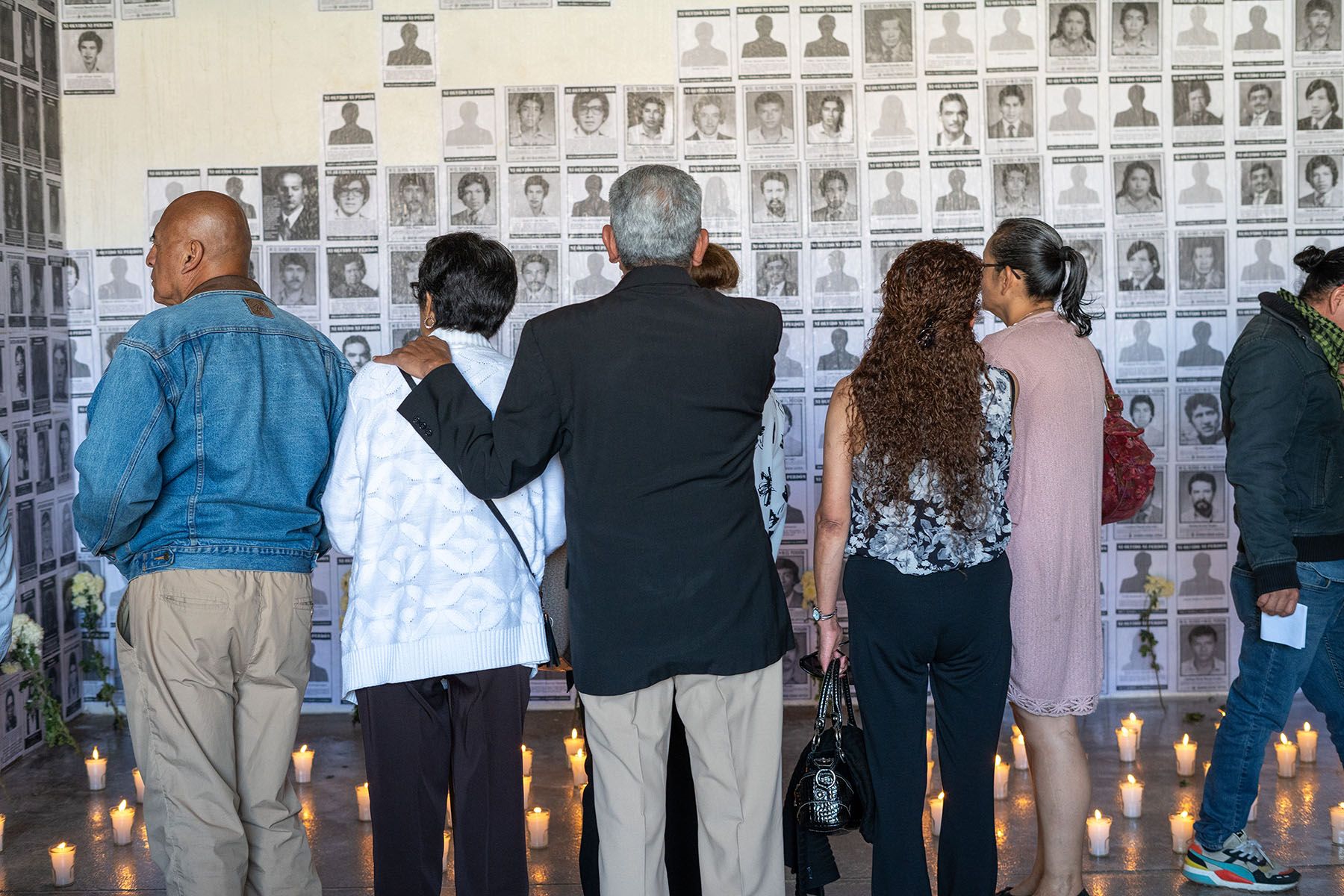
Relatives of victims. Photo: Juan Esteban Calderón
Guatemala and Its Connection to Global Systems of Exploitation
The museum also integrates personal stories into national and international contexts. The sastrería, el enemigo interno (The Tailor Shop: The Internal Enemy), is the most recent exhibit, featuring a timeline, documentary information, copies of military plans and details on how the Guatemalan State acted against its own population. The exhibit also draws attention to the fact that the armed conflict arose following decades of repression, inequality, exploitation, pillaging, discrimination and racism in the country, perpetrated by its numerous dictatorships supported by the United States and its allies under the pretext of eliminating communist insurgency. “As part of the museum tour, we also mention the genocide in Gaza, perpetrated by Israel,” Pablo explains. “The used bullet shell casings found on site and now on display at the Museum are Israeli-made. It is well-known that Israel sold weapons to Guatemala during its armed conflict and trained Guatemalan military forces. Guatemala’s military reserves continue to use the Galil, which is a 5.56 caliber Israeli rifle. The tactics currently being employed by Israel in Gaza are also very similar—if not a carbon copy—of those that were used in Guatemala.”
The international context of Guatemala’s history—and how its struggles are connected to global systems of oppression and resistance—is something that features prominently in the Park’s programming through its collaborative solidarity projects. It has undertaken collaborative projects with groups from Colombia, Mexico, with, the Office of the United Nations High Commissioner for Human Rights in Guatemala (OACNUDH/OHCHR), with the Spanish Cultural Center and with Germany’s Agiamondo. And in 2024, it hosted the Biennial of Resistance, a contemporary art event that featured more than 104 artists and collectives from across Latin America.
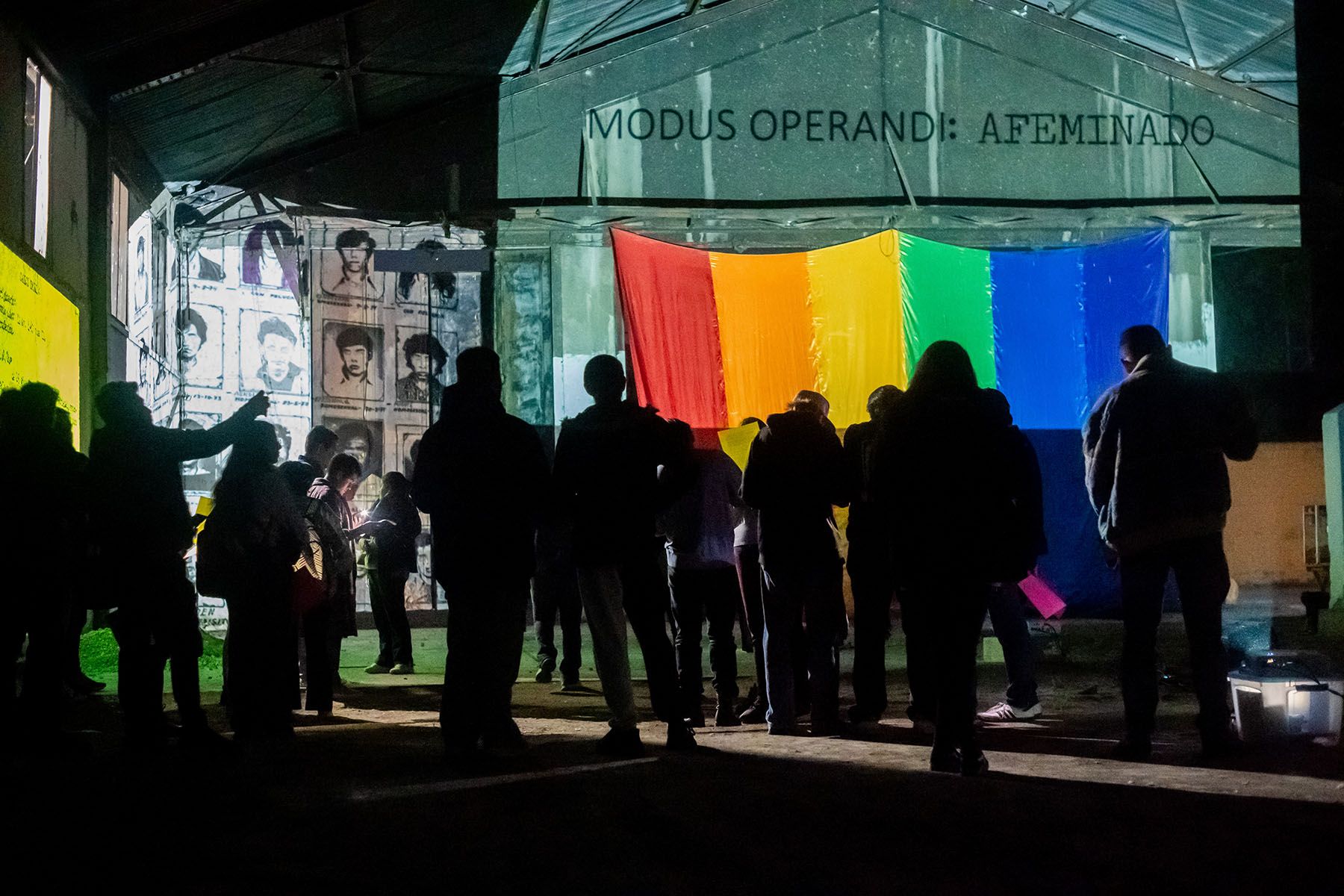
LGBT collective. Photo: Juan Esteban Calderón
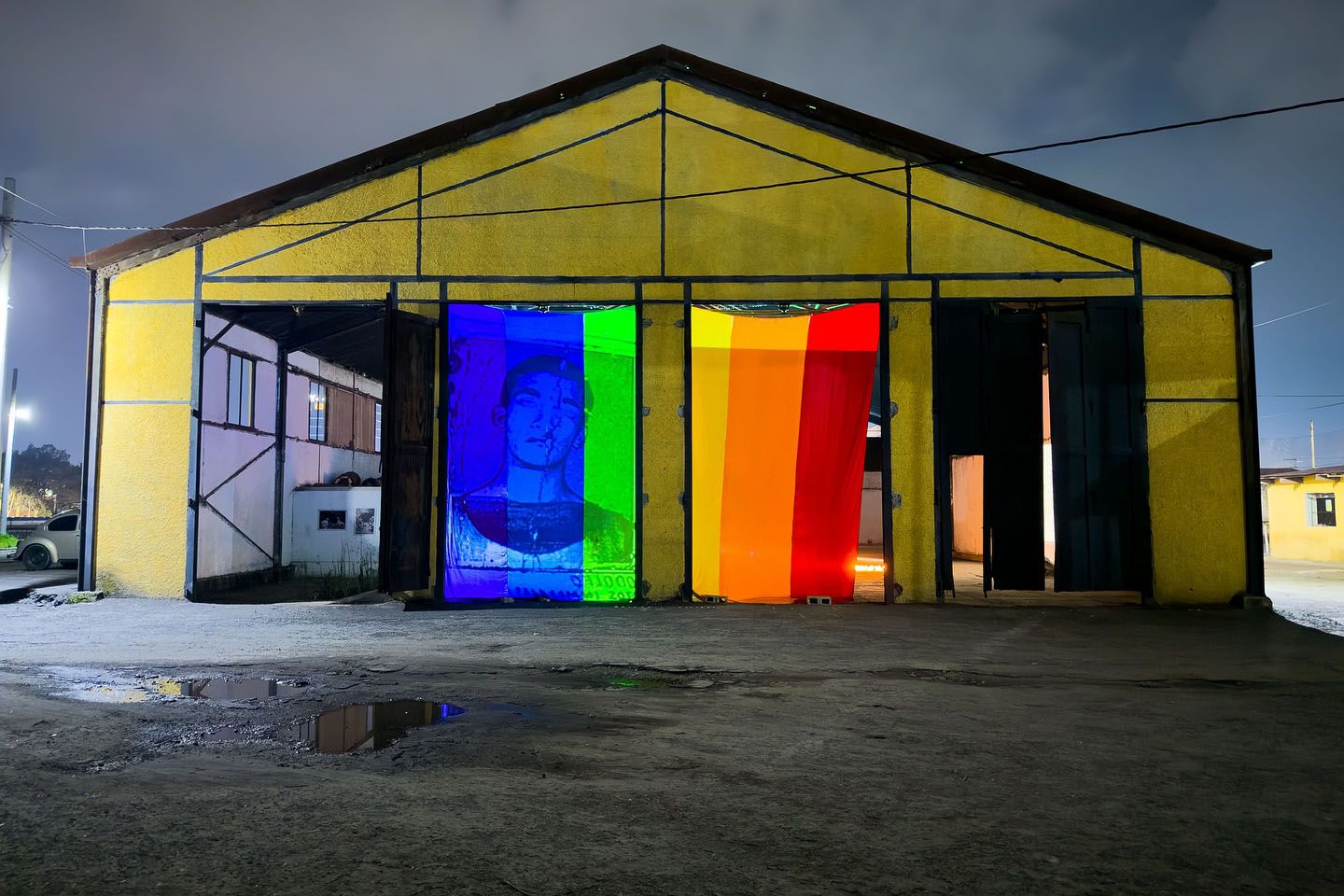
View of the installation Memoria Disidente (Dissident Memory). Photo: Courtesy
Resistance and the Future
Resistance at the Intercultural Park is not merely a theme or a historical matter. In addition to hosting an exhibition on the persecution of protesters calling for gender and sexual orientation rights during the Conflict, they also organize LGBTQI+ pride marches and provide a safe space where activists can make contemporary memories of life and fulfillment.
However, despite all they do—or perhaps precisely because of what they do—they are often under siege by a group of businesspeople who want to repossess the facilities and who have, ironically, attempted to intimidate them with military support. “In response, we engaged in a collective action. We formed a human chain, embracing the space,” Branly says. “And then we hung a massive banner that read ‘MEMORY.’” The action attracted a lot of protesters who decided to tell their stories as well, engaging in their own actions of remembrance. It was an enormous demonstration of the power of art to raise awareness and encourage conversation. Many people in Guatemala still do not know the whereabouts of their disappeared family members; and therefore, for them, the Park provides a space to light candles, display photographs and remember their deceased loved ones—because they are unable to do so in a cemetery.
The Memory Museum in the Intercultural Park of Quetzaltenango is the only museum in the world that transforms the architectural vestiges of state violence into a place where art, memory and community generate new inclusive worlds of peace and healing. Serving its community in theory and practice, the Intercultural Park honors its past with a resolute gaze toward the future.
For more information visit: parqueintercultural.com
About the author
Will Furtado
Will Furtado is the Editor-in-Chief of C&AL.
A Journey into the Inaugural Museum of Belizean Art
The Indigenous Sci-fi Love Story about the Climate Crisis and the Power of Language: Itu Ninu
Chavis Mármol: Thinking Manually in the Age of Artificial Intelligence
The Power of Fabulation in the Black Cinema of Zózimo Bulbul
Archivo Honduras Cuir: The Art of Trans Life and Friendship in Central America