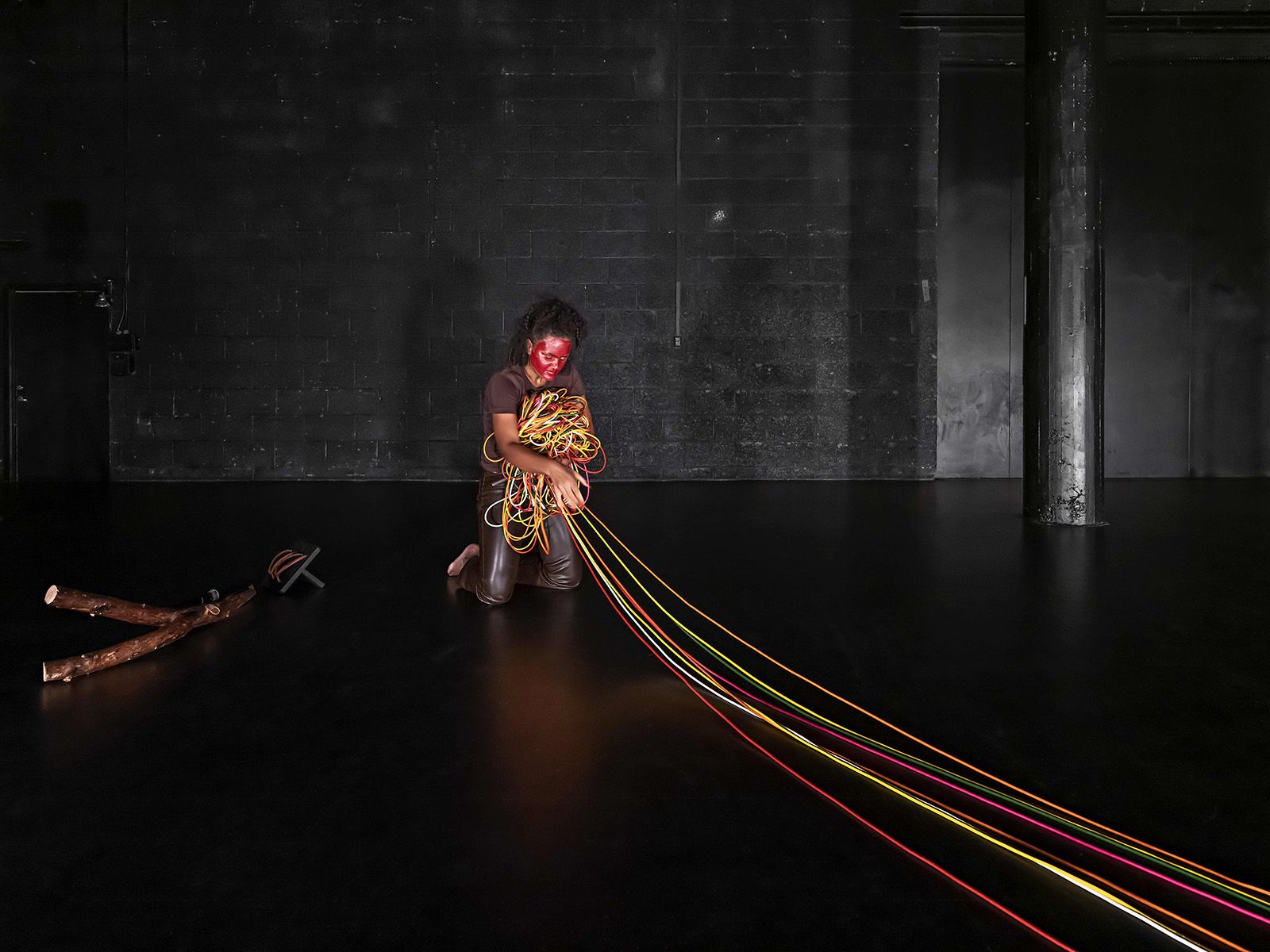
Representing the Desires of the Community in the Work of Jeff Cán Xicay
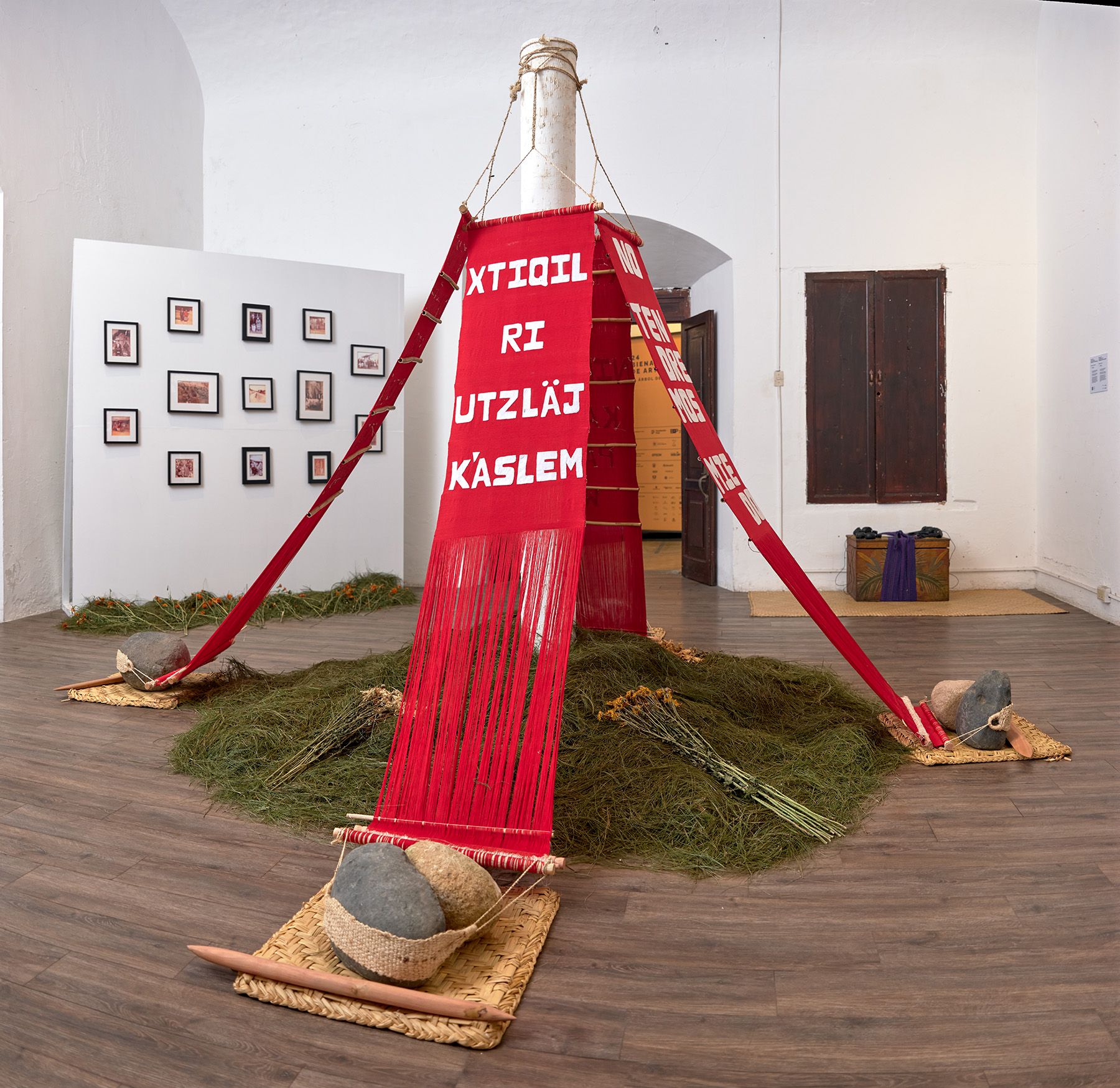
Jeff Cán in collaboration with the Kaqjay Community Association, Installation view of Ri qa rayb'äl / Los deseos nuestros (Our Desires) at the National Museum of Art of Guatemala (MUNAG), 2025. Courtesy of Fundación Paiz / 24th Paiz Art Biennial. Photo: Byron Mármol.
Jeff Cán Xicay is a Mayan Kaqchikel weaver. At the 24th Paiz Art Biennial in Guatemala, Jeff presented his piece Ri Qa Ray’bäl (Our Desires), an installation he made with Kaqjay, a Kaqchikel community association. The work brings together photographs from the local archive, conversations with the town’s grandmothers, weaving, stones and elements connected to the home and to ceremonial space.
This exchange took place during a visit to Patzicía in Chimaltenango, Guatemala, and was a sustained conversation. I chose the interview format so that Jeff could talk about the responsibility of bringing a community process to an institutional space, about the land and about the desire that runs through his work.
C& América Latina: When you found out that you would be participating in the Biennial, your first thought was Patzicía. What did it mean to show the piece in that context?
Jeff Cán Xicay: The first word that comes to mind is responsibility. My work was born in Patzicía. I make a point of telling people what I do because they know me: they know that I am the guy who weaves and plays the marimba or the drum in processions. They see that I am doing things and that there’s a response in other places and people.
They also look at me differently. They are the most difficult audience. There’s a certain sarcasm about us being equals and thinking that what I am telling them about the town may be made up, that I am exaggerating or I’m a showoff. For example, in my piece Muxux (2025), which references the tradition of burying our umbilical cord at birth. It’s a normal everyday practice. They don’t see it as romantic or artistic, and they laugh. But yes, they can come to understand it. I remember one of the leaders of the brotherhood telling me he “understood everything” and he started explaining to me how the k’an was positioned in that piece. That was one interpretation here in Patzicía.
When I arrived at the Biennial, I thought of Carlos Nicolas Choc, who is also from Patzicía and who participated in a previous edition of the Biennial. I thought a lot about the institution. We like to go in and out of it. It’s like a game. His piece was called El niño del Santísimo (The Child of the Holy Sacrament). It gave me the idea of how to talk about the town and made me afraid of how to narrate it.
I’m going to lay down my sticks, my stones and my sash here.
Today, the Biennial involves an historical exercise that Carlos Nicolas was part of, and now I, Jeff, am part of it. There are two people who have been in this institutional and foreign space. I feel the responsibility to use the word correctly. I didn’t want people in the town saying: “We don’t understand, but other people probably will.” I wanted to bring everything here. To stand up and say: “We are here.” It is bold.
I always say I’m setting up camp. I think of the Memorial de Sololá, the handwritten chronicle that tells the history and mythology of the Kaqchikel people, which says: “They laid down their shields and bows in these valleys and mountains.” Those first people settled here as explorers and migrants who were getting to know the world. In my piece, Ri Qa Ray’bäl (Our Desires), I say: “I’m going to lay down my sticks, my stones and my sash here.”
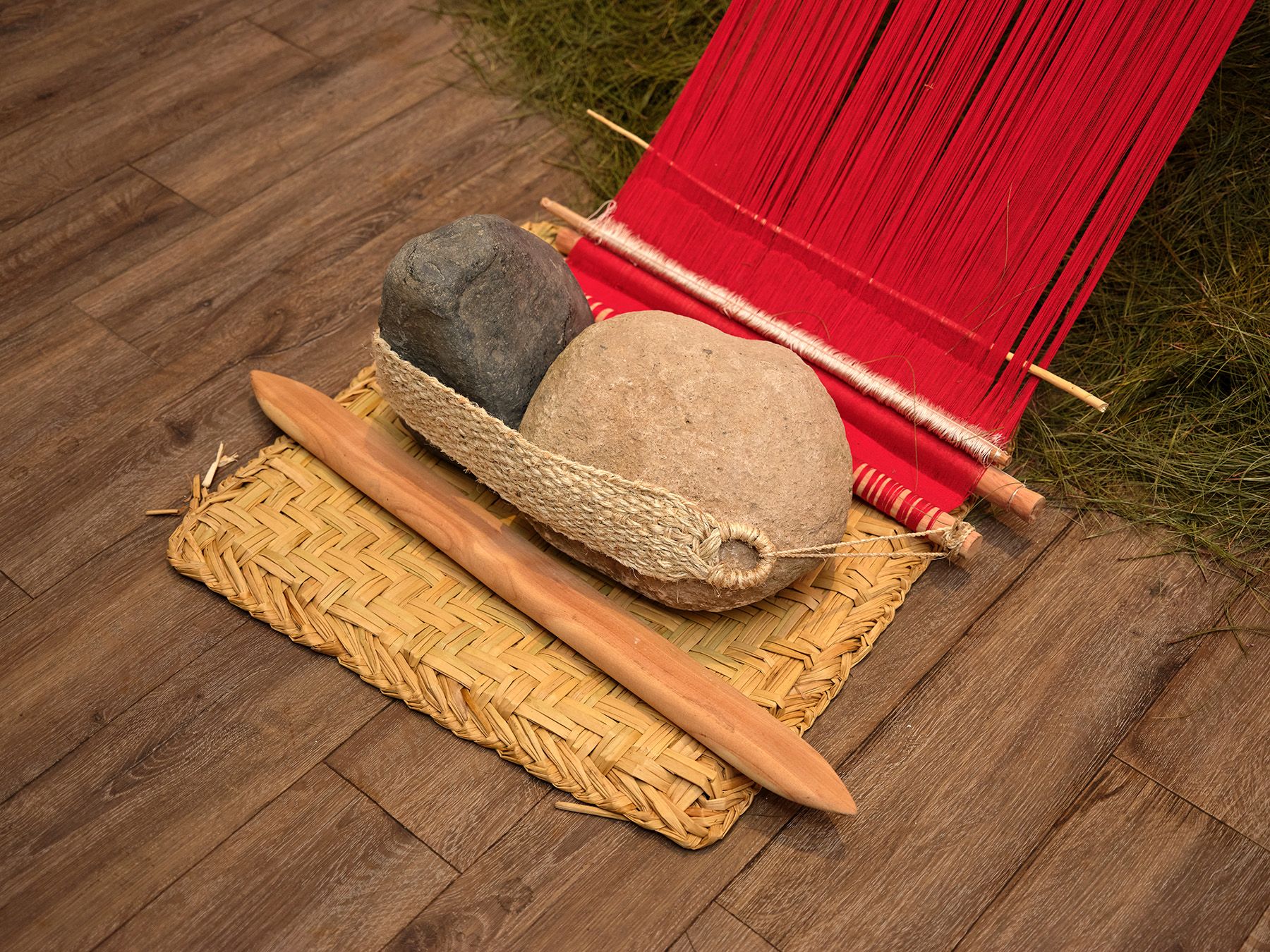
Jeff Cán in collaboration with the Kaqjay Community Association, Installation view of Ri qa rayb'äl / Los deseos nuestros (Our Desires) at the National Museum of Art of Guatemala (MUNAG), 2025. Courtesy of Fundación Paiz / 24th Paiz Art Biennial. Photo: Byron Mármol.
C&AL: You’ve said that these desires are intended for “the people who are going to come later.” What place does the future hold in the way the present is lived and thought about in Patzicía?
JCX: A friend of mine wrote me saying that the work is set up like a mokan—a living space for a sacred object—destined for the energy of collective desire. The main idea is that the people of Patzicía can have desires and think of themselves in terms of future time. We indigenous people also think about our future, just like anyone else does. That is political.
When you go into people’s homes and are able to live in them, you realize that they not only have the right, but they also claim the right to inhabit their desires and their future. One grandmother, Nana Juana, told me: “I’m going to leave soon, but this is for those who come after me.” They are the ones who are going to inherit the town.
C&AL: You include photographs from the Kaqjay archive taken by photographers from the town. What did working with those images mean to you?
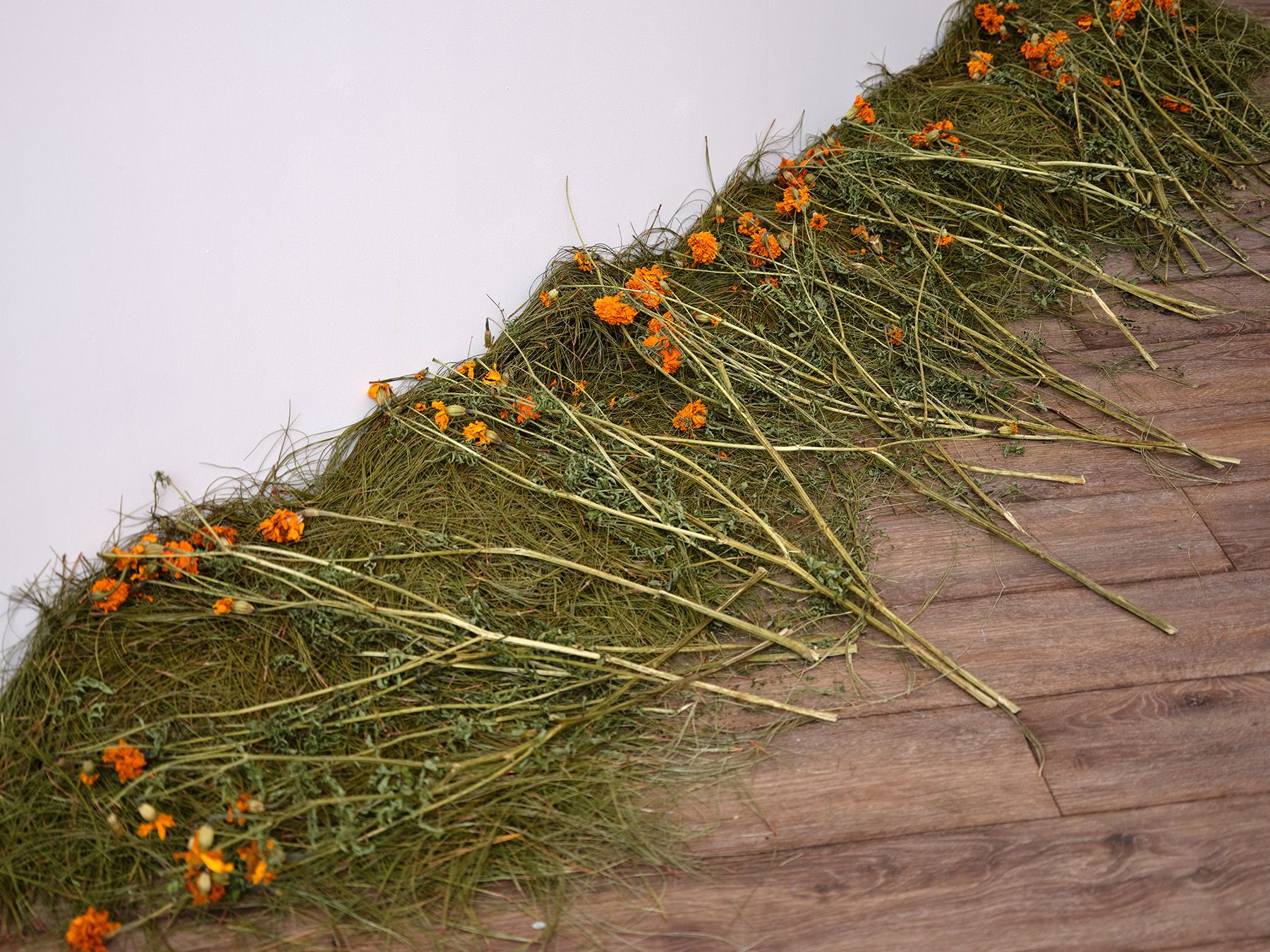
JCX: I curated the photographs with a friend, Edi Tocón. Many of the photos were taken in people’s yards. They called the photographer because they wanted to document their lives for posterity. They gathered their family or partner, and they even put on new clothes. All of those images conjure up people’s memories and allow them to see themselves in the installation. For the Day of the Dead, I gave them flowers and food. Now that it’s almost tapizca, the day we harvest the corn, I am going to bring an offering for that as well.
There were photos that we chose not to include because they could result in another interpretation of indigenous people. A grandmother with her corn, or, I don’t know, a photo of the town festival. We are the ones photographing ourselves, seeing ourselves and remembering ourselves. It makes me think of a phrase we say a lot, Ojk’o Wawe’, which means “We are here”. We are the people of Patzicía.
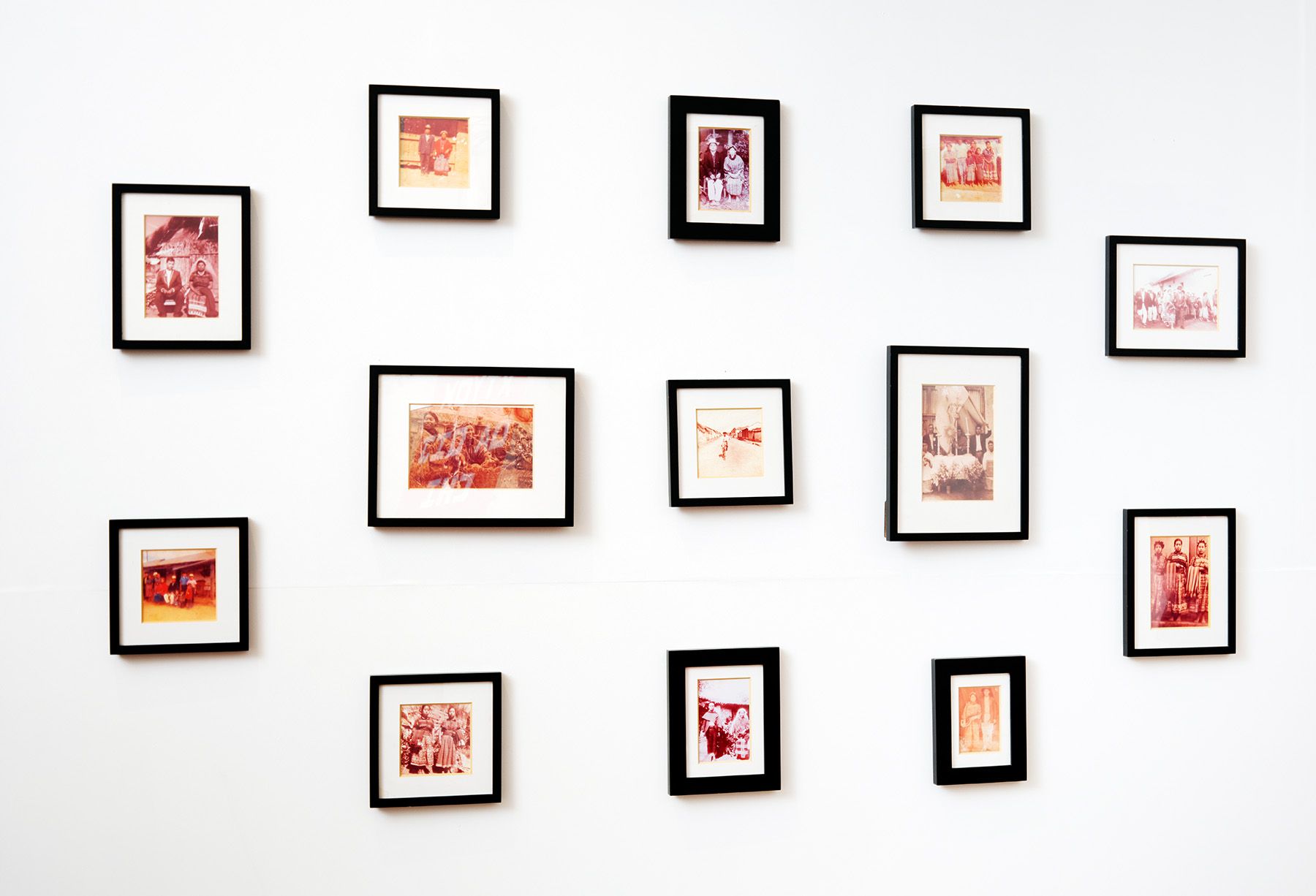
Jeff Cán in collaboration with the Kaqjay Community Association, Installation view of Ri qa rayb'äl / Los deseos nuestros (Our Desires) at the National Museum of Art of Guatemala (MUNAG), 2025. Courtesy of Fundación Paiz / 24th Paiz Art Biennial. Photo: Byron Mármol.
C&AL: You mentioned the phrase “sticks and stones”. What does that mean to you?
JCX: When my mother finished an embroidery project that had taken her months, she used to say to me: “chuwa’ che’, chuwa’ ab’äj”, which means “I’m finished, it’s over, sticks and stones”. For something that was painful, took time, was a struggle. This year was full of learning, pain and difficulty. Here, weaving is hard work. You can’t make a living from art. You do it because that’s your desire. What we delivered at the Biennial was strenuous.
The 24th Paiz Art Biennial El Árbol del Mundo (The Tree of the World) was on view in Guatemala from November 6, 2025 to February 15, 2026.
About the author
Jimena Galán Dary
Jimena Galán Dary (1997) is a Guatemalan feminist curator and cultural manager. Her work brings together art, memory and collective processes from knowledge and practice located on land. She is co-founder of La Revuelta, a feminist collective from which combines artistic and educational processes with women and dissent, and develops accessible archives linked to community memory.
Cyle Warner and the Transformations of Vernacular Caribbean Architectures Across Time
Confronting the Absence of Latin America in Conversations on African Diasporic Art
I Am Monumental: The Power of African Roots
Jesús Hilário-Reyes: Dissolving Notions of Group and Individual
Biophillick: Connecting Ancestries Through Technology