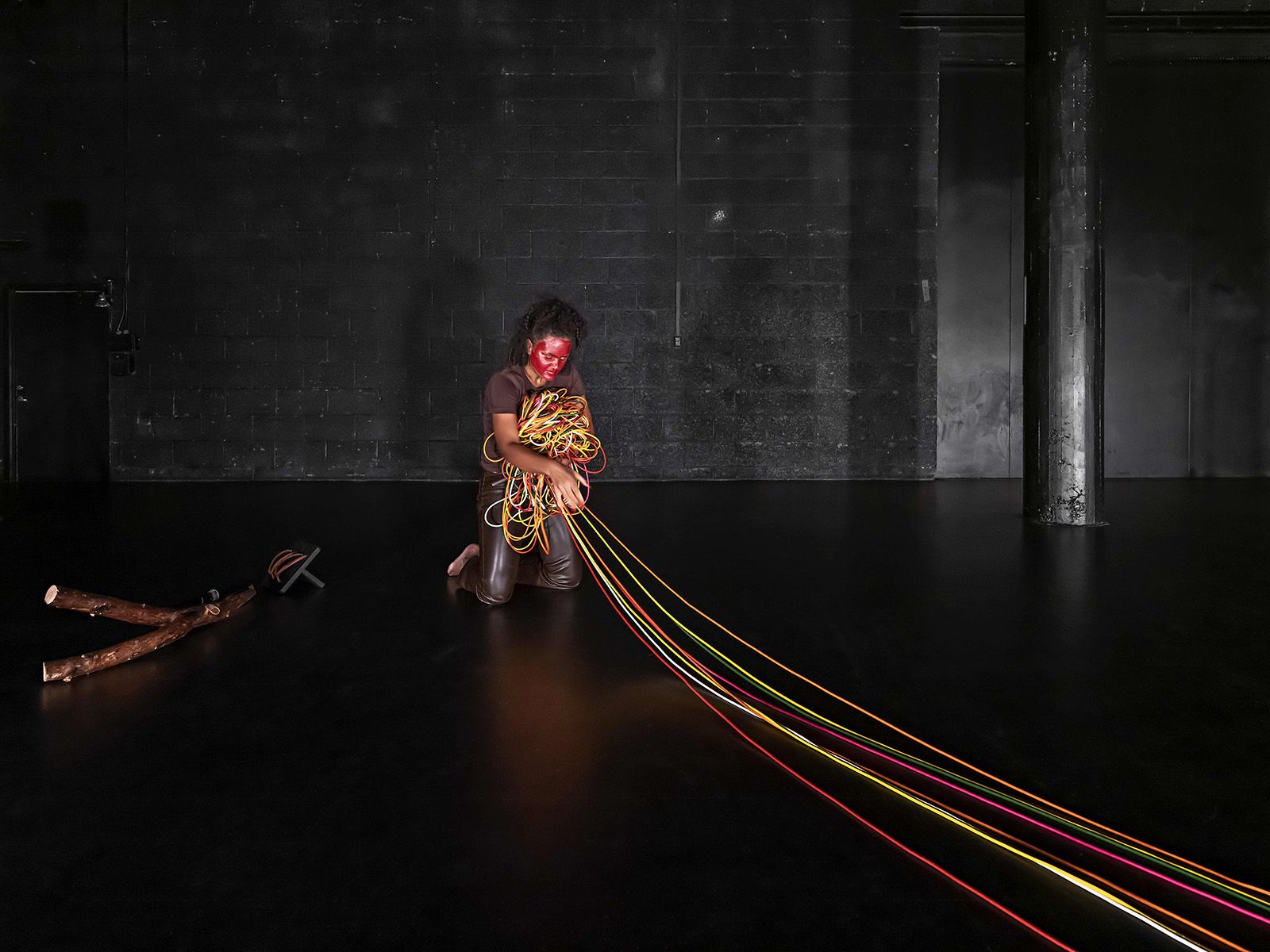
Cyle Warner and the Transformations of Vernacular Caribbean Architectures Across Time
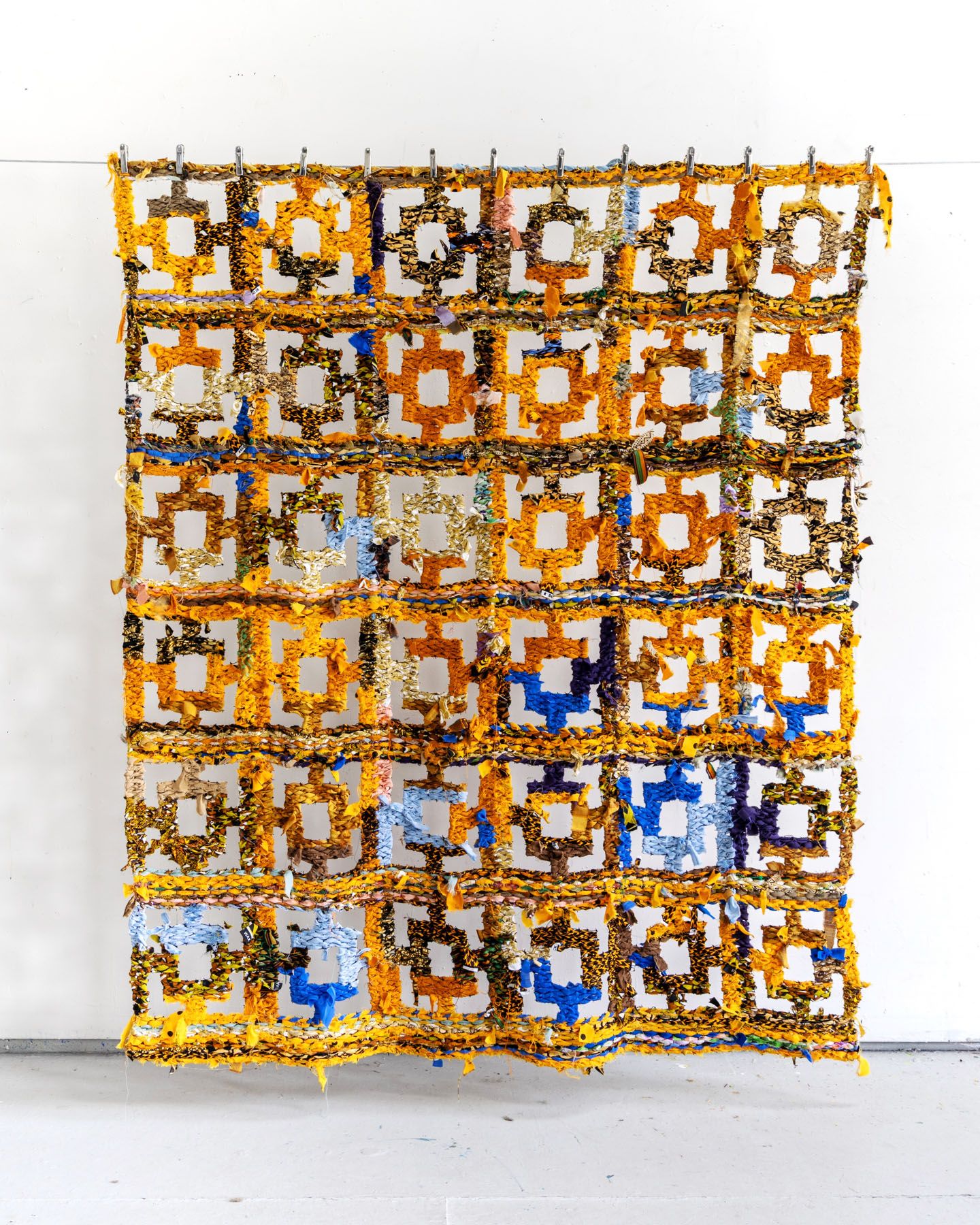
Cyle Warner, An approach; on continuity, 2025. Heirloom fabric in nylon netting, stainless steel, 76 x 66 x 2 in. Courtesy of the artist.
Cyle Warner's practice explores circulation as a process of reorganization through material, memory, and space. Using inherited fabrics from the women in his family and breeze block forms, he draws on Anni Albers, Hélio Oiticica, and bell hooks, to ask how vernacular Caribbean architecture indexes diasporic spatial politics, survival, and transformation across time.
C& América Latina: When we began talking about your work, I brought up the idea of circulation in relation to movement, memory, and material exchange. What does this idea suggest to you?
Cyle Warner: The idea of circulation resonates, especially as something that does not dissipate but reorganizes itself through time, gesture, and material. The work is not just interested in movement, but in how movement is held, redirected, and made legible through spatial systems.
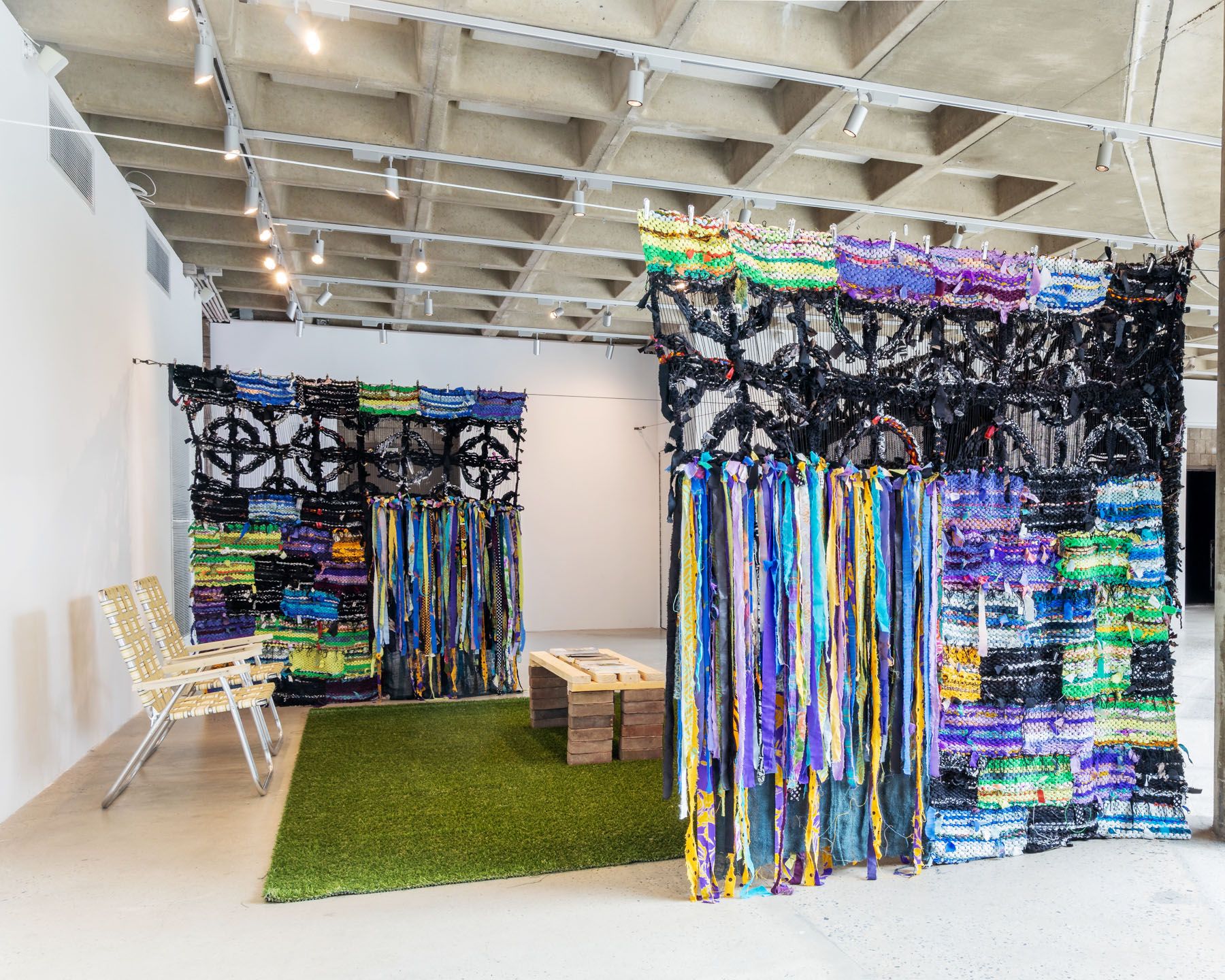
Cyle Warner, Installation View of My Yard, 2025. Courtesy of the artist.
C&AL: Your architectural language feels less concerned with permanence than with negotiation through structures that remain flexible and permeable. I’m thinking particularly about the breeze block forms.
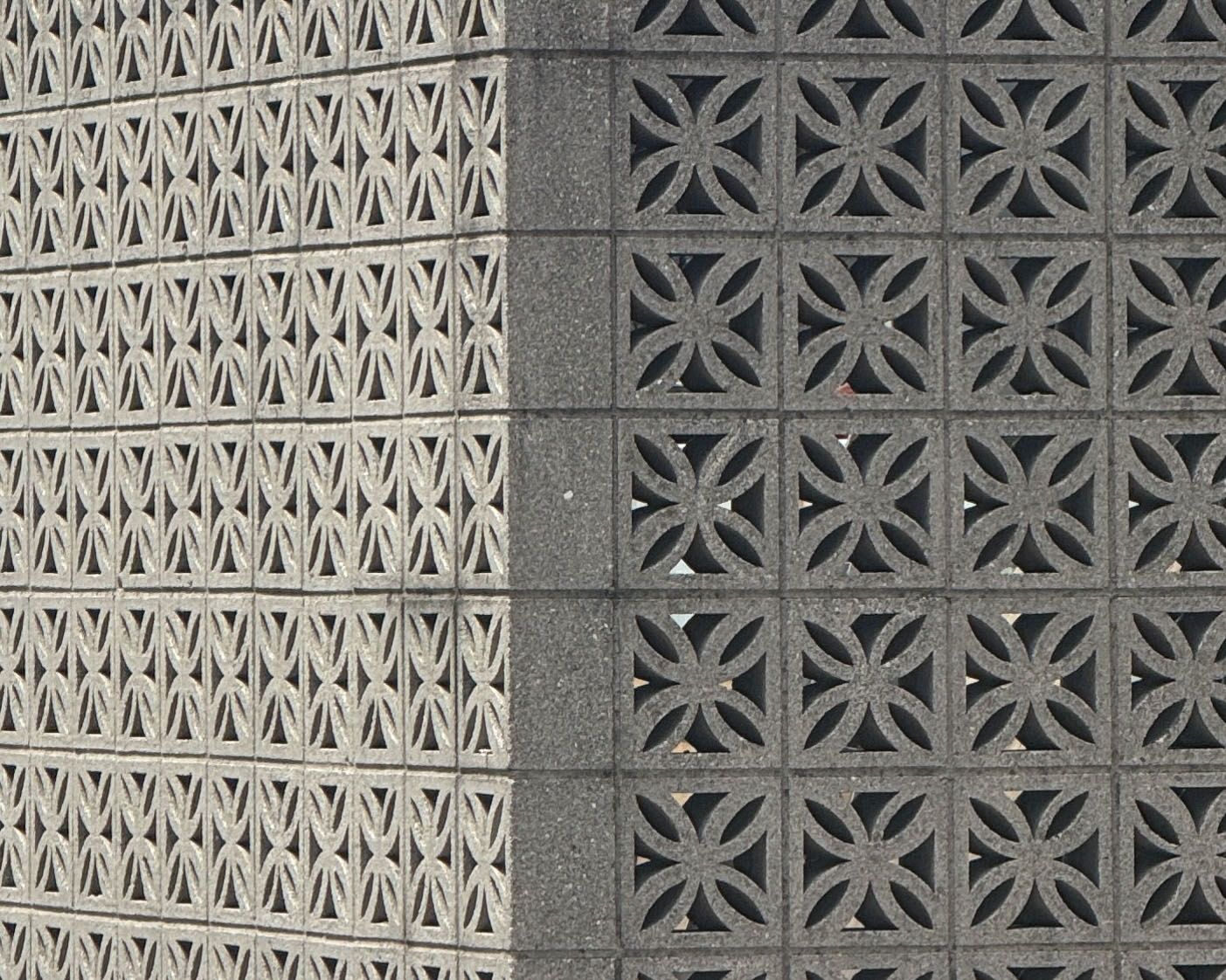
CW: The breeze block sets conditions rather than determines outcomes. It changes how light and air move through a space, how bodies position themselves, and how materials behave when woven through its openings. I think often about a wall outside Port Zante in St. Kitts overtaken by vegetation: a structure mid-decay that still holds and organizes space as it changes form. Ultimately, the framing of the work’s language as negotiation feels right to me.
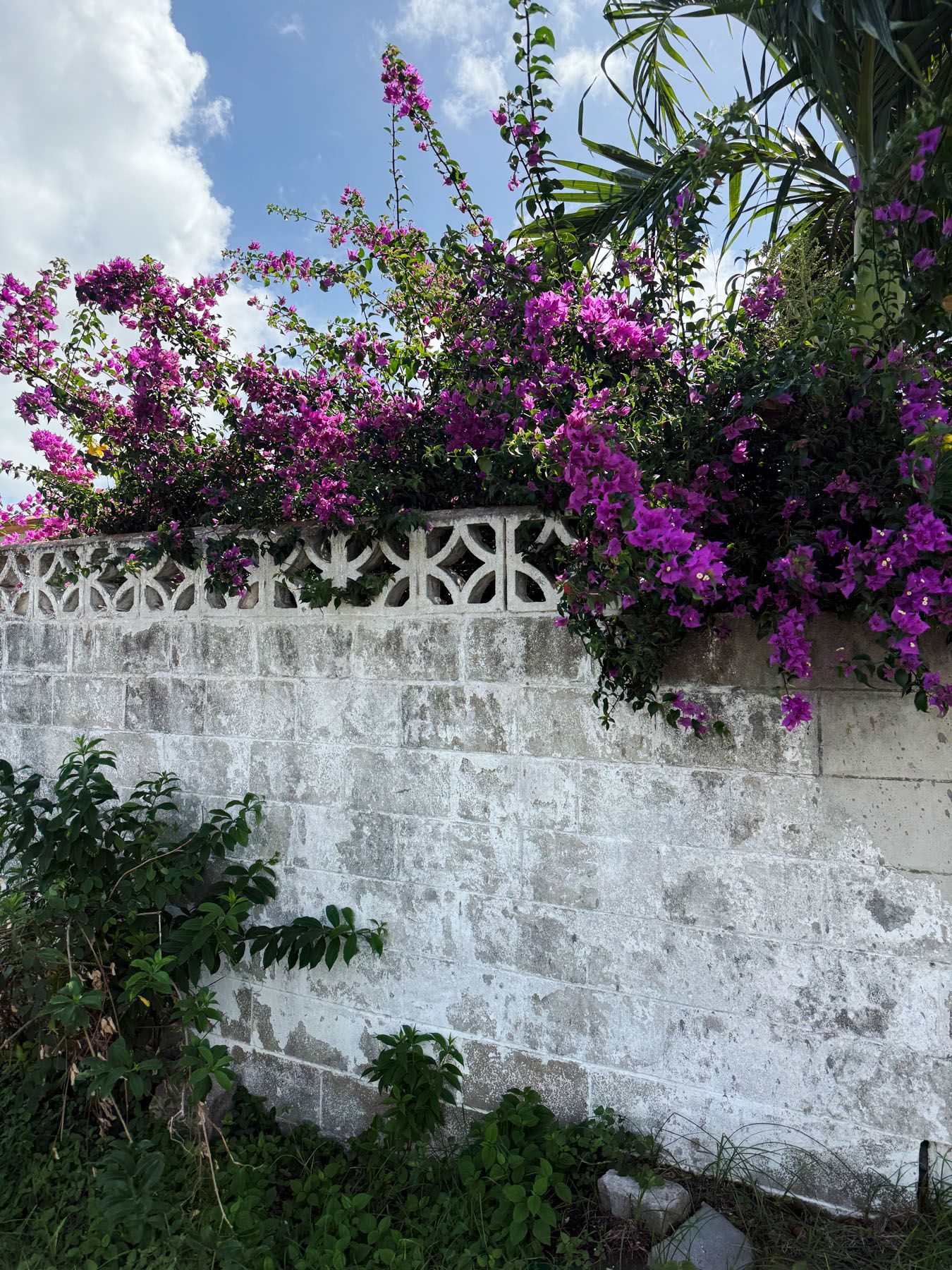
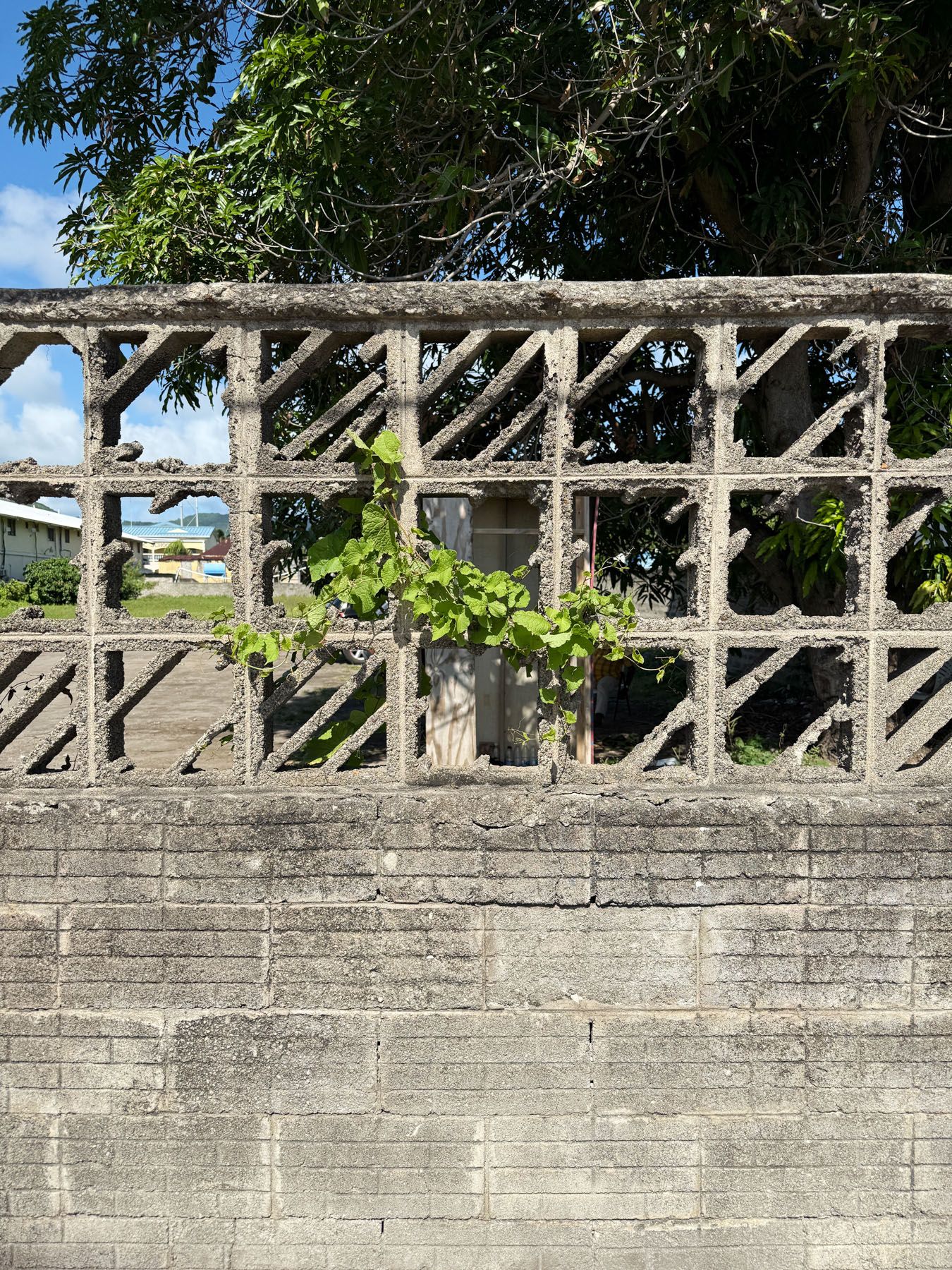
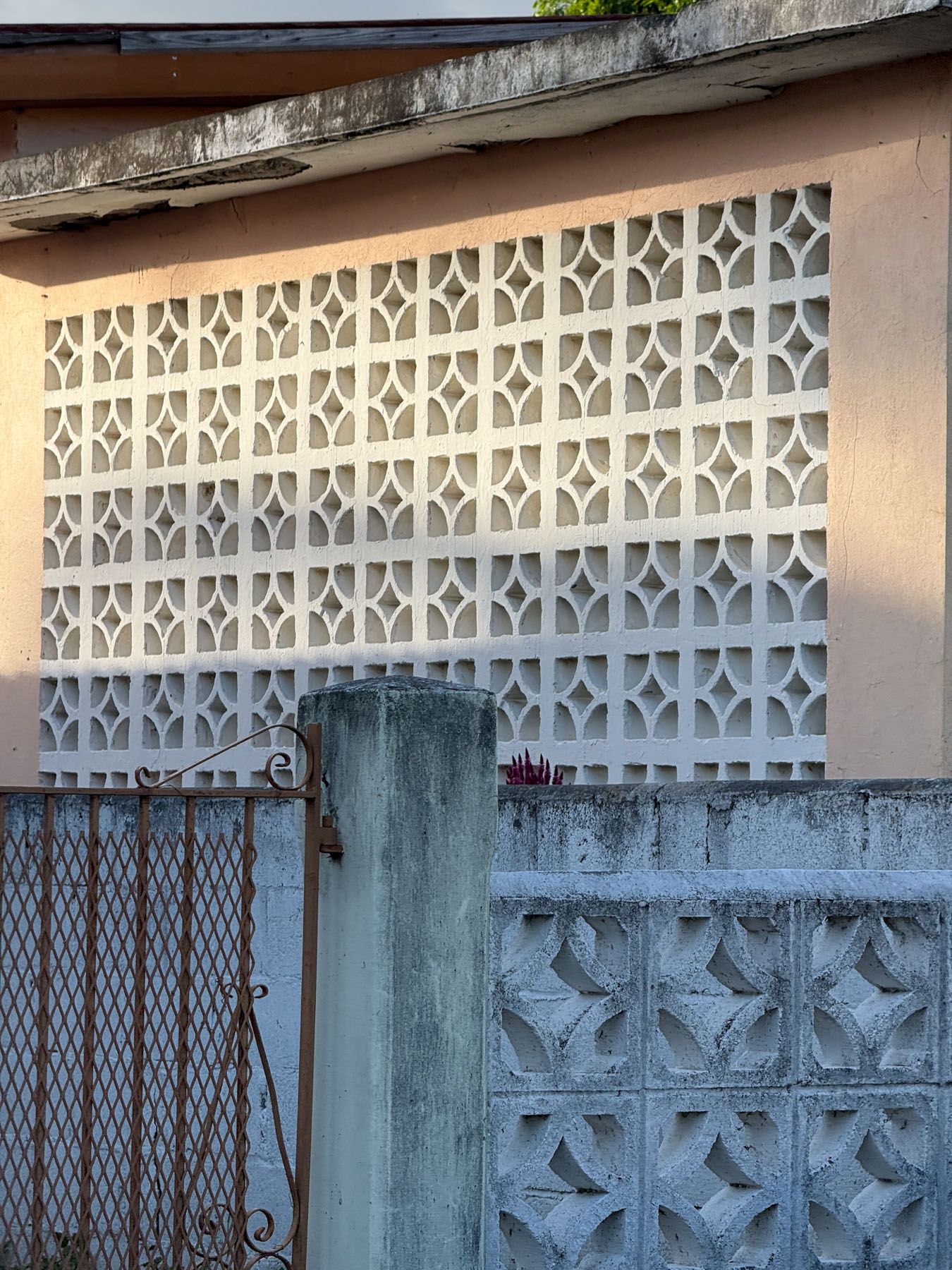
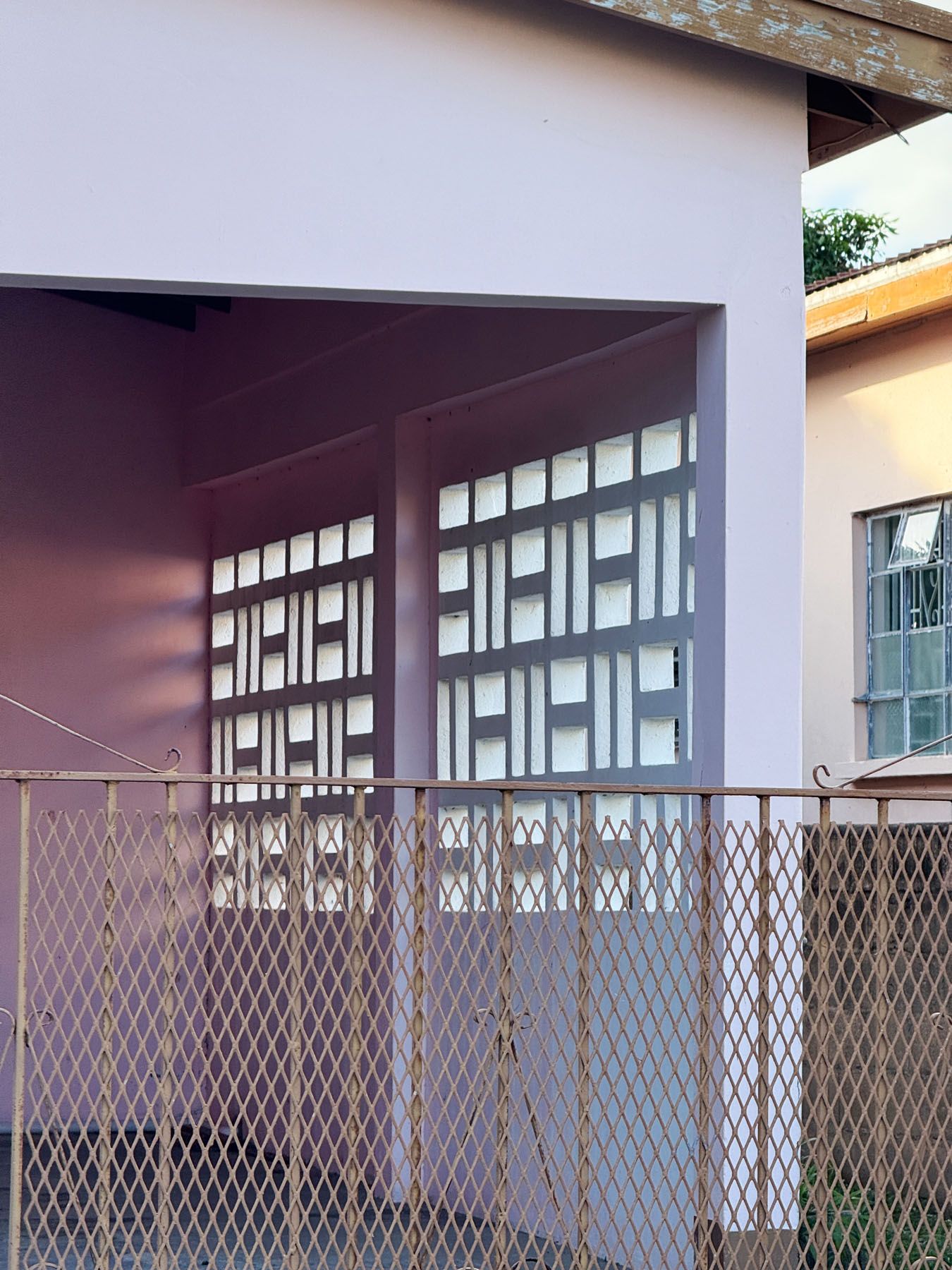
C&AL: What I find compelling in your relationship to inherited materials is that the gesture is less about preservation than reorientation, allowing materials to exceed their original intention while still carrying continuity.
CW: I am less interested in the archive as a site of preservation than as a circulation of memory accessed through use, touch, and repeated organization of space. Most materials in my practice come from fabrics acquired by my grandmother and mother for projects that were never completed. When I engage with them, I am not trying to fulfill their original intention but to reorient it. Where fabric was meant to be sewn, I strip and weave it instead. I think about this as shared authorship between myself, the women who gathered these materials, and the materials themselves. Their touch sets the conditions for a continuity that allows something new to emerge from that foundation.
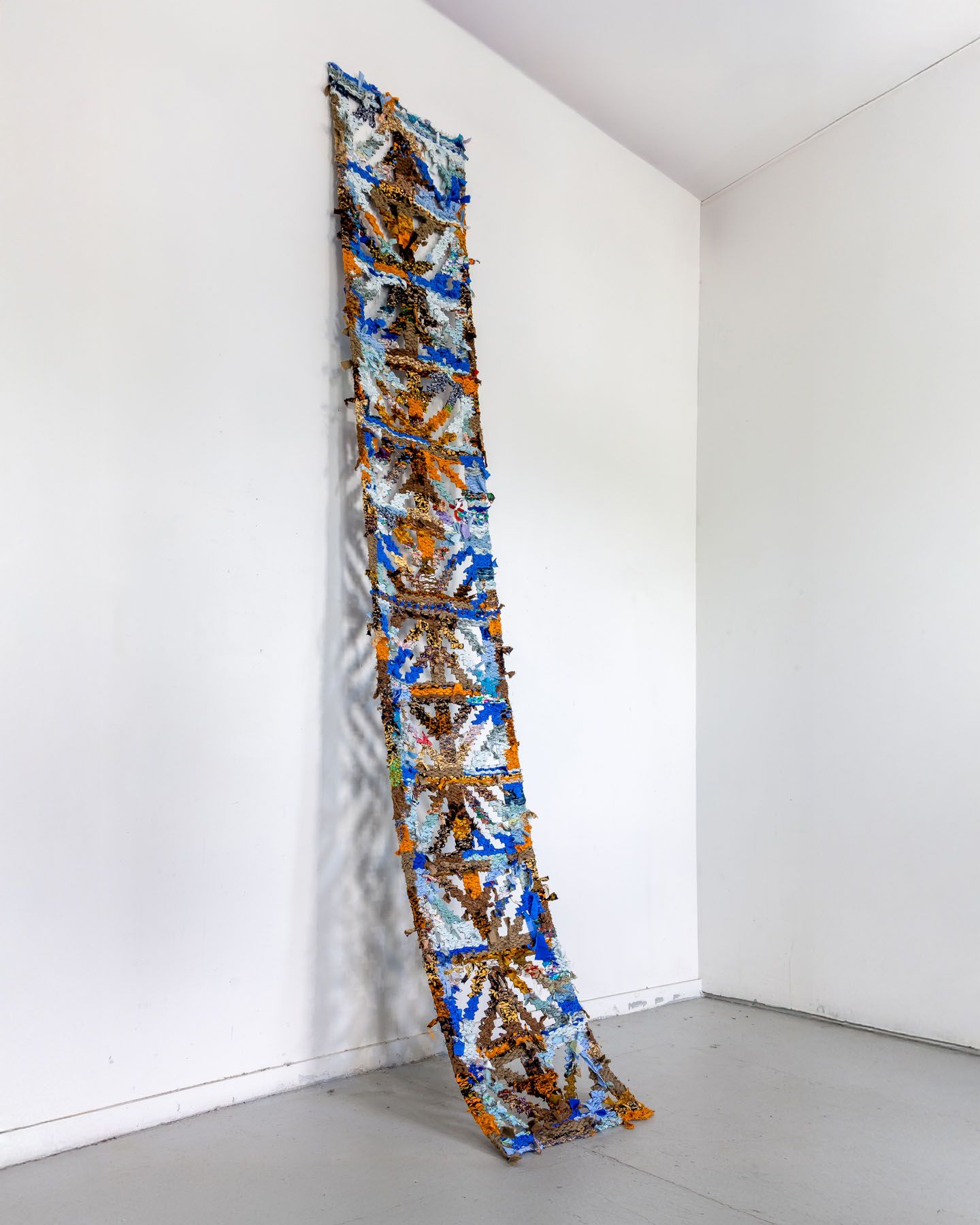
Cyle Warner, Shatter Me Upon The Waterfall’s Edge, 2025. Heirloom fabric in nylon netting, 144 x 26 x 36 in. Courtesy of the artist.
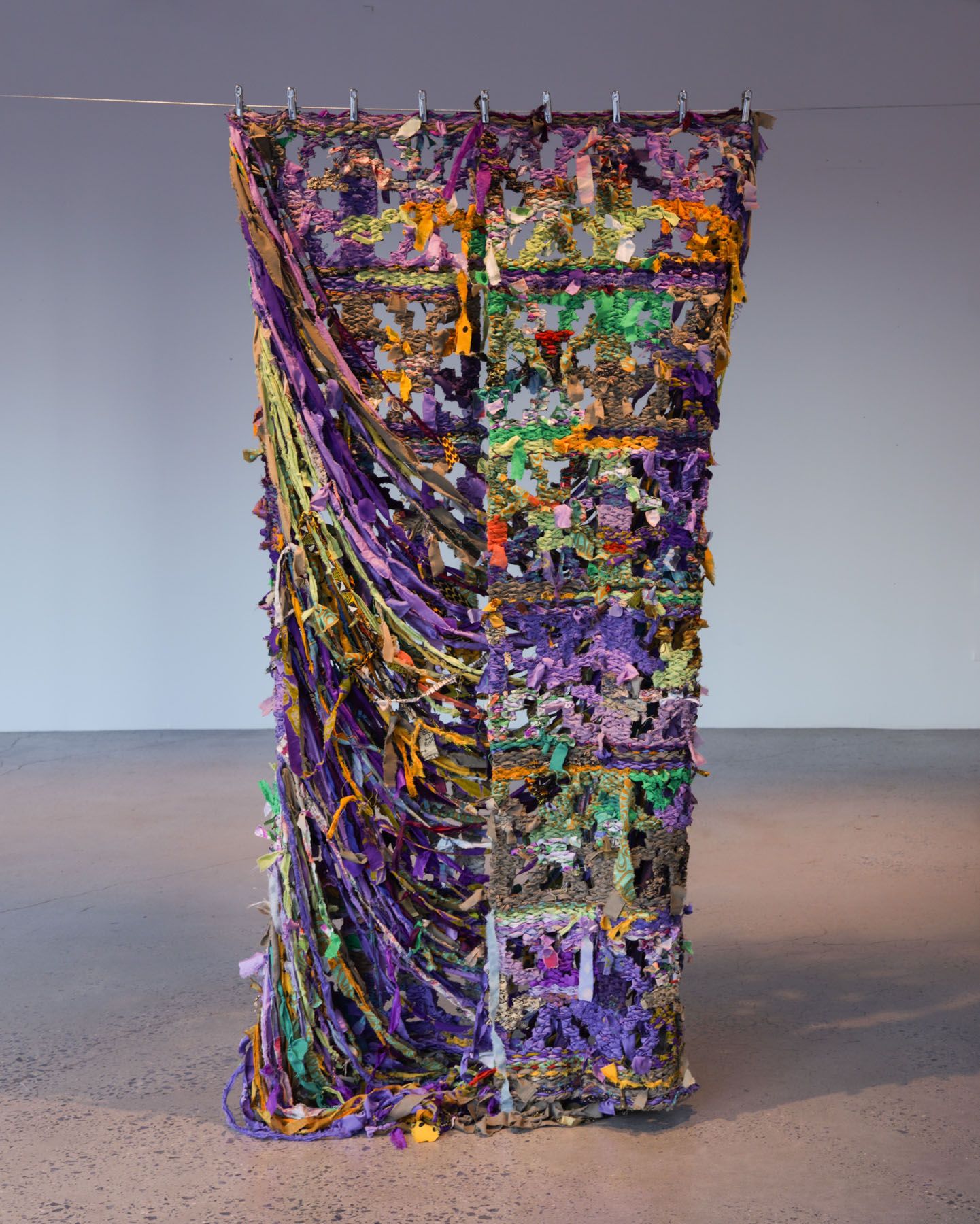
Cyle Warner, Slip Zone, 2026. Heirloom fabric in nylon netting, 84 x 44 x 2 in. Courtesy of the artist.
C&AL: Looking at your practice today, what conversations or urgencies do you feel it is entering, both for yourself and within the wider art dialogue?
CW: The questions guiding the work right now are shaped in part by returning to Anni Albers’ writing on the pliable plane, Hélio Oiticica’s description of his Metaesquema works as an obsessive dissection of space, and bell hooks’ essay Black Vernacular: Architecture as Cultural Practice. I find myself asking how vernacular architectural motifs can operate as tools for spatial indexing, where form is not simply referential but actively organizes relationships between bodies, movement, and memory. Another question that continues to surface is how architecture can be understood as something people do rather than something that is fixed. In that sense, I am interested in how vernacular architecture provides evidence of Caribbean diasporic communities' engagement with the politics of space, and how strategies of adaptation, survival, and transformation become embedded in form. In terms of the broader dialogue, I feel the work is entering conversations about how we understand memory beyond fixed archives and how spatial practices can function as forms of record. I think this is where the reference to circulation becomes most present for me, not as a closed loop, but as an ongoing reconfiguration.
Cyle Warner is one of the artists featured in Forgotten Lands Vol. 7 Poetics of Architecture. The artist co-curated a group show at Welencora Gallery and participated in an end-of-cohort exhibition at Abrons Arts Center, both in New York, USA.
About the author
Sheila Ramirez
Sheila Ramirez dances and sings. She is a Cuban-Angolan artist and researcher whose artistic practice spans performance, video, sound, and installation. She has collaborated with cultural institutions in Portugal including MAC/CCB, Teatro do Bairro Alto, and Espaço Alkantara, as well as the NESR Art Foundation in Luanda, Angola. She is currently deepening her training in classical, modern dance and Cuban dance techniques. Sheila is part of the editorial team at C&AL.
Representing the Desires of the Community in the Work of Jeff Cán Xicay
Confronting the Absence of Latin America in Conversations on African Diasporic Art
I Am Monumental: The Power of African Roots
Jesús Hilário-Reyes: Dissolving Notions of Group and Individual
Biophillick: Connecting Ancestries Through Technology