Chavis Mármol: Thinking Manually in the Age of Artificial Intelligence
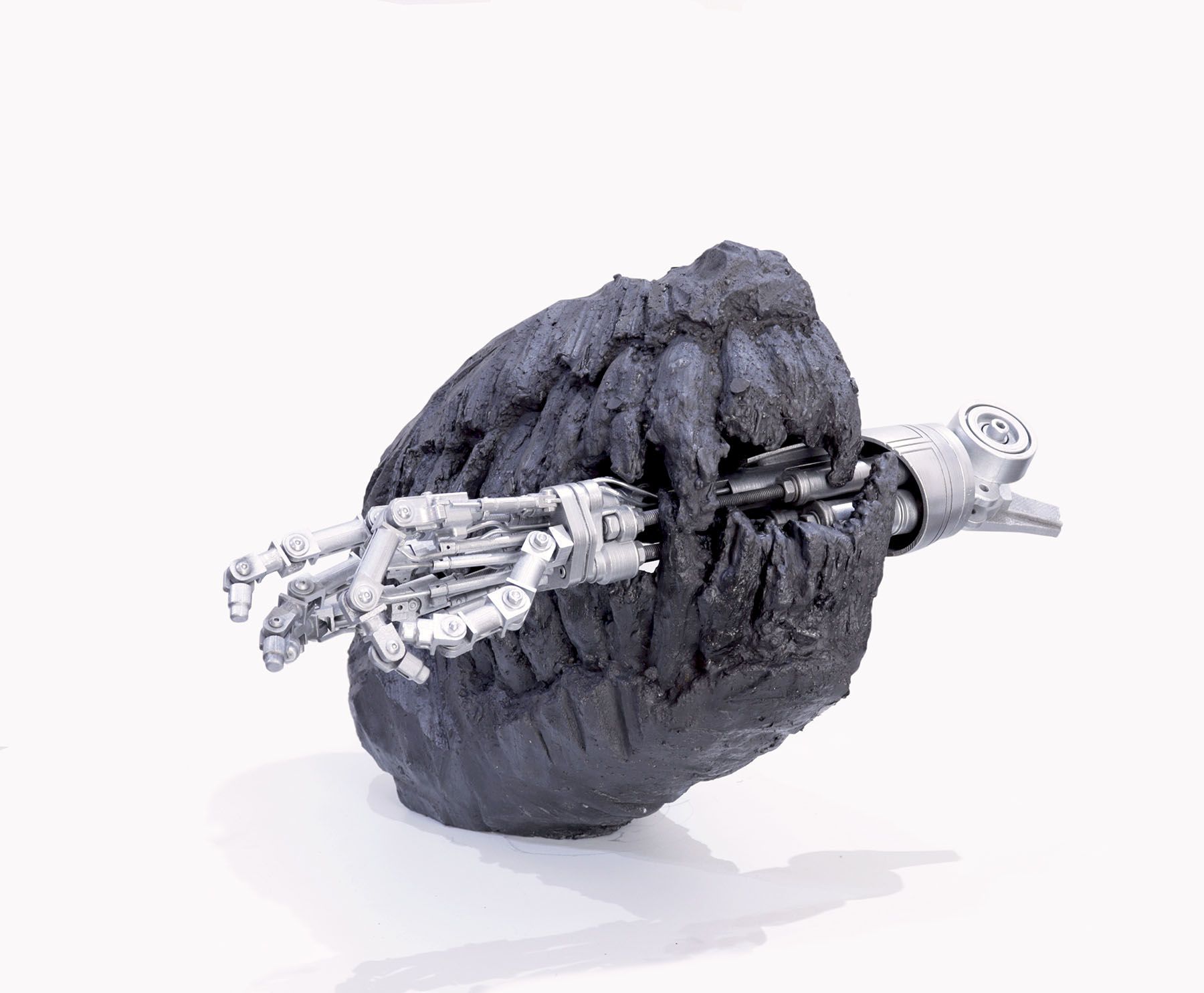
Chavis Mármol, STRUGGLE FOR EXISTENCE, 2024. Cast aluminum with micronized graphite surface finish, 38 cm x 58 cm x 33 cm. Courtesy of the artist.
Chavis Mármol is a Mexican artist who works entirely by hand in his workshop in Mexico City. Combining pre-Hispanic iconography with pop culture as well as humor, the artist’s work critiques imperialism and nationalism.
I met Chavis when I was renting a studio in San Rafael, a neighborhood in Mexico City. His workshop was next to mine. In the evenings, after the hustle and bustle of the day, when the shouting and the noise of machines and tools became quiet, we would sometimes run into each other in the backyard, and we would talk about art, the art market and the cultural scene in Mexico City.
It was within that context—his daily routine—that I was able to witness firsthand his committed work ethic. He seemed to take pleasure in creating rather than seeing it as an obligation. The name of his production workshop is Todo Woooow, and that’s where he and a small group of young workers, who seem more like his collaborators, produce pieces for renowned Mexican and international artists—or rather, artists embedded in a much more voracious and fast-paced market.

Chavis Mármol, Pearls Should Be Eternal, 2025. Cast aluminum, obsidian and micronized graphite. Courtesy of the artist.
Behind the viral international success of his piece of an Olmeca Head Crushing a Tesla lies a career built on years of sustained work by a laid-back guy who is passionate about the materials and tools he uses. “My work is 100% manual; it’s how I relate to the world,” Chavis tells me on a videocall. “If you grew up doing work more akin to manual labor, what you know how to do is mix plaster or cement or cut wood—because those are the jobs we tend to do in those areas where manual labor is required. My hands-on approach, sculptural processes and generally all of my work is developed based on a series of demands that I place on my creative output.”
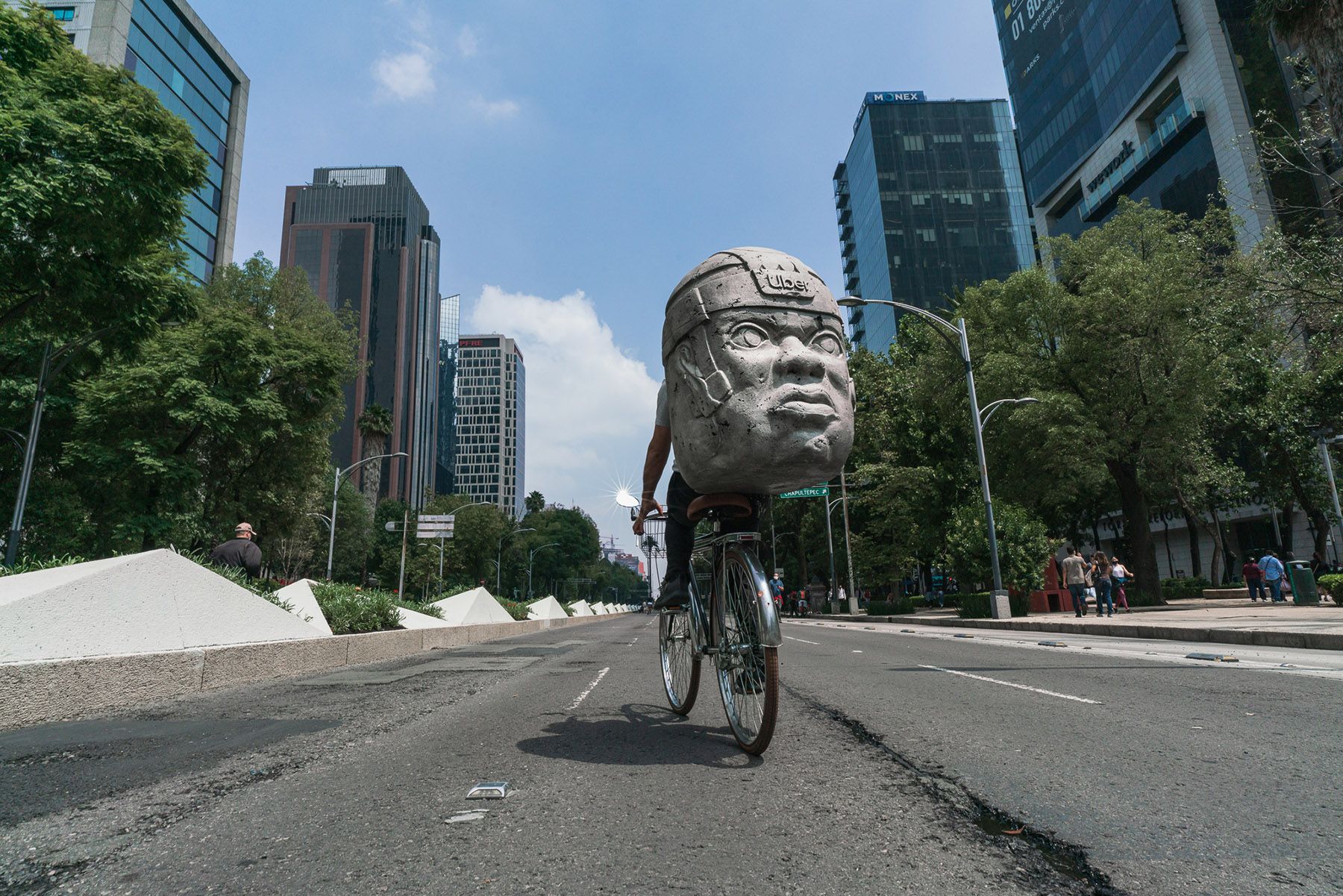
Chavis Mármol, Neo-Tameme, 2023. Fiberglass, volcanic dust, micronized marble, carbon steel bicycle, 17.3 x 15.7 in. Courtesy of the artist.
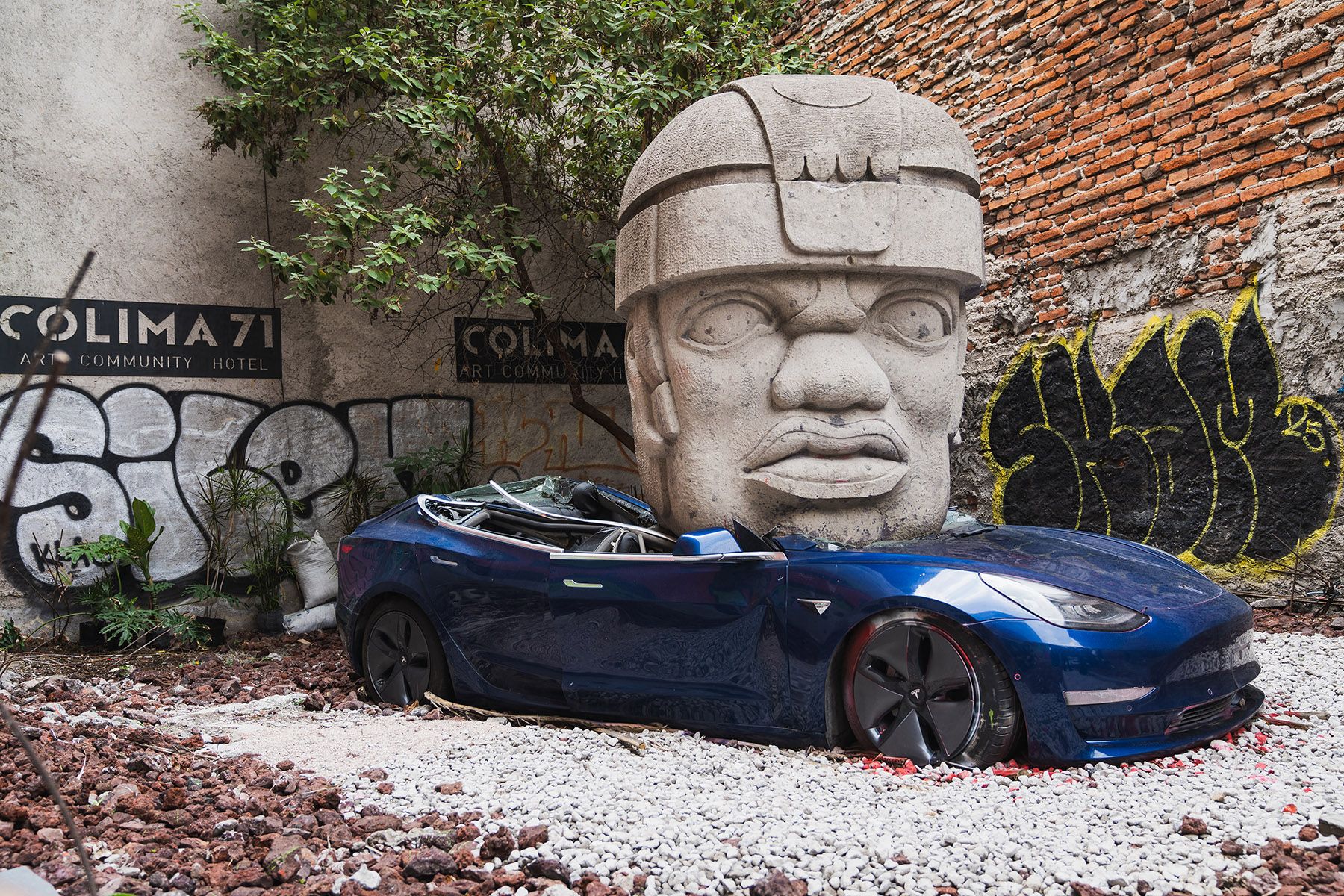
Chavis Mármol, Neo-Tameme, 2024. 9-ton quarry stone replica of an Olmec head on a blue Tesla Model 3. Courtesy of the artist.
Pop art based on the pre-Hispanic era
Neotameme, 2024 put Chavis on the map. The piece can be understood as an update of the work Still Life with Stone and Car, 2004, by North American artist Jimmie Durham. To produce his sculptures, Mármol, like Durham, employs humor to deconstruct, reassemble and juxtapose visual elements of popular culture with pre-Colombian Mesoamerican references that are widely recognizable in the Mexican context.
That managed to strike a nerve regarding the construction of the Mexican nation-state, which exploits pre-Hispanic identity to forge a foundational myth that fosters pride and a sense of belonging to the national territory. By combining those elements, the artist creates visual configurations that allow him to explore issues that are contemporary to the moment. For Mármol, cultural products are not innocent, since they alter the way in which we understand the world.
I draw on the pre-Hispanic past precisely to talk about Mexican pride, land and identity as well as to question the new worlds we are meeting through technology.
Growing up in the 1990s in Apan, a town in the state of Hidalgo, was pivotal in shaping that stance. Back then, the prevalent notion was that any cultural product of the Global Minority was superior to expressions of the Global Majority, such as cumbia or reggaeton. With the advent of the internet and the mass dissemination of digital images, that perception of supremacy is slowly eroding, giving way to a present in which any cultural product uploaded to the internet can be mass consumed on a global scale. Through what Chavis calls “attentive listening” to the cultural products he consumes, he manages to recognize images and elements in which he is interested in intervening, assembling and incorporating them into his sculptures. “As Mexicans, we are always seeking a kind of identity; we consistently look back on the past to be able understand our present,” Marmól explains. “I draw on the pre-Hispanic past precisely to talk about Mexican pride, land and identity as well as to question the new worlds we are meeting through technology.”
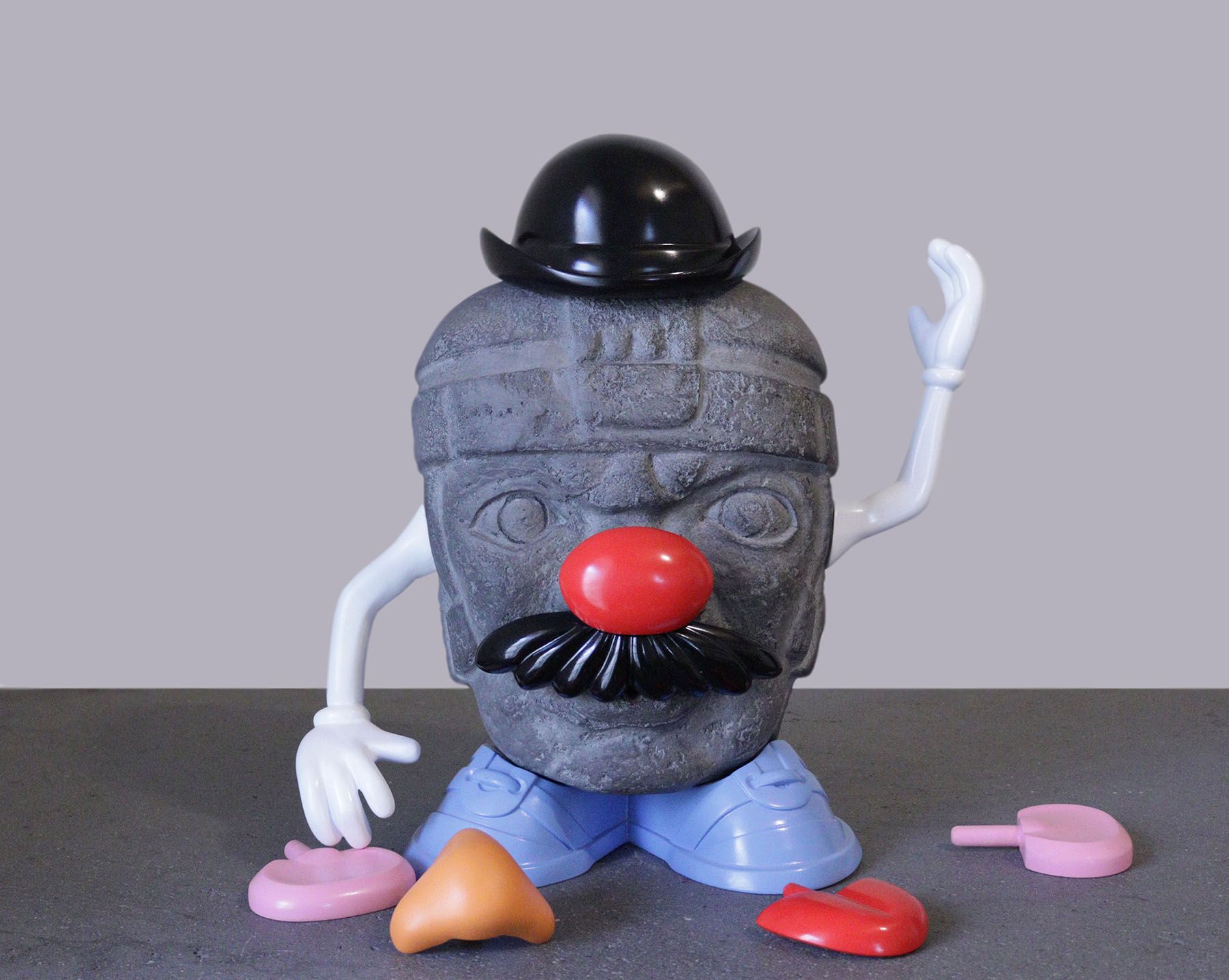
Chavis Mármol, Mr. Olmeca Head, 2023. Resin and volcanic stone. Courtesy of the artist.
Art and humor as cultural weapons against fascism
At a time when the hegemonic propaganda machine is selling a techno-dystopian future mediated by Artificial Intelligence, Chavis is building his work from a position of personal resistance, viewing art as a rebellious act against the frenzied political times we are experiencing.
The resurgence of nationalism and fascism along with U.S. diplomacy characterized by flexing its military might inspired his new series of works. In it, he uses art as a cultural weapon to counter the hegemonic narratives of subjugation and violence that the North is exerting on the South. To that end, he turns his gaze to the local. He recognizes the power of reciprocal relationships with the land, through which a distinct identity is cultivated.
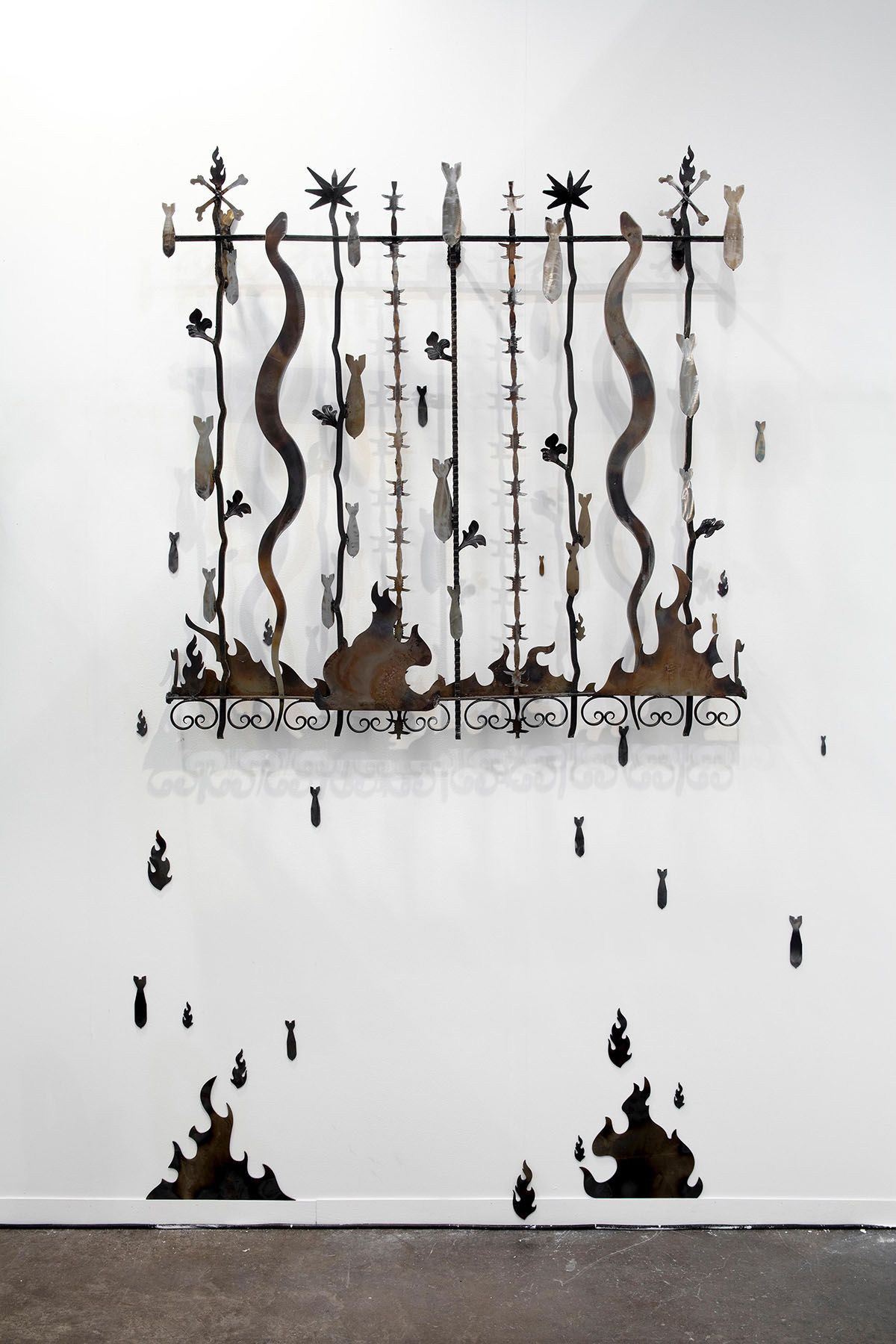
Chavis Mármol, Iron Swords, 2024. Sculpture made of steel and charcoal. Courtesy of the artist.
Humor is a tool that has been widely used in Latin American contexts to cope with hard times and laugh at one’s own misfortunes. Chavis wants his art to take on an even more biting and funny tone to address the current context of global crisis. “The material and the technique, the subject matter I choose, and the humor and character a piece tends to take on are the elements I try to ensure are present in my work,” says Chavis Marmól. “If it doesn’t have them, the piece doesn’t work and gets left to the wayside.”
At the same time, Chavis is working on another series of sculptures that critique imperialism and new processes of colonization through mass spectacles, such as soccer. He plans to present the series in the context of the World Cup taking place in Mexico, Canada and the United States in the summer of 2026.
About the author
Esteban Pérez
Esteban Pérez (Quito, 1992) is a multidisciplinary artist based in Berlin. His work uses research and process-based strategies to explore the relationships between nature, technology, and humans through video, sound, objects, and installations.
A Journey into the Inaugural Museum of Belizean Art
The Indigenous Sci-fi Love Story about the Climate Crisis and the Power of Language: Itu Ninu
The Power of Fabulation in the Black Cinema of Zózimo Bulbul

Archivo Honduras Cuir: The Art of Trans Life and Friendship in Central America
Iahra: Addressing Marine Ecology Through Industrial Materialities