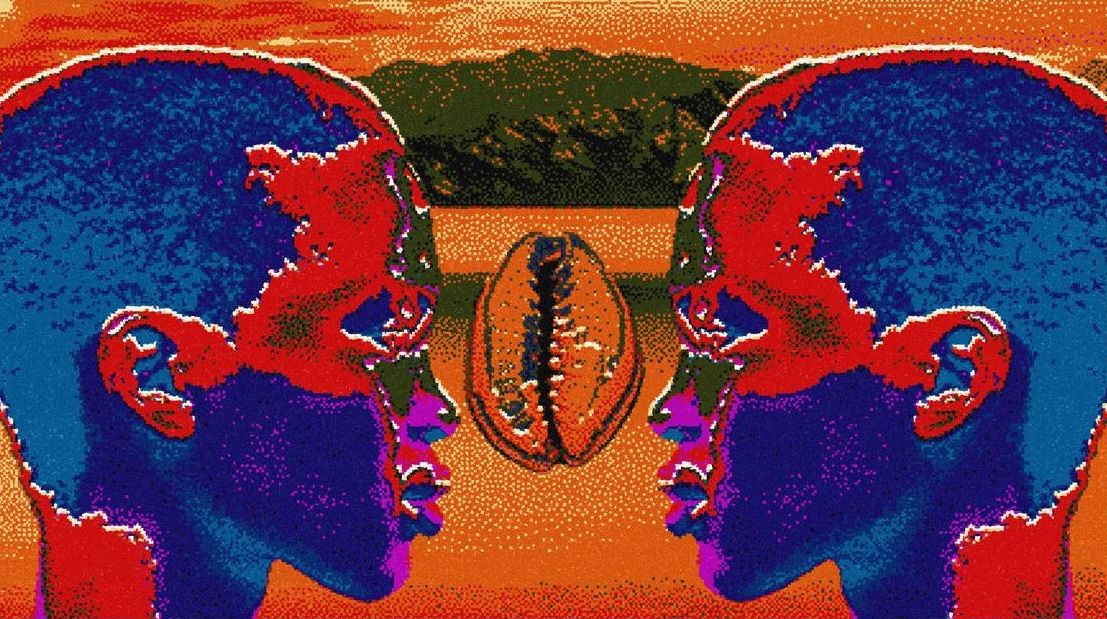
Thenjiwe Niki Nkosi Frames Printmaking As A Relay Process
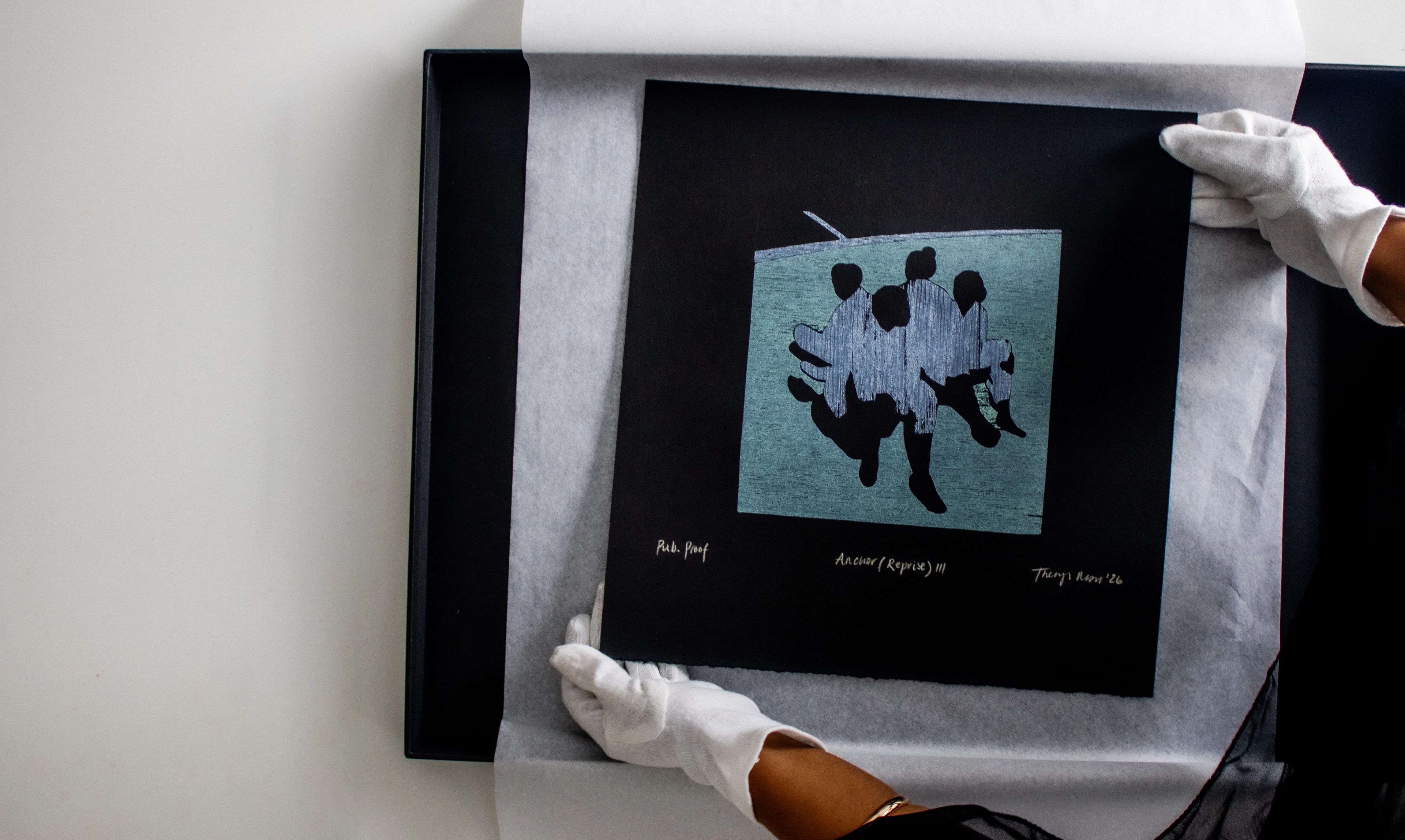
C& Artists’ Edition #6 Thenjiwe Niki Nkosi, Anchor (Reprise), 2026. Courtesy of Thenjiwe Niki Nkosi.
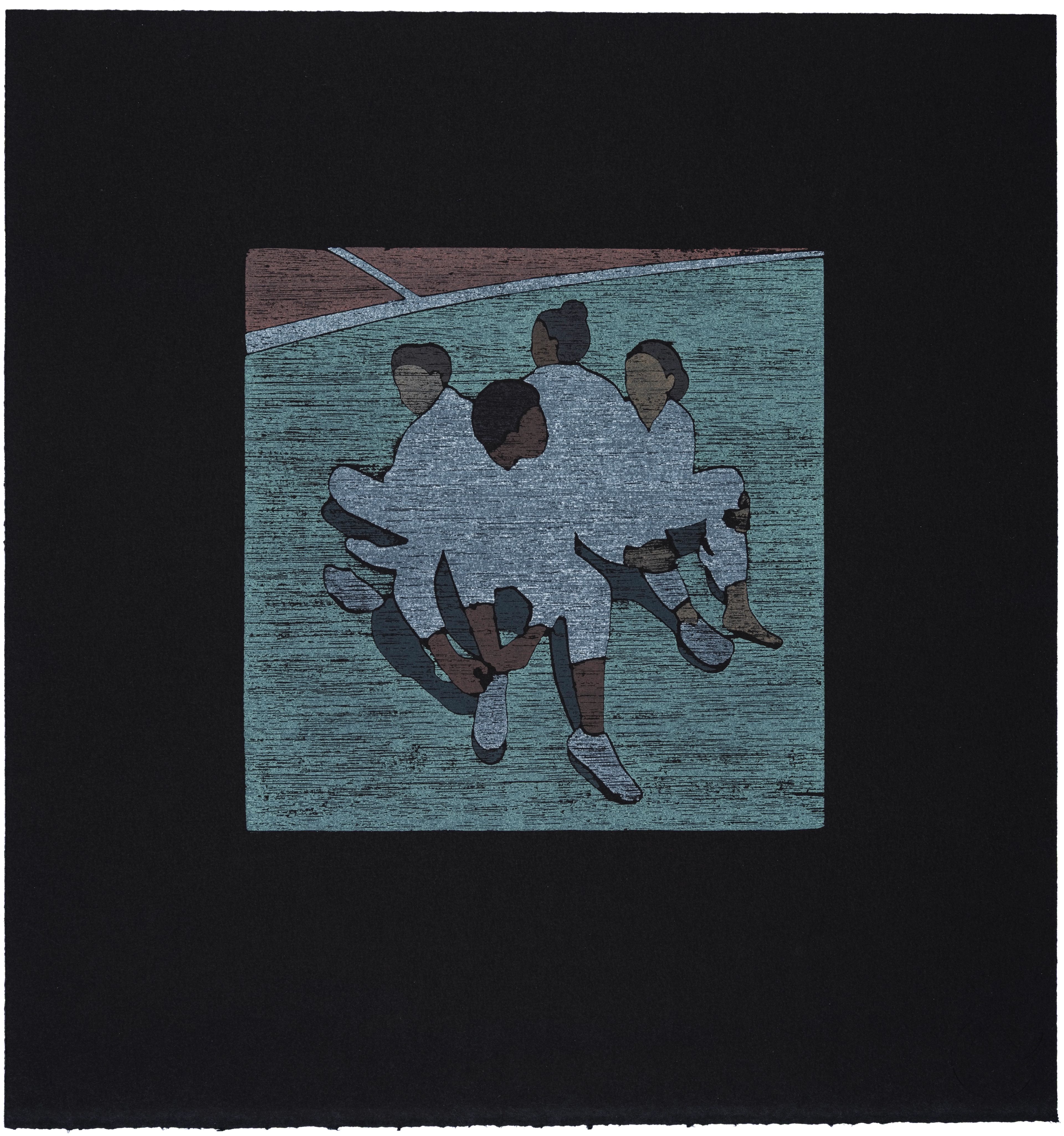
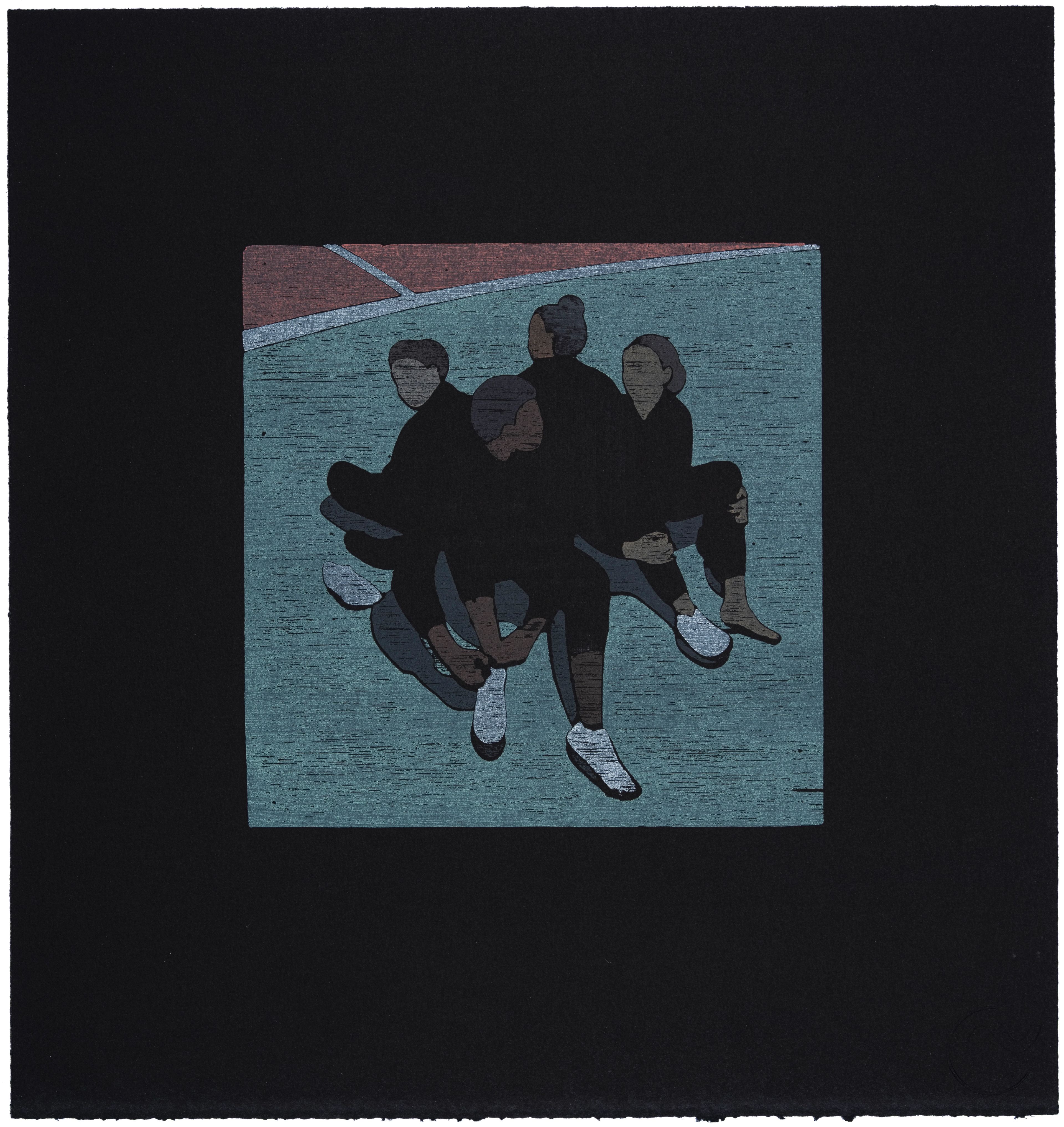
Our latest C& Artists’ Edition print, Anchor (Reprise) I, II & III, launches with South African artist Thenjiwe Niki Nkosi, whose work has long examined the body, collectivity, and the charged geometries of sport. The edition takes as its subject the anchor position in a relay race, where strength is distributed across the team rather than held by any single figure. In conversation with close collaborator and printmaker Sara-Aimee Verity, the pair reflect on the making of the edition, available in three variations exploring abstraction, negative space, and the particular qualities of the wood itself.
Thenjiwe Niki Nkosi: Sara-Aimee had introduced me to the idea of translating my work into a woodcut. So, when the opportunity of creating a print for C& came along, we decided to give it a try. Woodcuts occupy a very nostalgic place deep in my visual memory. There is a long history of cultural workers in South Africa working in woodcuts as part of their political resistance work (posters, flyers, artworks). In my childhood home, we had a reproduction of a woodcut of Angela Davis made by Greek artist and communist Tassos in the 1970s. I loved all these images, and it made me eager to work in the medium.
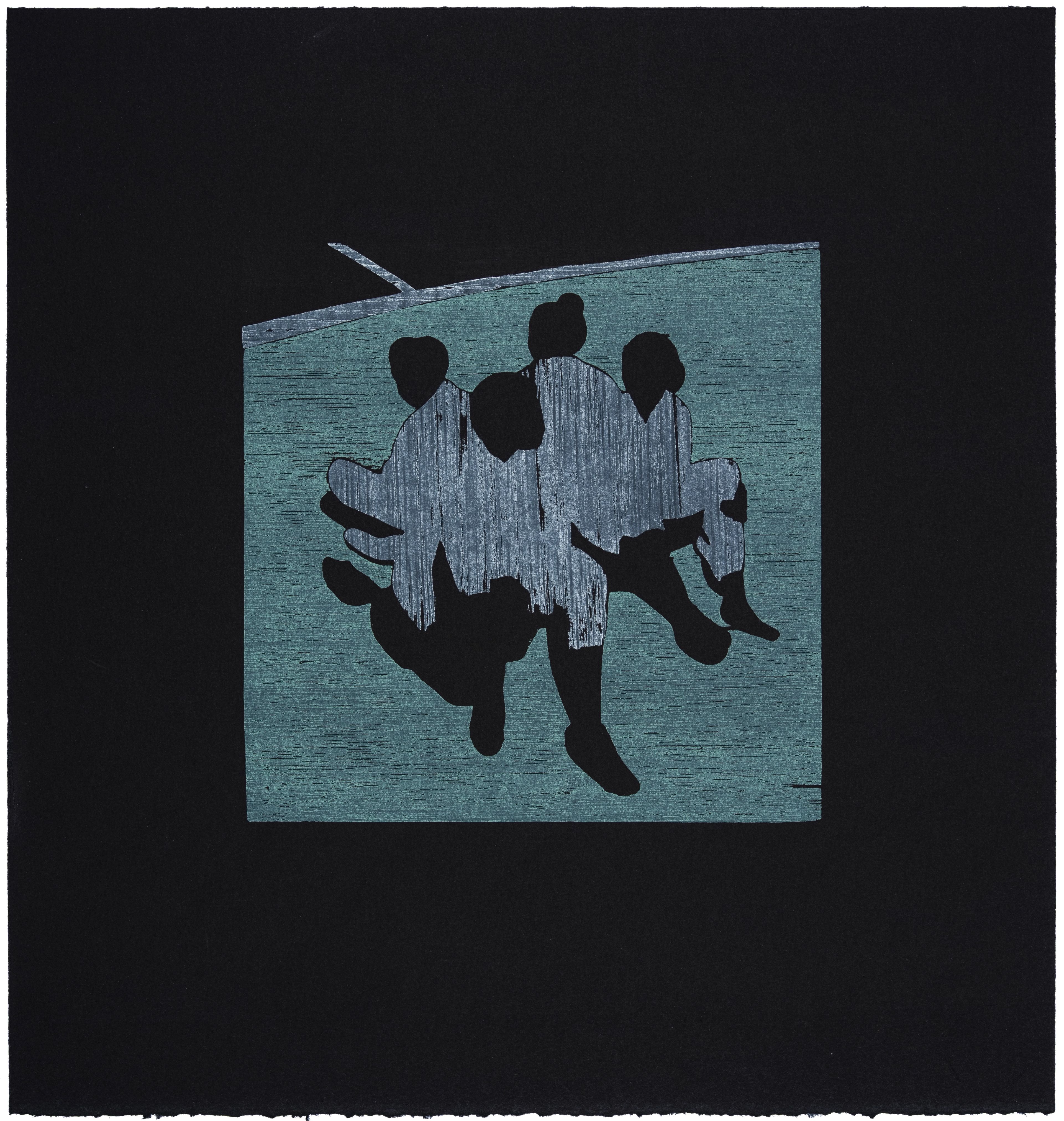
Sara-Aimee Verity: Working with Thenjiwe across these six years, I've come to understand our collaboration as something that happens inside her work — a closeness that builds through accumulated trust, shared looking, and the very particular intimacy of translating someone else's vision with your hands. This print was no different, though the medium brought us somewhere new together.
We chose to laser cut rather than hand-carve the blocks. This was partly instinct, partly a considered interpretation of an existing painting of Thenjiwe's. The distinction is with laser cutting you surrender the carved gesture, the artist's handwork in the wood, and instead you are working with and relying on the grain of the wood itself. The material speaks in its own voice. That felt like the right kind of honesty for this image.
The laser also gave us hard, precise lines that echo the strong spatial qualities of Thenjiwe's compositions. There is a single piece of wood cut to the shape of an athletic field track. It's such an elegant, almost architectural line. Slotting it into place between the neighbouring blocks that make up the composite felt quietly thrilling and informative to the whole image in a way that is both structural and poetic.
The black paper was a singular choice. The gaps between the cut pieces, some less than a millimetre, opened up the possibility for the paper to provide a welcome shadow. And printing in relief rather than working flat introduced texture and tactility. That is a genuine departure from Thenjiwe's luminous painting surfaces. There was something monumental in that shift, even as the woodcut works at a smaller scale than her larger canvases.
What I keep returning to is how our back-and-forth moves between the microscopic — a texture, a line, a pressure decision — and something much larger, like stepping out into a landscape that feels both new and deeply familiar. Uncanny, maybe, but also exactly where I want to be.
TNN: The image title refers to the anchor position in a relay running race.
The anchor leg of a race is usually run by the athlete who is the strongest or fastest in a quartet of relay runners. I don't identify the anchor in this team.
It could be any one of the figures depicted here. I am interested in these athletes as a single unit, and to consider what aspects each of them might bring to the team. In a way, they find their stability or support, their 'anchor' in their relationship to one another.
This process of making this image mirrors the concept in the work. Both Sara-Aimee and I bring different qualities and strengths to the project of making the print. It's a relational process.
SAV: We worked with Meranti and Red Oak, neither are conventional choices for woodcut. Both are hardwoods, more at home in cabinetry or construction than on a press bed. But we chose them specifically for their grains. The Meranti in particular has a tight, close-knit grain with tiny valleys that ink does not fill. It behaves almost like a natural half-tone screen, introducing a subtle, breathing texture that no carving could replicate.
The pieces that didn't survive the laser process became just as important as those that did. Their absence created the gaps, some less than a millimetre, that made the black paper not merely a background but an active surface and presence that pulls the composition together. Assembling all the pieces on the press bed is one of the most satisfying moments of the whole process.
A key moment came when Thenjiwe saw a proof I had pulled to clean the ink from the blocks. I had placed just one piece down to print alone: the key block, inked in green, the field that encases all the other smaller blocks. Something in that single impression, that one shape standing on its own, told us something important about the whole image. It had weight and it held everything.
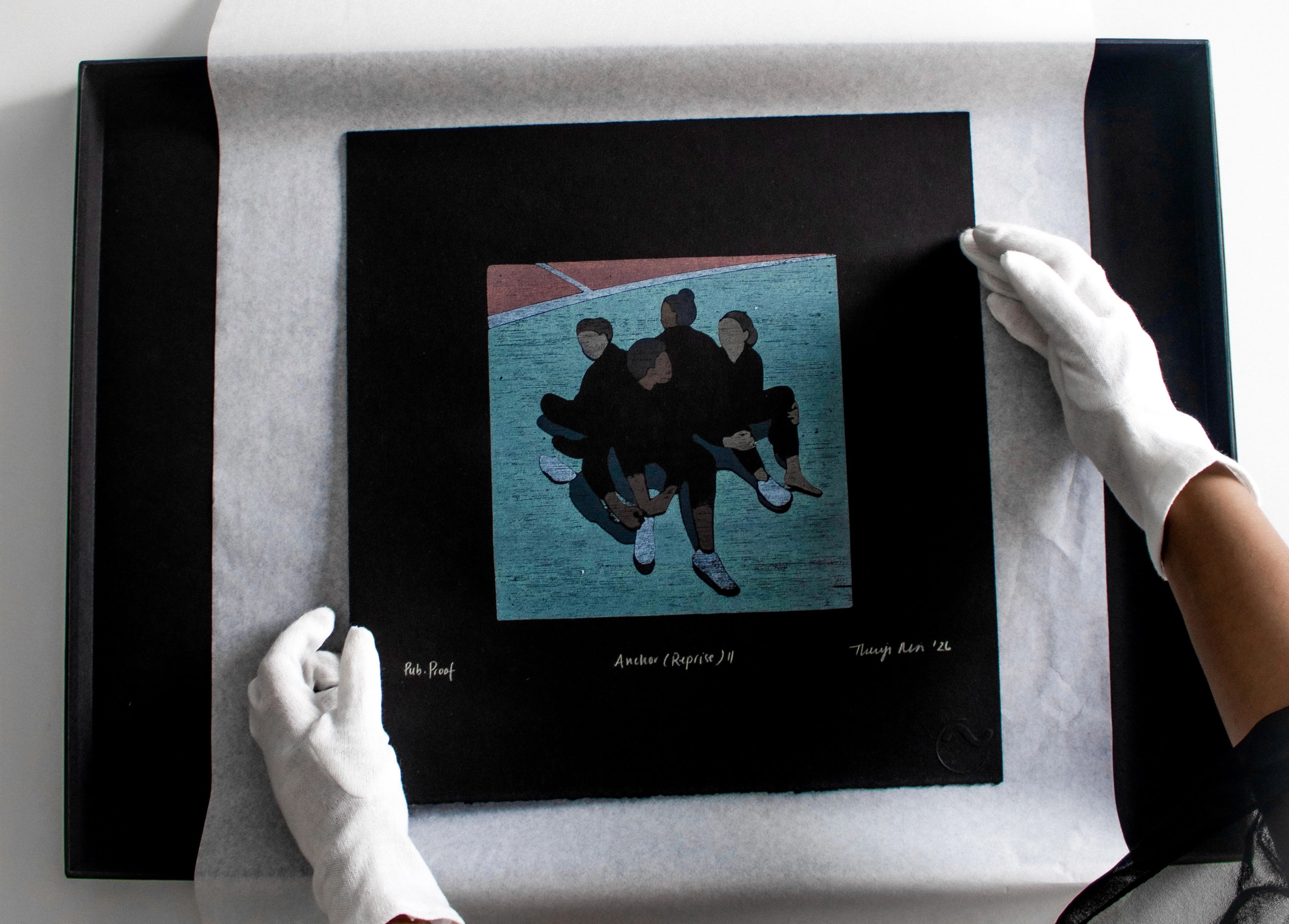
C& Artists’Edition #6 Thenjiwe Niki Nkosi, Anchor (Reprise), 2026. Courtesy of Thenjiwe Niki Nkosi.
TNN: It's a puzzle that needs to be fitted together and there are many permutations of the image that can exist. We landed on the idea of doing three variations of the print because each wood block cutout interacts so specifically with each of the other pieces, and each variation brings such a different feeling to the print.
We landed on the idea of doing three variations of the print because each wood block cutout interacts so specifically with each of the other pieces, and each variation brings such a different feeling to the print.
We experimented with negative space, abstraction and the wood grain itself in making these three versions within the edition. It's definitely opened a world of possibilities for me in terms of working in this medium.
About the author
Thenjiwe Niki Nkosi
Thenjiwe Niki Nkosi (b.1980, New York, USA) lives and works in Johannesburg. She divides her time between studio work, performance, and navigating the field of art as social practice. Her work investigates the lived consequences of imperial histories and the personal dimensions of political identities, collectivity, and futurity, among other concepts.
In Conversation
Water is Running: Wura-Natasha Ogunji’s Aquatic Archive
Aggregates of Plunder: Ndidi Dike’s Rare Earth Rare Justice
Olukemi Lijadu: Feedback, Friction and Black Atlantic Music
In Conversation
The Deconstructive Lens of Ngadi Smart: From Drag to Climate Change
On Ghosts and The Moving Image: Edward George’s Black Atlas