The Olympia Effect: Who Gets Credit for Sexual Liberation On/Off Screen?
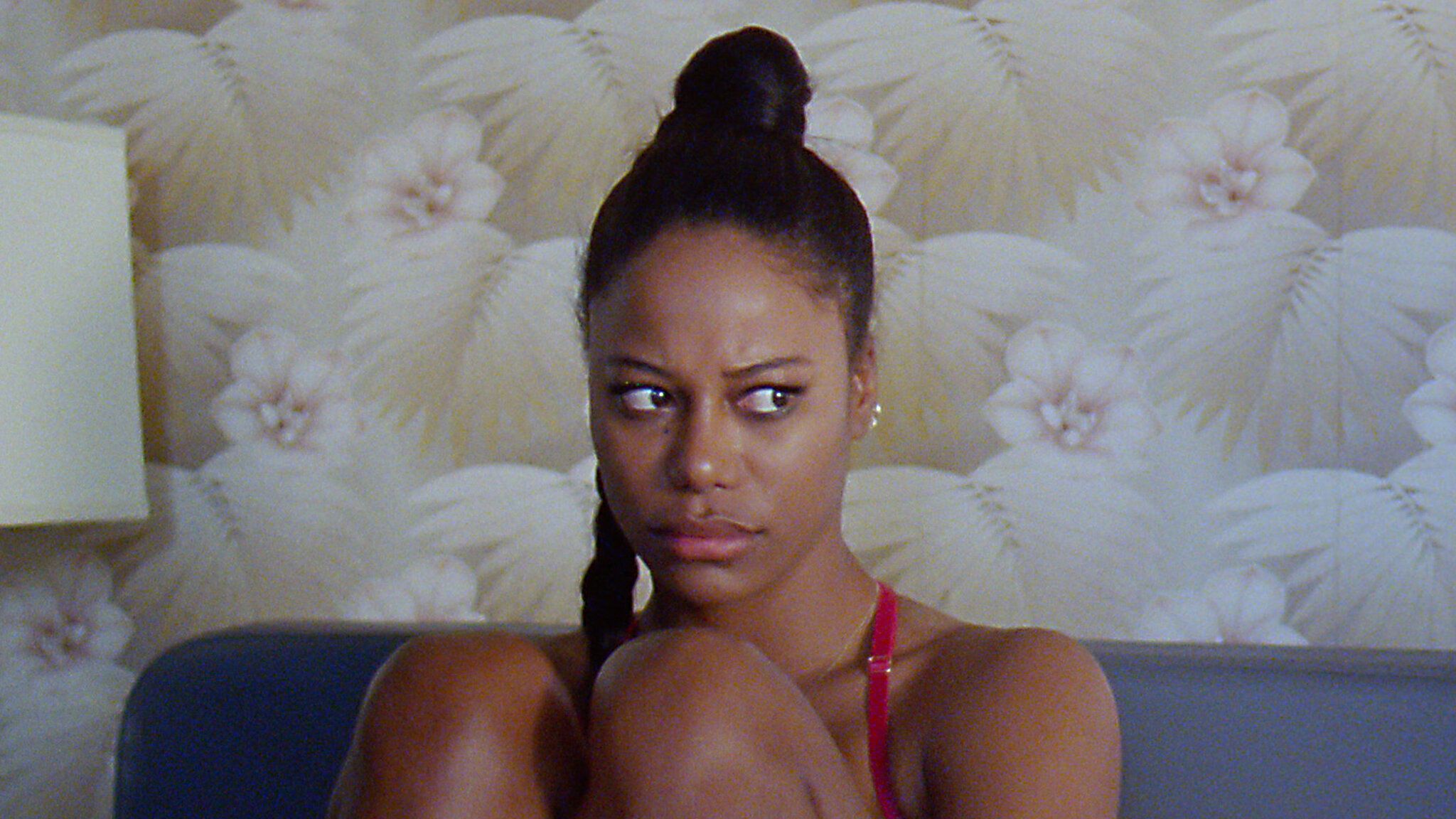
Janizca Bravo, Zola, 2020. Courtesy of A24.
From Edouard Manet’s nineteenth-century painting Olympia to Hollywood’s Academy Awards, a familiar pattern resurfaces. Writer Stephanie Tinsley argues that Western art and cinema repeatedly frames white women’s sexual liberation through the appropriation of Black femininity – a phenomenon she calls the “Olympia Effect.” Citing two recent films, Zola (2021) and Anora (2024), Tinsley remarks how stories about sex work and modern womanhood are rewarded with cultural legitimacy only when centering a white damsel.
In 1865, Manet’s controversial painting Olympia debuted at the Paris Salon. In the foreground is a French courtesan exposing her pale nude body to the viewer as she lays upon a bed of white cotton sheets. Standing in the background is Lauré, an Afro-Caribbean maidservant wearing a pink dress and holding a bouquet likely sent as a gift to the courtesan by a client. Though the painting was initially greeted with disdain or outright disgust from salon attendees, it would come to be lauded as a catalyst of the modern art movement and an important contribution to the Western art-historical canon.
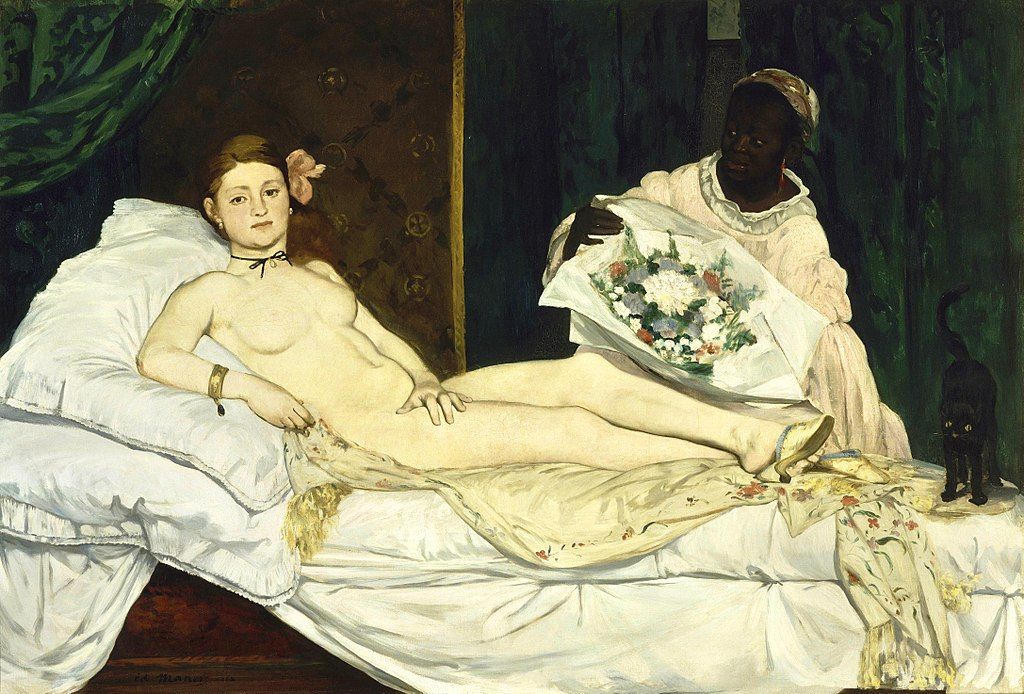
Édouard Manet, Olympia, 1863. Courtesy of Musée d’Orsay.
Black femininity, including the hypersexual attitudes with which Western culture associates it, is the vehicle that European women operate in their journey towards sexual and socioeconomic progress.
What made Olympia revolutionary? Certainly not the lack of clothing, for the tradition of painting female nudes is longstanding in Western art history. What set this nude apart from its predecessors was the presence of a Black woman. When Manet completed this painting in 1863, slavery in the French colonies had only been abolished for 15 years. The establishment of the Second Republic in 1848 emancipated its enslaved Black population abroad and decreed a new democratic electoral law that was equal for all—except les citoyennes (female citizens). Black Caribbeans migrated from the colonies to the city of lights in search of opportunity while women’s suffrage struggled under this new regime. Many women resorted to prostitution to assert their socioeconomic independence. Though it was regulated by the state, the archetype of the rebellious, sickly prostitute became a social pariah. But what serpent had seduced these once innocent Frenchwomen into a life of depravity? The Black woman, already fetishized in the French imagination, had become the scapegoat to explain the sexual and political tensions between men and women in an everchanging French society.
If Olympia is the subject—the feminized goddess Cronos representing the modern European woman—then Lauré is the object; a decorative set prop placing the painting in the larger context of globalization and urban development in nineteenth-century Europe. The white nude’s proximity to the Black female body gives her cultural relevance which would otherwise be inscrutable. If the pedestal is modernity, Black femininity is the ladder Olympia climbed to differentiate herself from the idealized nudes of the past. Black femininity, including the hypersexual attitudes with which Western culture associates it, is the vehicle that European women operate in their journey towards sexual and socioeconomic progress. The Black woman herself is presented as detached from her own sexuality, and once she has served her purpose, her presence is no longer necessary. I call this phenomenon the Olympia effect.
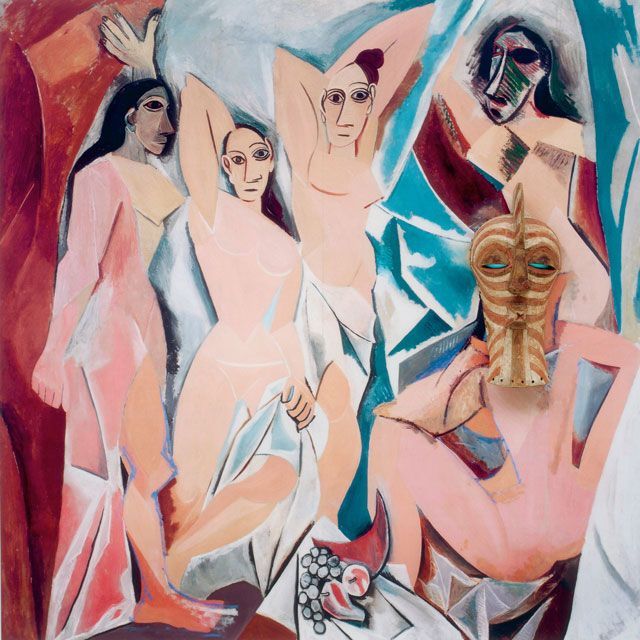
Fred Wilson, Picasso/Whose Rules? 1991. Courtesy of Matthew & Iris Strauss Family Foundation.
The Olympia effect has become a recurring trope in visual art and pop culture. Think Pablo Picasso’s Les Demoiselles d’Avignon (1907) or Man Ray’s Noire et Blanche (1926). It’s Cindy Sherman’s Bus Series (1976). It’s Bo Derek’s Blonde Fulani braids in the movie 10 (1979). In the twenty-first century, it’s Christina Aguilera’s Stripped album, Miley Cyrus’s Bangerz era, Taylor Swift’s “Shake It Off” music video, Kim Kardashian’s everything. It’s the redundant narrative we see play out anytime a white pop star matures into adulthood and sheds her innocent, girlish image: she asserts her sexual prowess and socioeconomic freedom by exploiting Black feminine aesthetics, mannerisms, speech patterns, and rhythmic movements. As her cultural relevance increases, so does her economic value. All the while, the Black women and femmes who cultivated these artistic traditions are alienated from the fruit of their creative labor and robbed of its cultural capital.
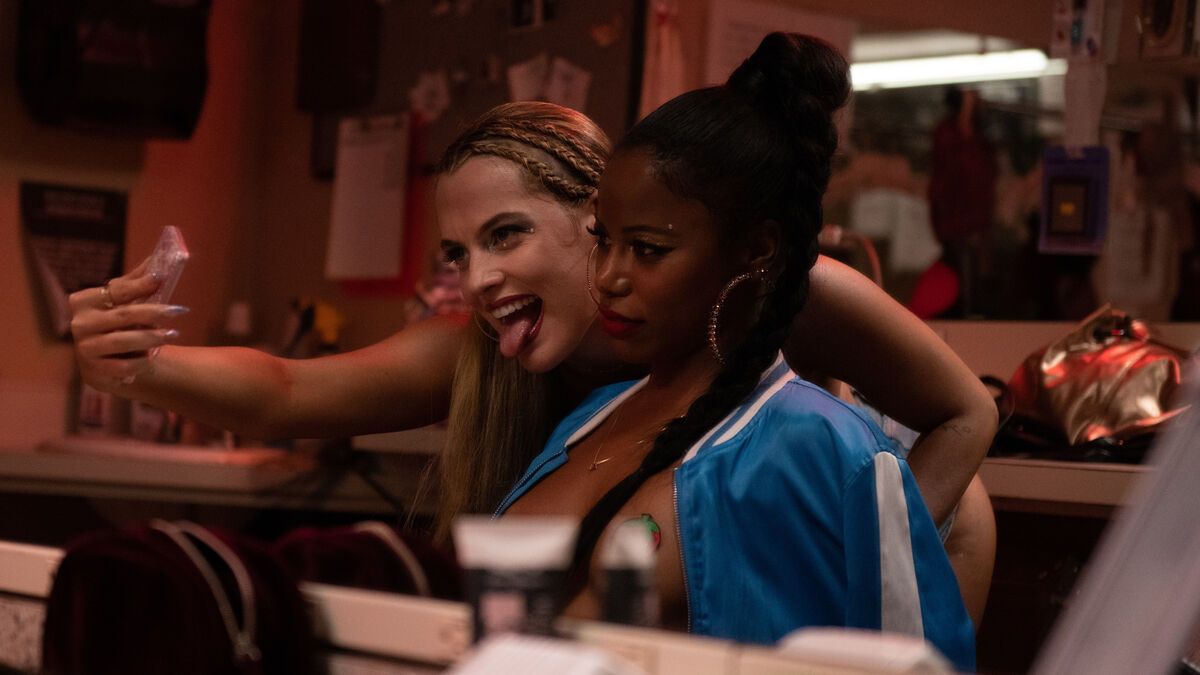
Janizca Bravo, Zola, 2020. Courtesy of A24.
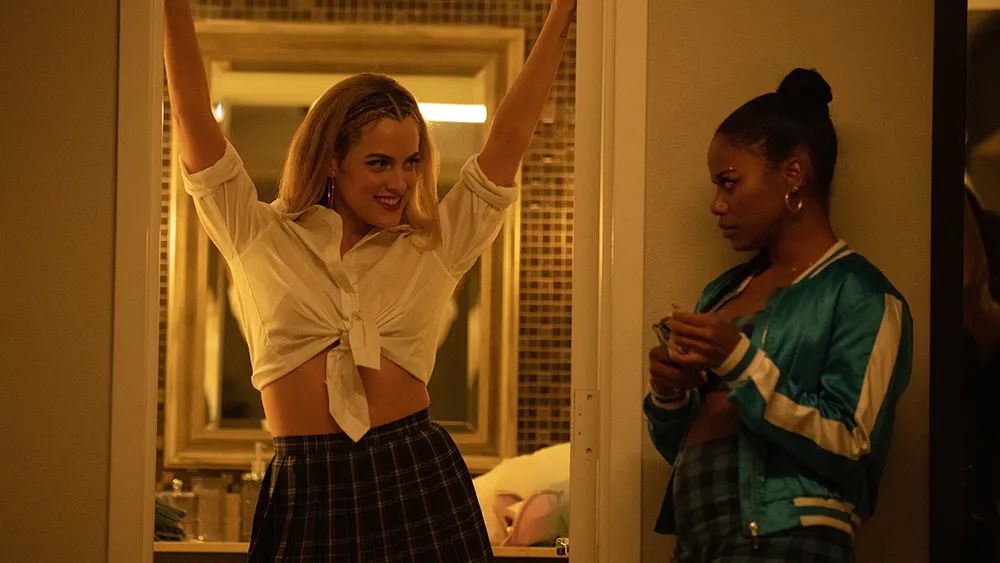
Janizca Bravo, Zola, 2020. Courtesy of A24.
In my opinion, no other work of art has confronted this crisis with more wit and charm than the film Zola (2020), directed by Janicza Bravo. Based on the true-life story of A’Ziah “Zola” King and adapted from the viral Twitter thread King authored in 2015, Zola recounts a spontaneous girls’ trip turned hostage crisis. Our eponymous protagonist (played by Taylour Paige) is a Black woman and waitress who meets a white customer Stefani (Riley Keough) while working at the restaurant chain Hooters. The two women click instantly, bonding over their shared passion for exotic dancing. Stefani uses her performative damsel-in-distress charm to love-bomb Zola and lure her into a sex-work expedition in Florida without her knowledge or consent— the legal definition of sex trafficking. The social, cultural, and economic dynamics between the characters, who also include Stefani's pimp X (played by Colman Domingo) and her white cuckold boyfriend Derrek, reveal how the politics of race, gender, class, and sexuality impact our most intimate relationships.
Compare with Sean Baker’s Anora (2024), a multiple-Oscar-winning film starring Mikey Madison as Ani, a white stripper from Brooklyn who marries the son of a Russian oligarch in Vegas. Her X-rated fairytale becomes a Scorsese crime drama overnight when her in-laws send henchmen to break up the newlyweds. The film’s Oscars success contrasts with the lack of nominations for Zola, ironically demonstrating the Olympia effect and echoing the thesis of A’Ziah King’s story.
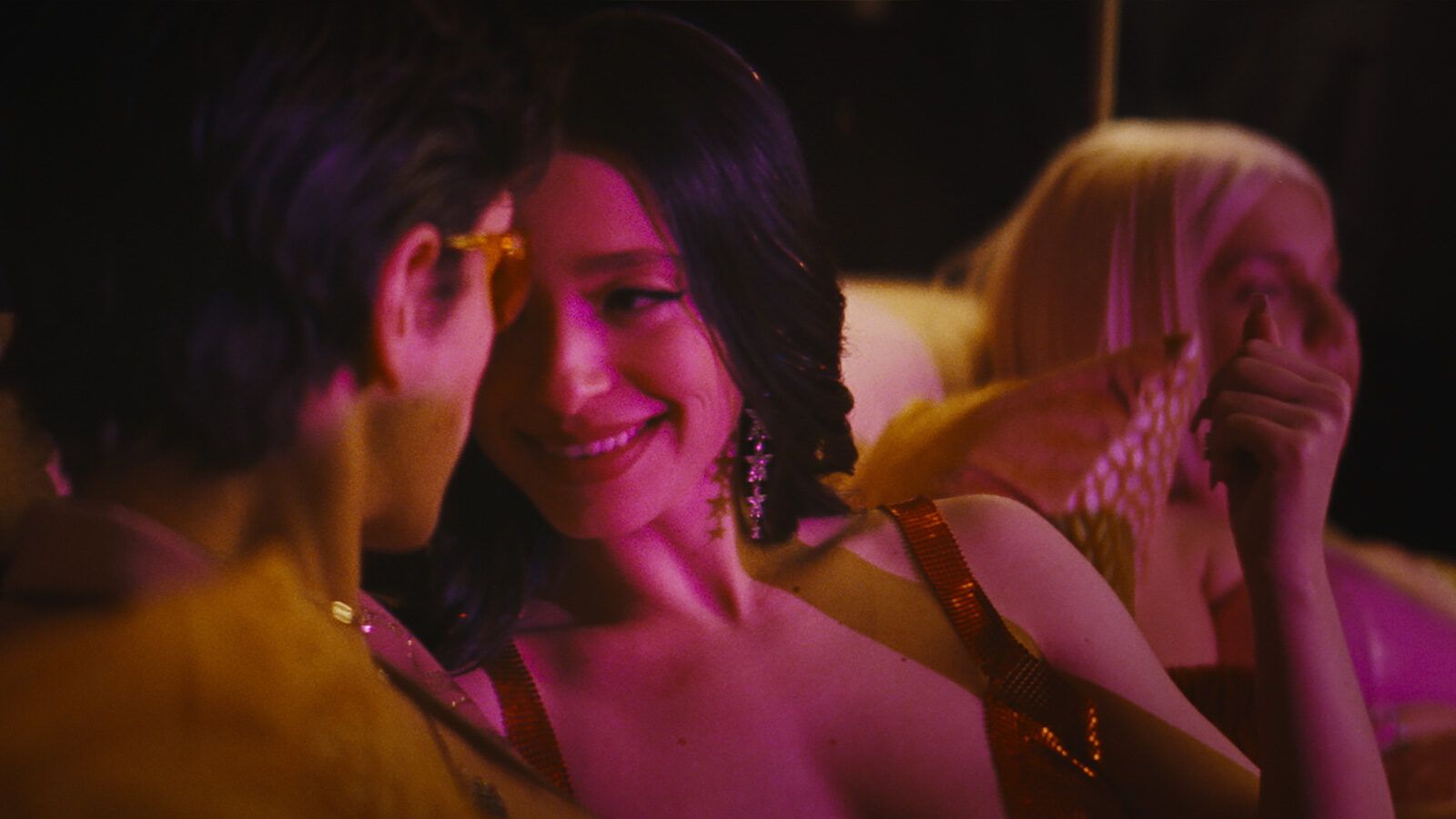
Sean Baker, Anora, 2024. Courtesy of Neon.
Just as the European nudes in Picasso’s Les Demoiselles D’Avignon are styled after African masks, Baker’s heroine Anora is made in the whitewashed image of an early 2000s video vixen à la Karrine Steffans, albeit with the naïveté and saccharine quality of a Disney princess. Her thick Brooklyn accent and crude vocabulary are her defining characteristics. Vanya, Ani’s prince-charming turned foil, flees from his native Russia to New York, the capital of Hip-Hop, to sow his royal oats with the same reckless abandon as the American rappers he listens to. The two lovers party and twerk like they are extras in a Nelly music video, yet there are no Black people in their social orbit. There’s even a scene ripped right out of an episode of Love & Hip Hop: Atlanta where Ani violently confronts her nemesis Diamond in the middle of the strip club as DMX’s “Where the Hood At” blasts in the background. Baker subverts the “primitive” Black cultural landscape into a palatable pornographic playground for white audiences to enjoy from a comfortable distance. All the while, the women of color who occupy these spaces in real life are demonized, endangered, and misrepresented in mainstream media.
But if you lean in a little closer, the Black female figure lingers in the background, patiently waiting to receive her flowers.
In Hollywood, Black women’s stories, especially those which deal with themes of sexual identity and agency, are only valued by their capacity to serve the white protagonist’s narrative, not their own (see One Battle After Another). However, when those same tropes most associated with Black women are adopted by white characters, those performances are canonized as seminal works of art. When the courtesan is the star of a film, she is required to wear Black femininity as a costume, but the role must be performed by a white actress for her character to be humanized and valued. Minstrelsy and misogynoir are the bedrock of Hollywood. For those who study the history of motion pictures, it came as no surprise that Academy voters did not believe Zola was relevant enough to nominate, even though Black women and girls face higher rates of sex trafficking than any other demographic in the United States. Anora attempts to address issues around sex work, but in a way that is agreeable to an institution that does not want to think deeply about its own complicity in sexual violence. Just as wealthy white actresses became the faces of the #MeToo Movement in 2017, a campaign which was founded by Black female activist Tarana Burke, the stories of sex workers and survivors will not get top billing unless they are represented by a white actress featured prominently on the movie poster. But if you lean in a little closer, the Black female figure lingers in the background, patiently waiting to receive her flowers.
About the author
Stephanie Tinsley
Stephanie Tinsley is a writer, filmmaker, producer and art administrator from Chicago, Illinois. Tinsley graduated from NYU’s Tisch School of the Arts with a BA in Film & TV and a minor degree in Art History. In 2020, Tinsley founded Black Sheep Collective, a nonprofit dedicated to providing artists with the resources, community, and guidance to create with purpose and make cultural capital accessible to all through the power of digital media and technology. She is a proud member of MoMA’s Black Arts Council and is currently pursuing her Master’s Degree in Visual Arts Administration at NYU’s Steinhardt School of Culture, Education, and Human Development. She is currently based in Brooklyn.
A Collector’s Guide to São Paulo
Dignity Under Duress: Black Figuration Beyond the Global Art Market
An Exhibition Aims at Accessibility Against a Backdrop of Protest in Kenya’s Capital
Five Things You Need to Know About the John Randle Center Before It Opens
The Off is On! Why We Should All Still Be in Dakar