The Deconstructive Lens of Ngadi Smart: From Drag to Climate Change
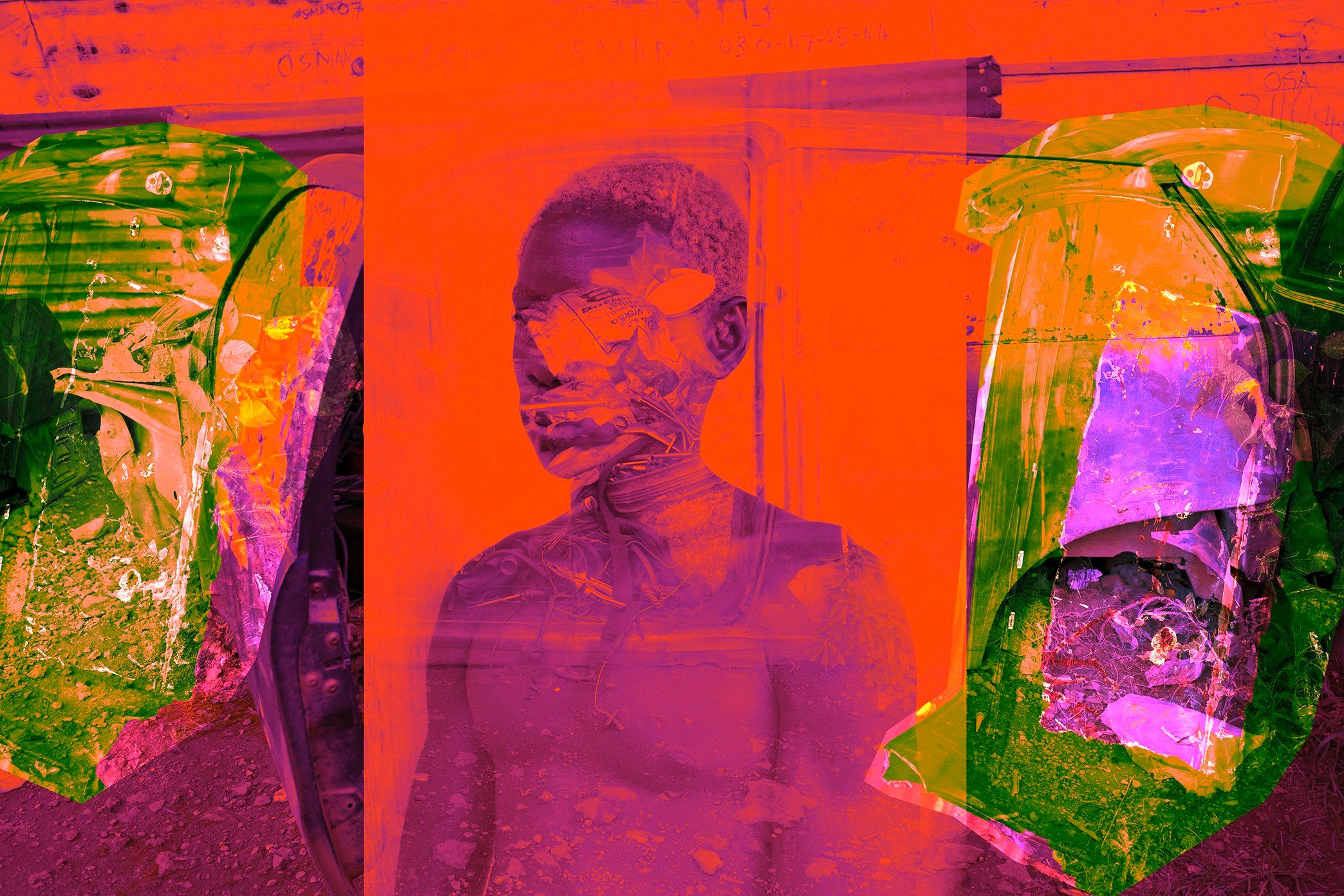
Ngadi Smart, Port Loko District, Tombotima Community, 2021. Courtesy of the artist.
Writer Aude Konan converses with multidisciplinary artist Ngadi Smart about two distinct projects that challenge preconceived views of the ‘normal’, the ‘beautiful’, and the ‘right ‘in West African societies and beyond.
From intimate portraits of Ivorian drag performers in the photographic series The Queens of Babi (2021) to explorations of environmental and social realities in Sierra Leone in the book WATA NA LIFE (2024), Ngadi Smart’s practice highlights creativity, resourcefulness, and the ways people navigate systems of power – inviting viewers to look closer and reconsider what they think they know. Her practice combines photography, collage, and illustration to tell layered stories around identity, resilience, and visibility across Africa.
Aude Konan: Drag has long been a staple of queer Ivorian communities, as evidenced in the 1998 documentary Woubi Cheri, featuring Ivorian transwomen. How did you come across the Ivorian queer community for The Queens of Babi?
Ngadi Smart: I’m Sierra Leonean. When I was six months old my mother and I moved to Abidjan and lived there until the war broke out in the late 2000s. I still visit a lot and I consider it my home base. When I was working in advertising in Abidjan between 2016 and 2018, Swiss photographer Flurina Rothenberger invited me to take part in a photography workshop and that led to me doing more photo-related projects.
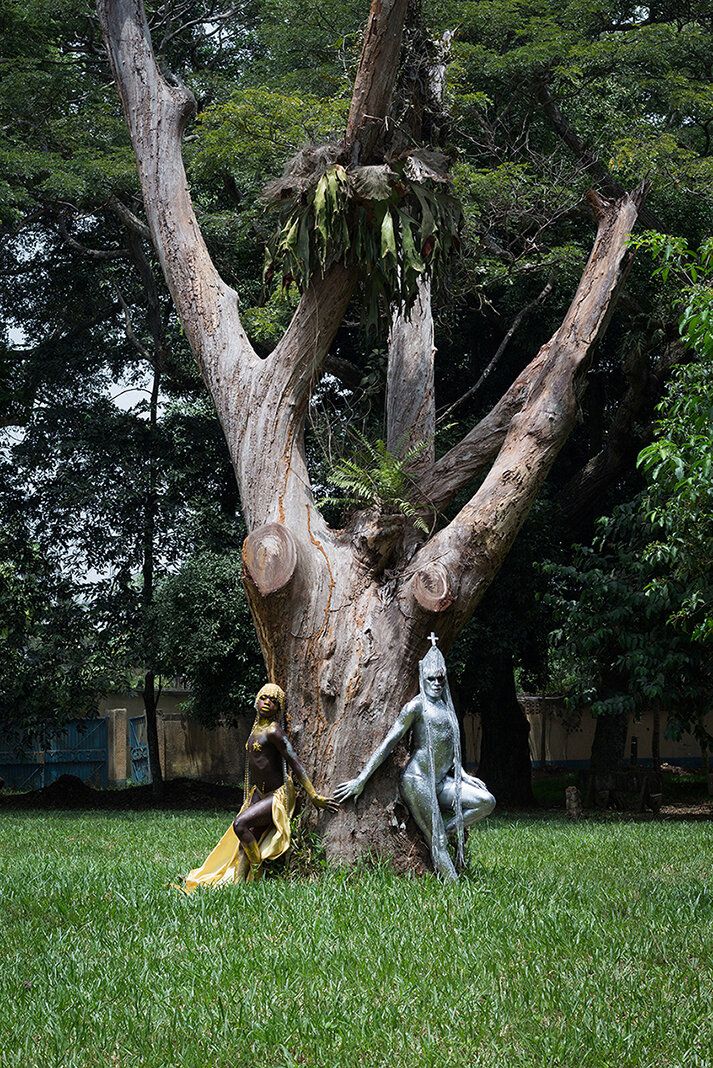
Ngadi Smart, The Queens of Babi, 2020. Courtesy of the artist.
I came across two members of the drag-queen community, Papa (aka Venus King Kong) and Elvis (aka Britney) after a friend sent me a video of them taking part in a ballroom competition. I reached out and met them. I proposed a shoot showcasing their creativity and provided funds for them to complete their creative take on the theme of “royalty,” which they had chosen. They had different looks: Britney silver and Baba gold. We did the photoshoot at the Jardin Botanique in Bingerville. People around us were mostly chill about it. The kids thought that Baba and Britney were spirits. They are amazing people and their personalities came through.
AK: What made the queer Ivorian community of particular interest to you?
NS: I believe the issues they face are similar to other queer people on the continent. Queer Africans have been around since the beginning of time, but we currently live in a patriarchal world that is not so friendly or accepting. Côte d’Ivoire is more tolerant than many other countries, yet if you scratch the surface you will find people who are not so open-minded. Even though there are queer entertainers like l’Exces (aka Stéphane Sacré), queerness is accepted only to a certain extent. I get the feeling people might not want LGBTQ+ people to be too visible. I would love to be able to do a similar project in Sierra Leone. But it’s a different country and climate.
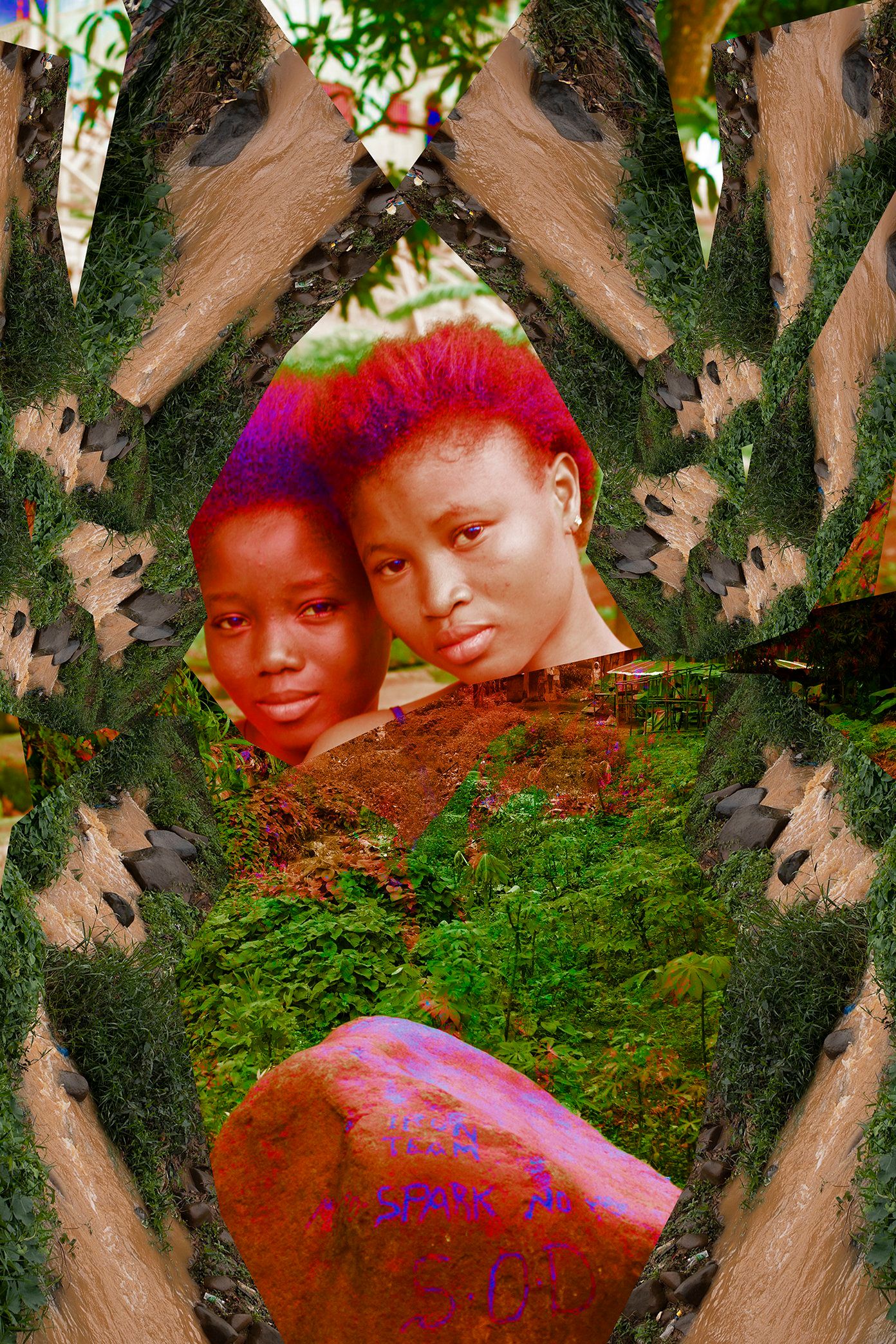
Ngadi Smart, Ja Kingdom, Freetown, 2021. Courtesy of the artist.
AK: What drove you to explore the effect of climate change in your home country with your first book, WATA NA LIFE?
NS: It was born out of a 2021 competition initiated by WaterAid and the British Journal of Photography. They commissioned three photographers from different parts of the world to document water issues and the effects of climate change. Then in 2023 there was another competition by Loose Joints – they commissioned me to develop the visuals further, which turned into the book.
I got to photograph my country of heritage for the first time and I learned so much. I don't take it for granted that I have seen remote places that many Sierra Leonans haven't seen. It was a difficult project because it involved photographing almost every day for two months, and collaging what I was photographing in the evenings. I wanted the people I was taking pictures of to look at my collages and recognize the places they know and see every day. The images depict heavy topics, some of them are unfortunately still unresolved to this day. The country still faces issues related to corruption and the difficulty of rebuilding a country after a ten-year civil war.
In Freetown the impact of climate change is many-layered. After the war an influx of people moved to the city. Its water system and dams were built in the 1960s to accommodate a population of about 100,000, but now the population is about 1,300,000. This reduces the way natural water sources flow and dwindles the supply. Out of dire necessity, some people have cut and rerouted dam tubes so that the water goes into their area, cutting it off from other parts of town.
Outside of Freetown the temperature may be even higher, the rainfall falls much later, and farming communities' wells dry faster. Because these places don’t have overpopulation issues, however, and because most of the people we met were farmers working the land, we found they were more connected to nature and could note the gradual impact climate change has on their lives and livelihood. For example, timber was once very prevalent in the agricultural center of Kabala. When I went to photograph it, the timber was being depleted at a rapid rate, mostly by Chinese loggers and other international companies, but also by local residents seeking to exploit or benefit from the situation. The inhabitants told me that this has affected Kabala’s landscape and water retention. They find they don’t get as much rainfall as before due to the rapid depletion of the trees.
Of course, what I describe in the book was the reality in Sierra Leone in 2021 – the situation is most likely different now.
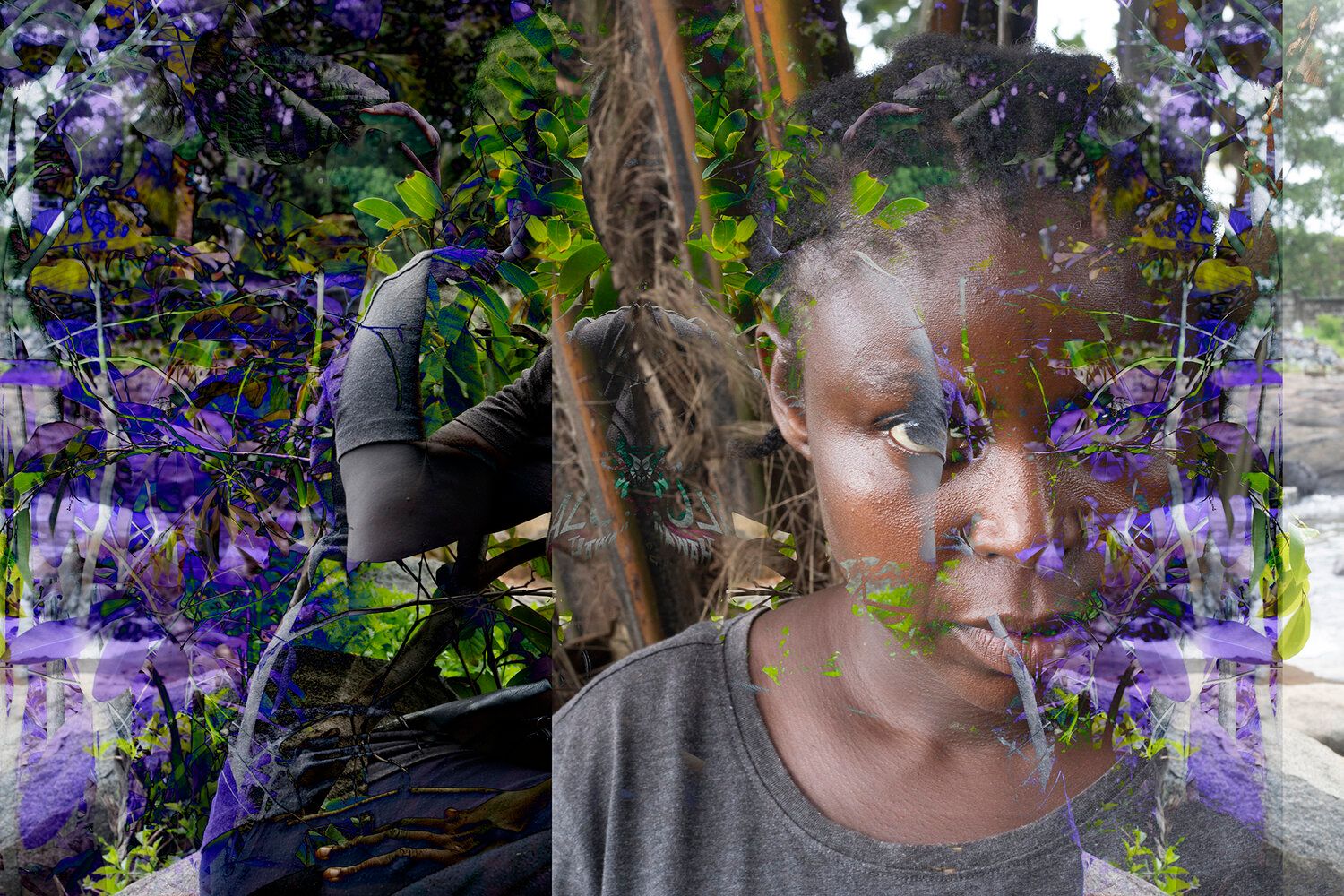
Ngadi Smart, Goderich, Freetown, 2021. Courtesy of the artist.
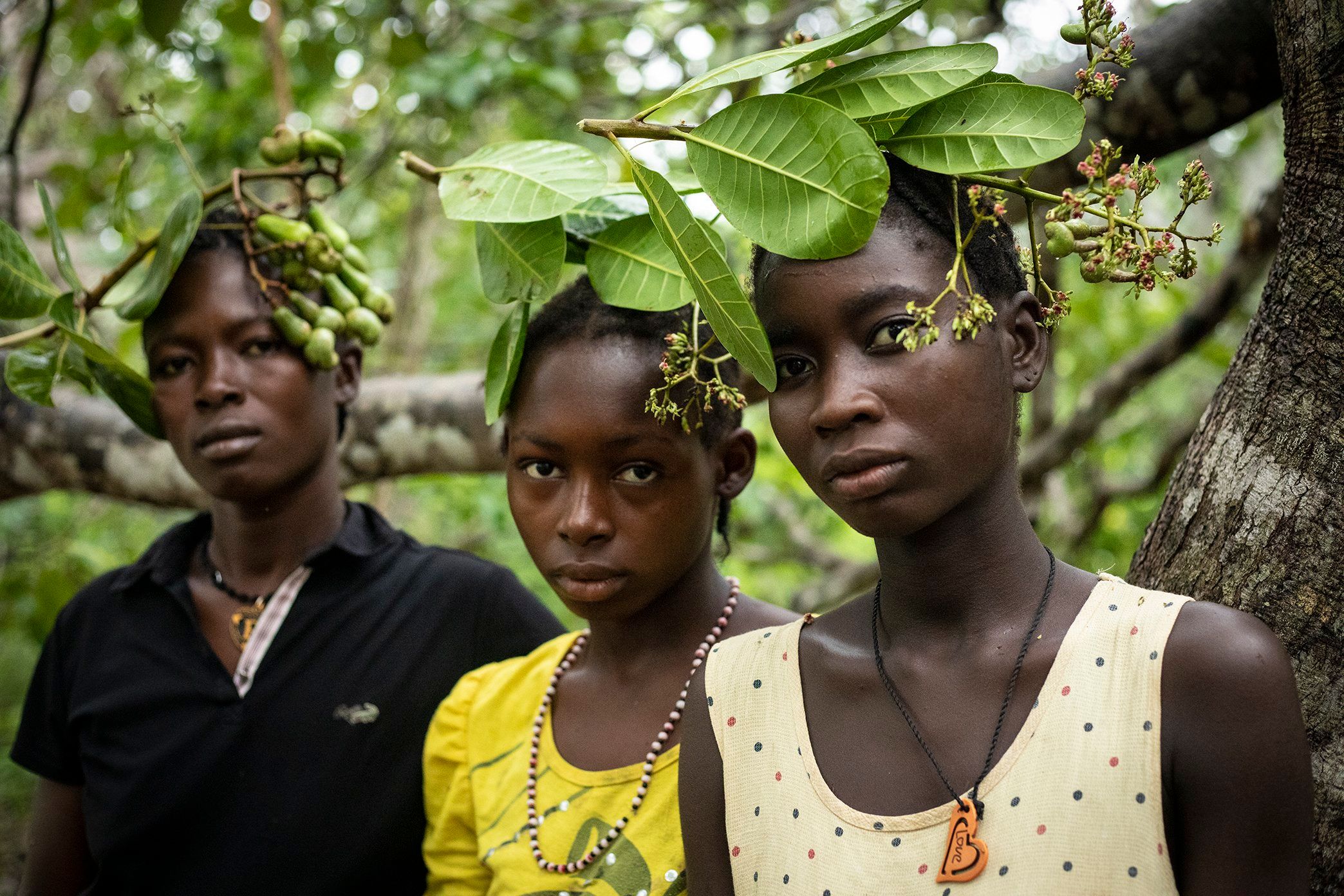
Ngadi Smart, Port Loko District, Tombotima Community, 2021. Courtesy of the artist.
AK: Your work is a mix of photography, collage, and illustrations. How do you decide which one to employ?
NS: I love being a multidisciplinary artist. I use different forms based on whatever best fits the project. When photography gets overwhelming I turn to illustration and vice versa, which keeps me creatively motivated. In June 2020, for example, I moved more into illustration because of lockdown. This saved me – it would have been tougher had I been strictly a photographer, due to the difficulty of photographing people at the time.
AK: What are you working on at the moment?
NS: I finished working on a piece for an NGO about refugees, and I’m working on an illustration series about identity. I want to photograph more LGBTQ+ communities in Africa.
About the author
Aude Konan
Aude Konan is a freelance writer, novelist and screenwriter. As a former child writer, their short stories have been published in France in anthologies for the past decade and their first novel “Ma Petite Soeur” has been published in December 2015 by Dagan Editions. Their articles have been published in The Guardian, Gal-Dem, Okay Africa, Complex Magazine, Media Diversified, Londonist, Amina, and more.
Sponsored Events
Chijioke Anyacho: A Bench is Made of Wood but a Bench is Not a Tree
SAVVYBRATION
Otis Kwame Kye Quaicoe: Where the Waters Meet
1-54 Contemporary African Art Fair
In Conversation
The Heart of the Matter: Carrie Mae Weems at FOMU Antwerp
Water is Running: Wura-Natasha Ogunji’s Aquatic Archive
Aggregates of Plunder: Ndidi Dike’s Rare Earth Rare Justice
In Conversation
Thenjiwe Niki Nkosi Frames Printmaking As A Relay Process
Olukemi Lijadu: Feedback, Friction and Black Atlantic Music