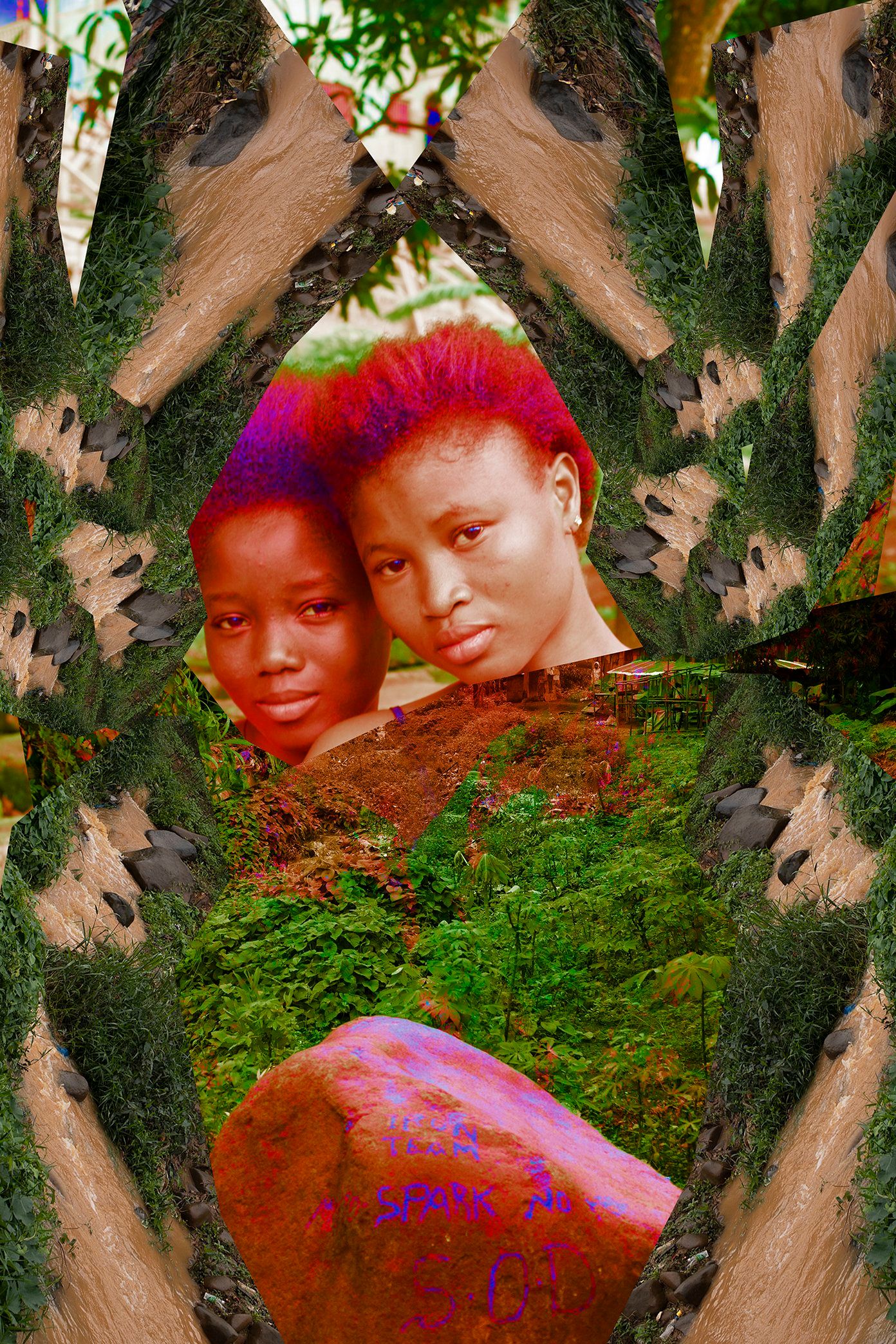
cameron clayborn: “It is always about trying to harness energy”
Our author Magnus Rosengarten met up with the artist to talk about the body, emotional landscapes, parents, and how all this comes together in their work.
Contemporary And: The translation or transference of emotional landscapes into various media characterizes parts of your work. What fascinates you about this process?
cameron clayborn: It gets to be out, I can see it. Especially when it comes to my Emotional Tools, which I make with clay and the process of finishing them, which is an extremely long thing to do, is almost like grief or mourning, yet being able to take my time. Multiple people support me through this process, casting or polishing the pieces. I like this and that is also why I call them Emotional Tools, and I have a piece called: These pieces are not for you, they are for us. The “us” is open-ended, as in who thinks that they should have ownership of what they are or what they should be for them.
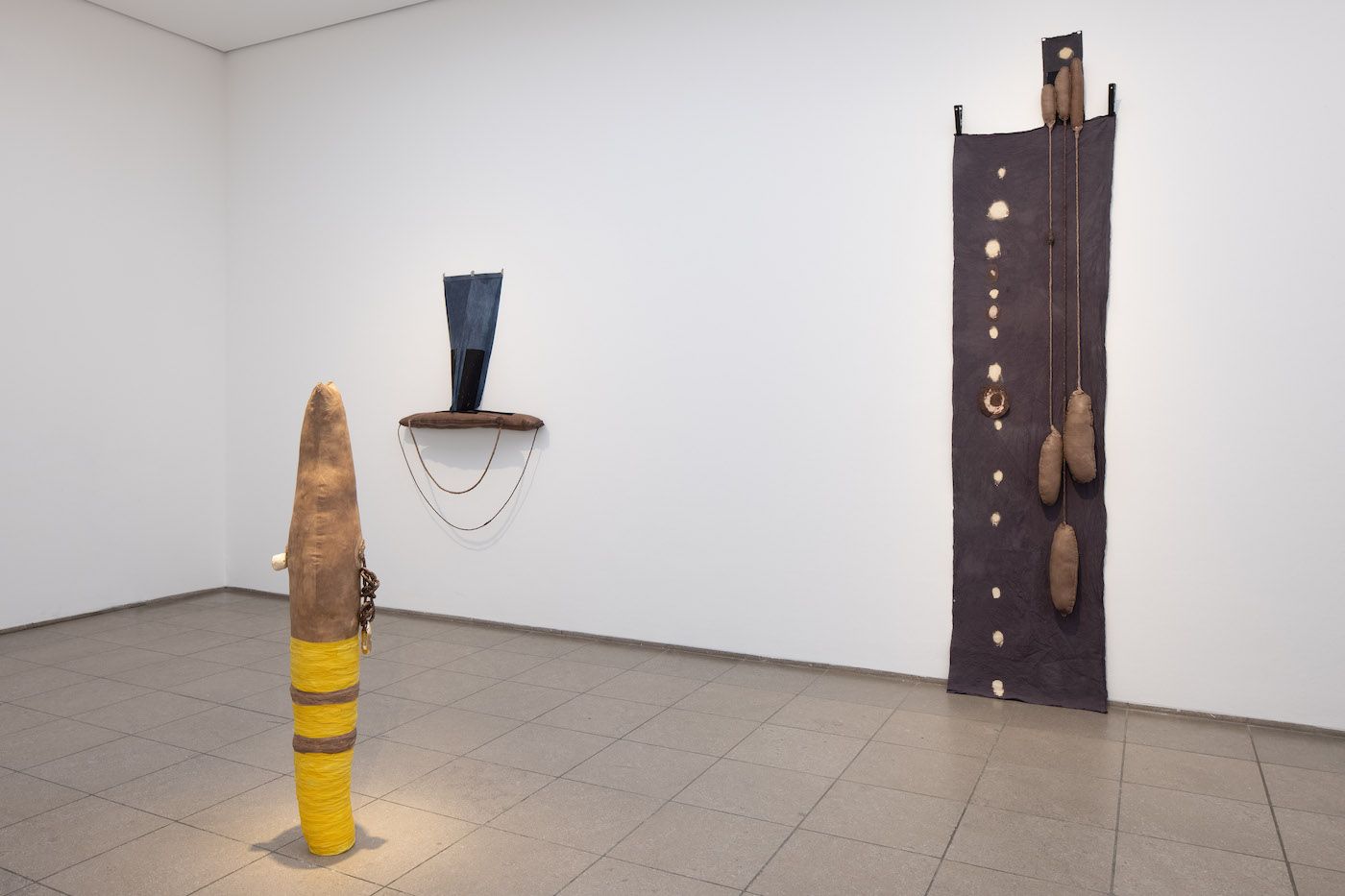
cameron clayborn. nothing left to be, Exhibition view Hamburger Bahnhof – Museum für Gegenwart – Berlin, September 15, 2022-January 22, 2023, © cameron clayborn, Courtesy Simone Subal Gallery, New York, © Staatliche Museen zu Berlin, Nationalgalerie / Thomas Bruns
C&: Your body appears through performance or photographic documentation repeatedly – how do you place your physicality in your work?
cc: There is this video work I did in my father’s house where I took off my pants and tucked my penis and stood up against the wall, while the door was open and everyone was downstairs. It was an incredibly tense moment and I remembered that I always used to do this as a child too. It is connected to coming to terms with my femininity, being non-binary, what this means for myself and how to keep these things within me.
C&: What was your relationship to your father like growing up? How did he “teach” you about being in a body?
cc: From my father I take away how to tend to my body because he is a sportsperson, although it was always loaded with masculine expression. At the same time, it did make me very attached to my body. I need to run, I need to move, I need to dance, I just need to do things. I understand this as a way to get things out. If I didn’t go through all those weird sports things, I wouldn’t have known that.
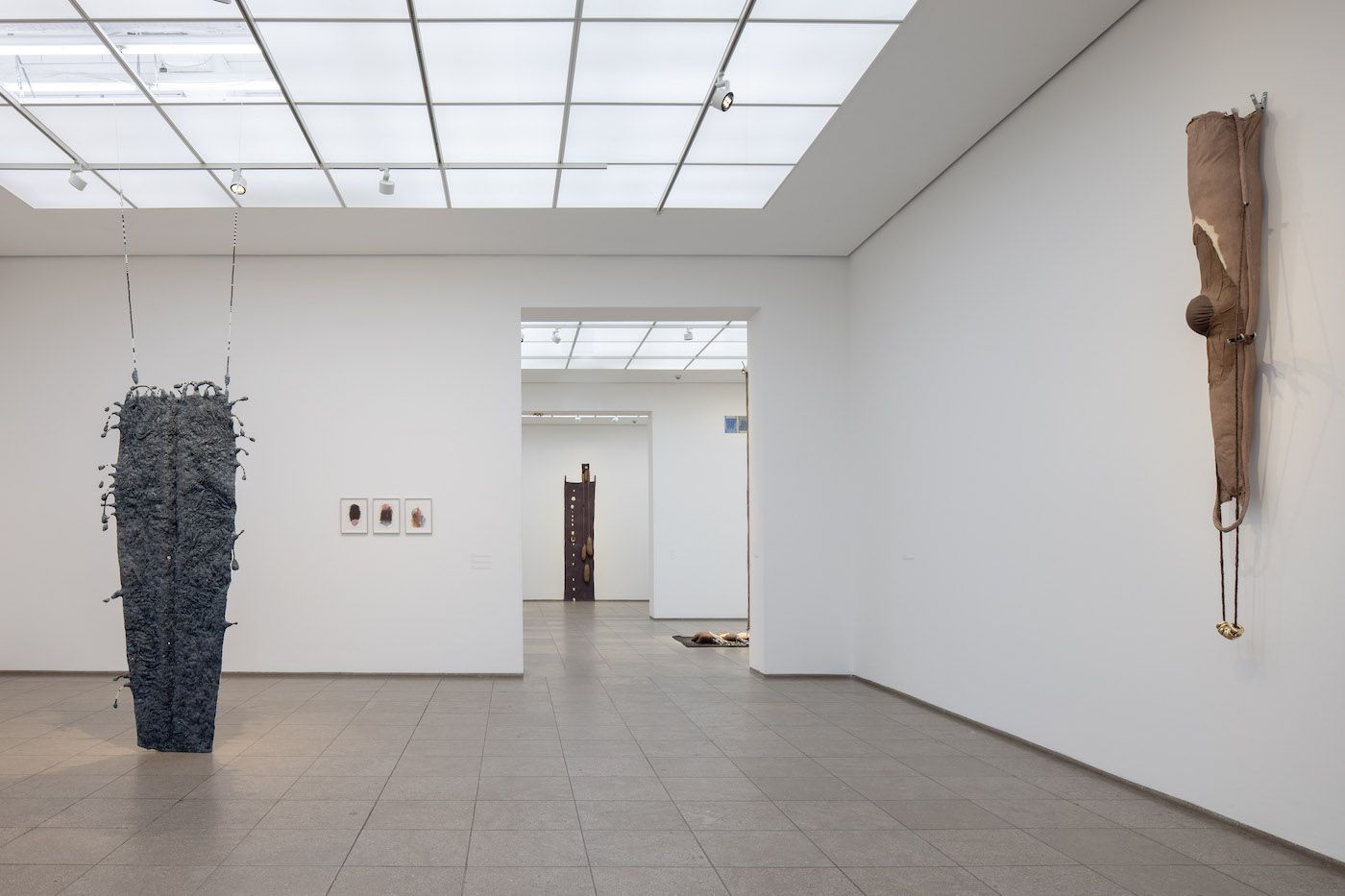
cameron clayborn. nothing left to be, Exhibition view Hamburger Bahnhof – Museum für Gegenwart – Berlin, September 15, 2022-January 22, 2023, © cameron clayborn, Courtesy Simone Subal Gallery, New York, © Staatliche Museen zu Berlin, Nationalgalerie / Thomas Bruns
C&: How was it different from spending time with your mom?
cc: When my parents divorced, I basically called it the split. I moved with my dad and then I lived with him, and I saw my mother over the summers and she’d come to Memphis and we’d stay in hotel rooms together, so placelessness is what I know. And when I was with my mother and sister over the summer, I just felt so incredibly free in this Black femme space – I still know what it feels like, I grew up in it. I expressed myself in so many ways, but as soon as I was back with my dad things became small and narrowed.
C&: Do you remember tender moments with your dad?
cc: Yes, of course. I remember when he turned fifty and we were driving somewhere in Texas and I remember how he gets out of the car at some point and tells me, Cameron, I just turned fifty and I don't know anything. And I was like, what? Because my father is very brilliant. He always comes off as a know-all. Hearing him say this and admitting I don’t know what I’m doing, to see this strong Black man say this, was so fragile. It was great because nowadays he talks with me about my art and loves what I do and is very proud. Me and him will always have a certain type of relationship, that’s what it is.
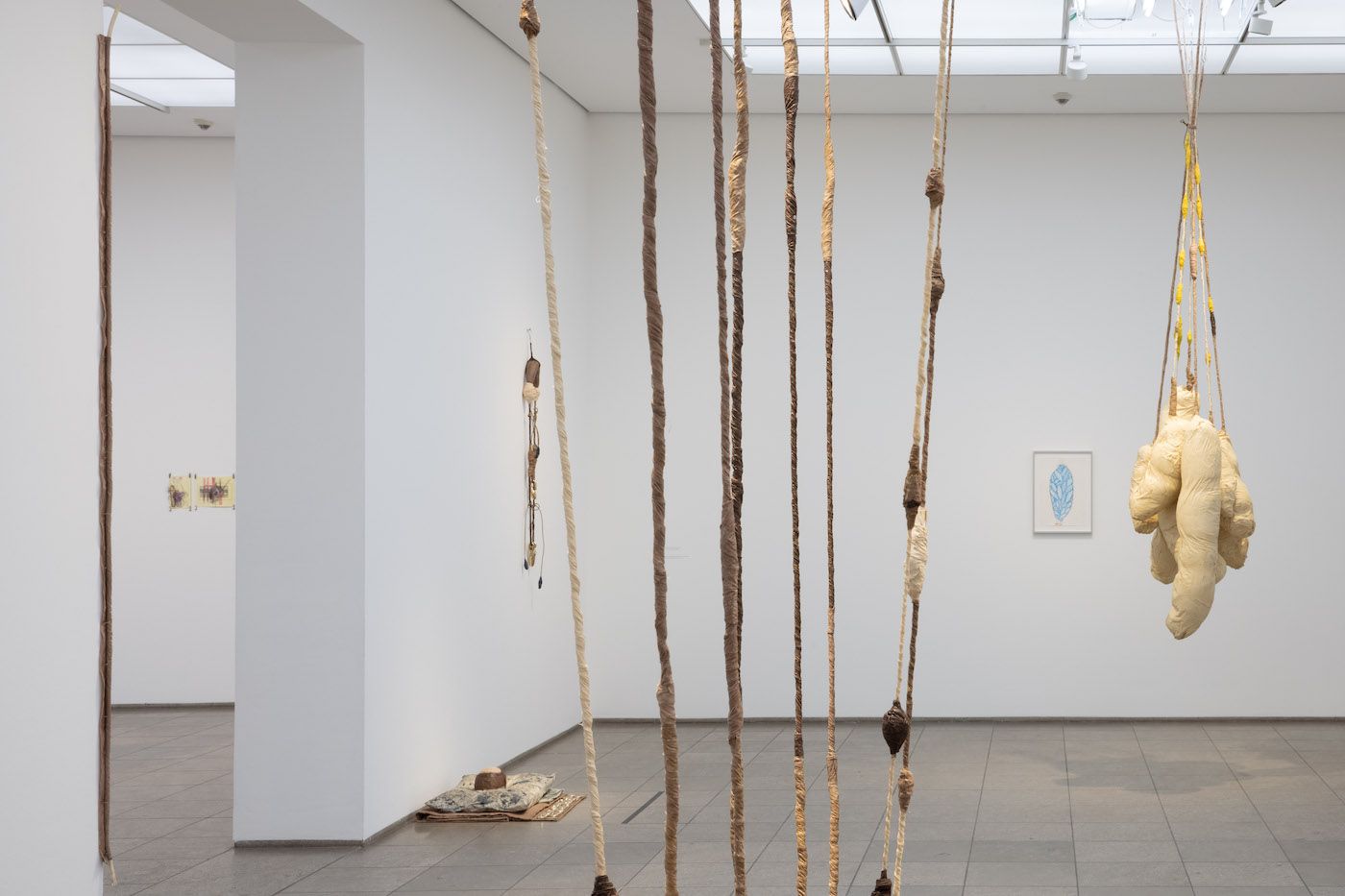
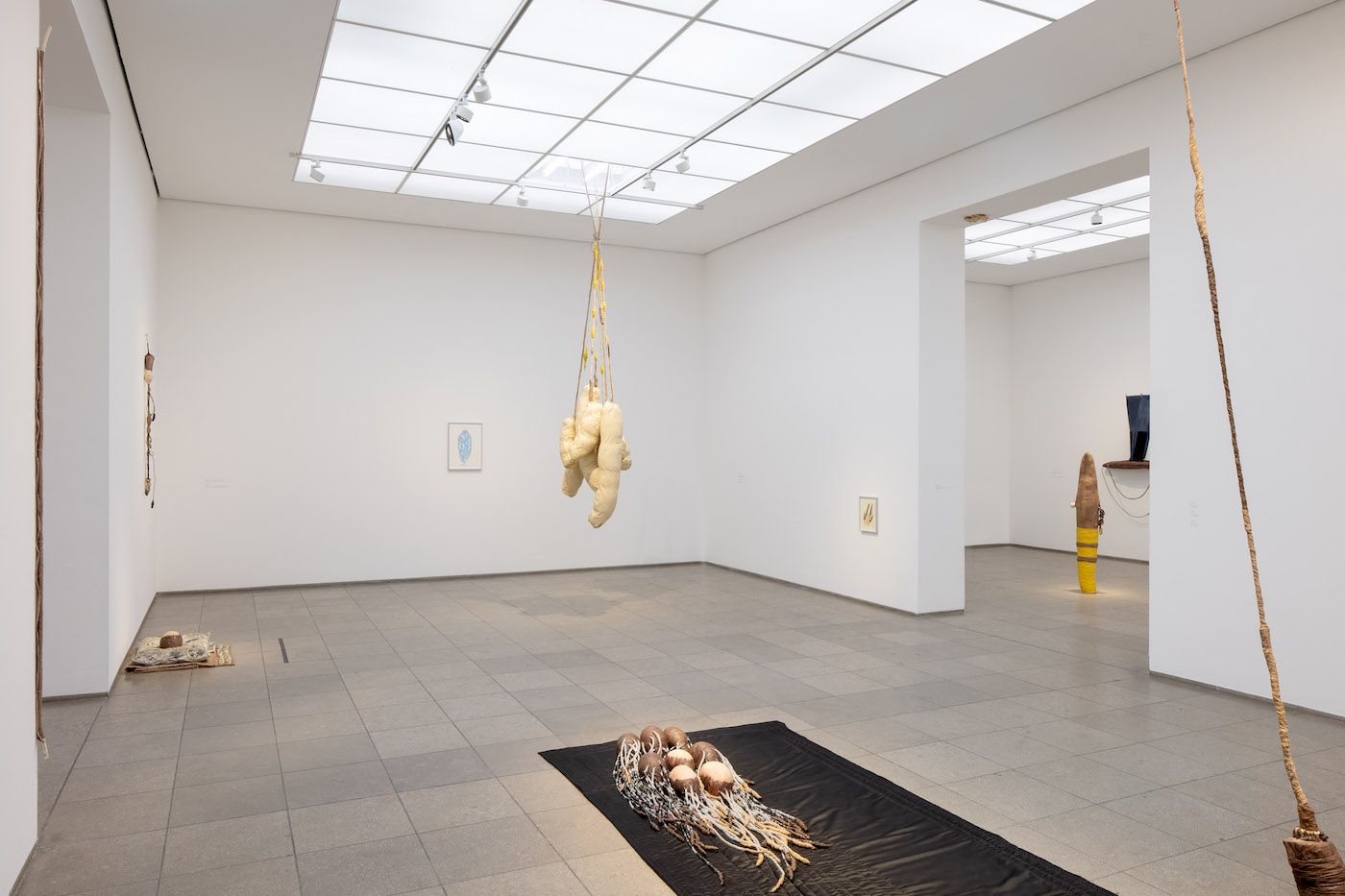
cameron clayborn. nothing left to be, Exhibition view Hamburger Bahnhof – Museum für Gegenwart – Berlin, September 15, 2022-January 22, 2023, © cameron clayborn, Courtesy Simone Subal Gallery, New York, © Staatliche Museen zu Berlin, Nationalgalerie / Thomas Bruns
C&: Hearing of these emotional planes you lived as a child and in your relationship with family members, I wonder about the materiality and manifestation of your work and how it might function as a translation tool.
cc: I love fabric, because you can do anything with it. I can wrap it, foil it, make it fat, make it thick, thin. I love it. Through drawing I can understand how to work and the more I do it the more I can create these characters or distinct lines of action. Once I am able to do that, I can transfer that same image into sculpture. It is always about trying to harness energy, transferring it. It’s not about coherence or logic – I am anti-logic when it comes to my work. I can’t operate on logic in my life. Not all the time.
C&: What role does failure play in your practice?
cc: Failure is always generative. If you want to continue to tend to your pain as if it’s the only thing with which you are able to create, that sounds as if it comes out of a demon’s mouth. Because you don’t need that and I think this is part of the failure. All of the work that did not work is in my current work, you know what I mean? All of that which is not on view here in Berlin is still in this room. Because there are so many pieces that did not work, so many failed experiments.
cameron clayborn: nothing left to be through 22 January 2023 at Hamburger Bahnhof – Nationalgalerie der Gegenwart, Berlin, Germany.
Magnus Elias Rosengarten is a writer and artist who currently lives in Berlin.
The Heart of the Matter: Carrie Mae Weems at FOMU Antwerp
Water is Running: Wura-Natasha Ogunji’s Aquatic Archive
Aggregates of Plunder: Ndidi Dike’s Rare Earth Rare Justice
Thenjiwe Niki Nkosi Frames Printmaking As A Relay Process
Olukemi Lijadu: Feedback, Friction and Black Atlantic Music