Aggregates of Plunder: Ndidi Dike’s Rare Earth Rare Justice
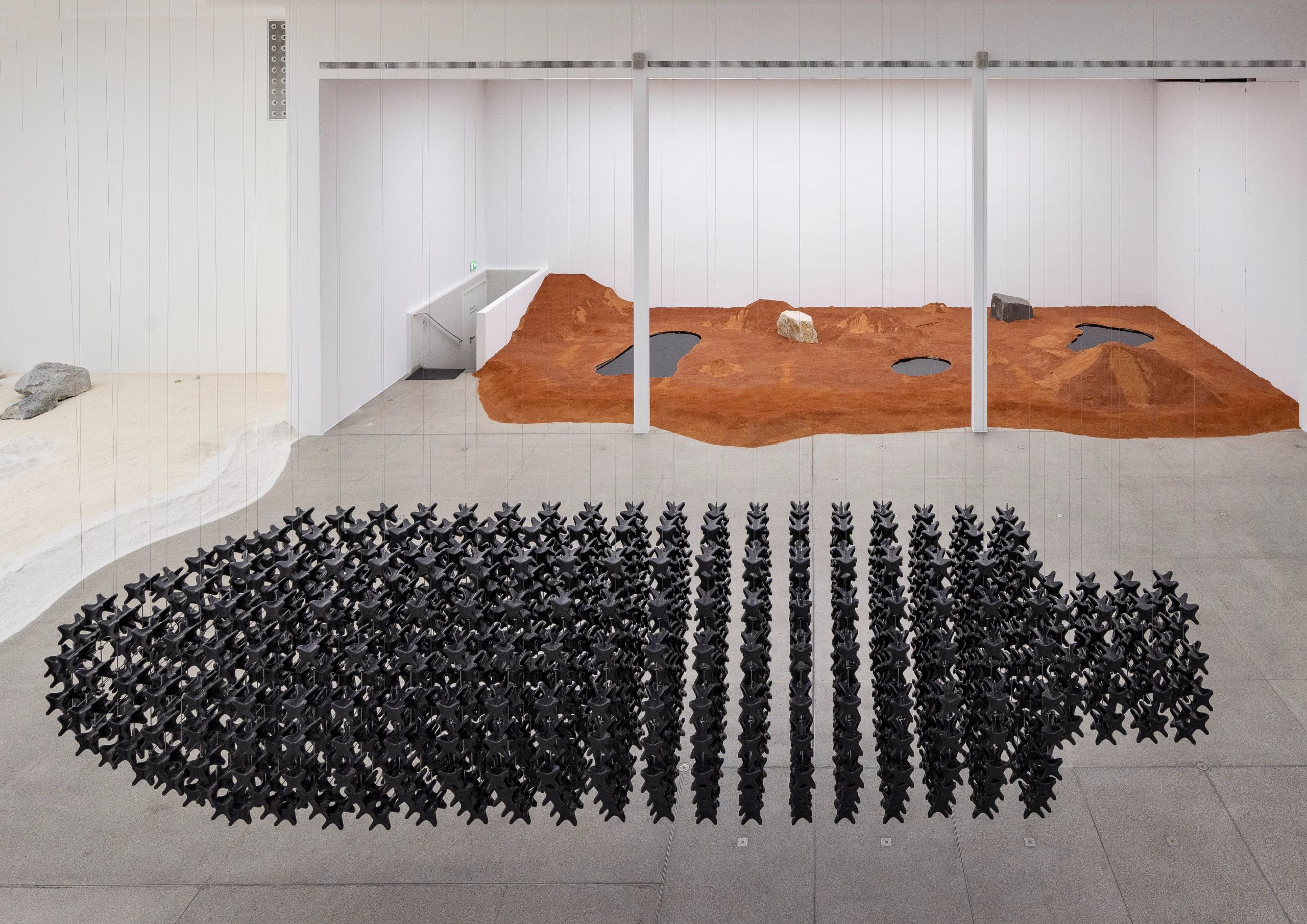
Ndidi Dike, Rare Earth Rare Justice, installation view, Secession 2026. Photo: Iris Ranzinger
In conversation with C&, sculptor Ndidi Dike traces the long grammar of extraction, from King Leopold’s rubber quotas to the cobalt mines powering the global green economy. She asks about the people who bear the cost of progress, for whom justice is a rare event. Dike’s exhibition, Rare Earth Rare Justice, curated by Jeanette Pacher, is on view at the Secession, Vienna, until May 31, 2026, before traveling to Färgfabriken, Stockholm, and Zachęta National Gallery of Art, Warsaw.
Naima Hassan: The exhibition opens with the sound of money-counting machines. When the hall fills with people, the sound drops to a hum. Why begin there?
Ndidi Dike: This was a commentary on the unrelenting extraction of resources, wealth, and capital from the Democratic Republic of Congo. Billions worth of unprocessed cobalt have left the DRC—circulating through Europe, China, and elsewhere—feeding industries that contribute to global growth.
The sound evokes financial systems operating at a distance from the human and environmental costs they generate. It transforms lives, land, and labor into abstract units of value. Its steady tempo mirrors the logic of extractive capitalism: accumulation without pause, calculation without accountability. Within the exhibition, the sound functions as an acoustic reminder that extraction is sustained by invisible transactions, global markets, and infrastructures that render violence legible only as profit. The hum indicates how this wealth continues to leave this continent in the midst of wars, displacements, illegal occupations, and ecological disasters.
NH: Your artistic practice is deeply informed by the Nsukka school and decades of work in Lagos. The exhibition turns its attention to the DRC. In Vienna, you said, “That’s where my interest lies.” Can you say more?
ND: Extraction relates not only to natural resources but also to people. Throughout my career, I have worked on histories of enslavement, migration, and the circulation of commodities. So in that sense, this is a continuation.
But the case of the Congo has always stayed with me.
When we think about Patrice Lumumba—the only thing left of his physical presence is a gold tooth. That alone is profound. People often ask me: Why the Congo? Why not Nigeria? The way the creative spirit is, there are things that move you, and you feel compelled to respond.
I remember a workshop I attended at Bisi Silva’s last Àsìkò School at the Centre for Contemporary Art (CCA) Lagos in 2010, titled On Independence and the Ambivalence of Promise. Someone gave a presentation on the Congo, and I was shocked to learn that during King Leopold’s rule, failure to meet rubber quotas resulted in dismemberment. That was a pivotal moment. It is why I’m still talking about the DRC today.
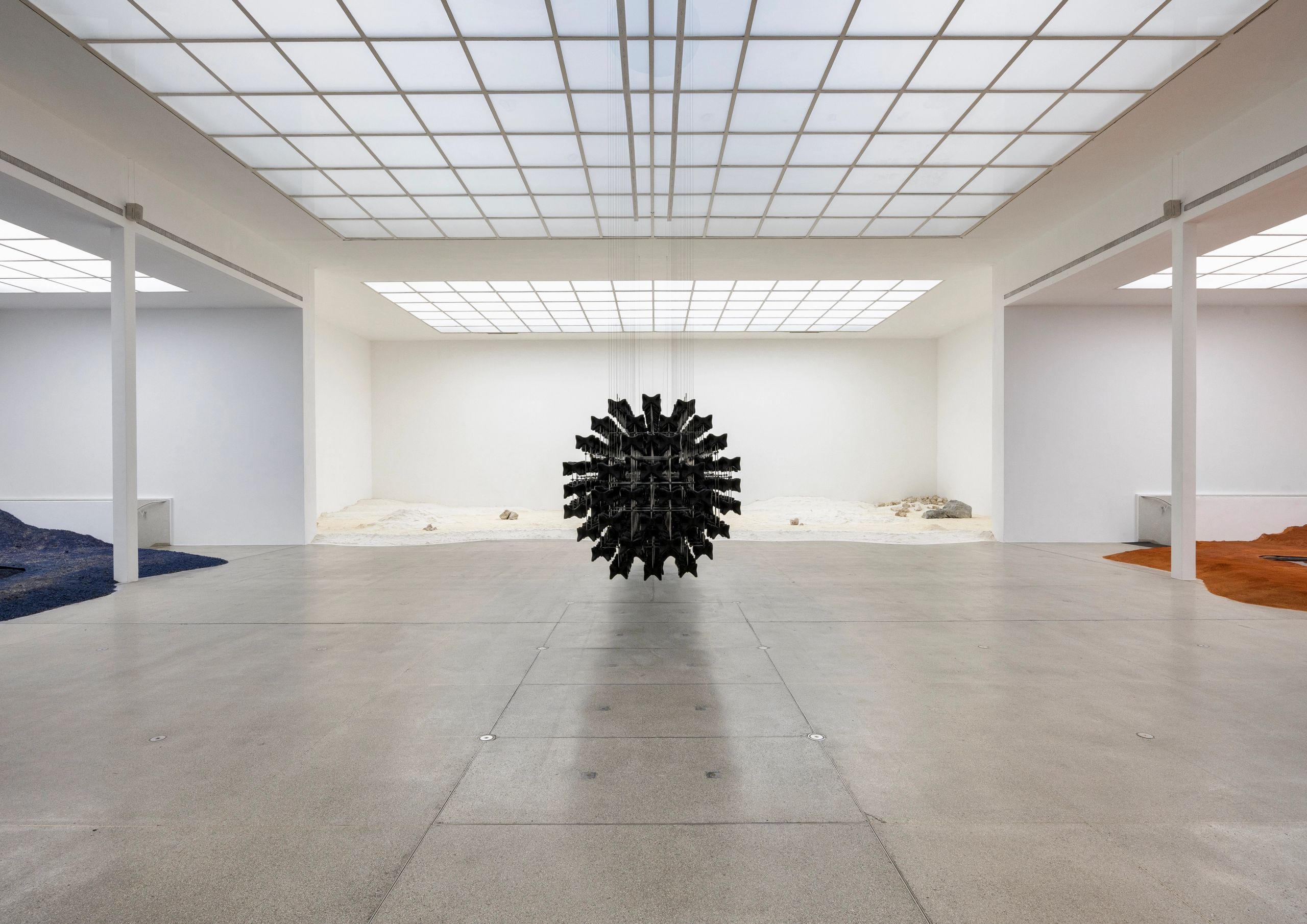
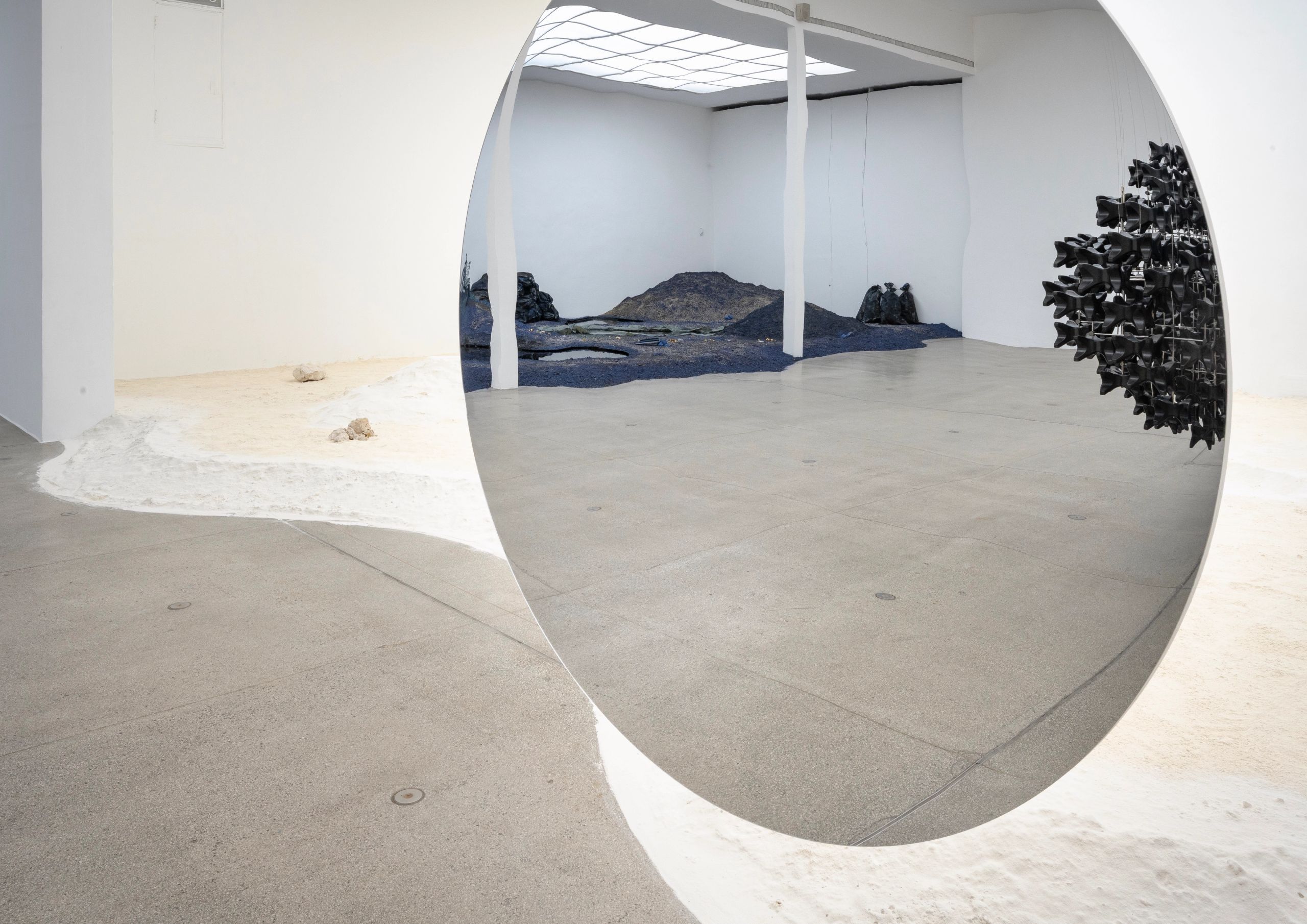
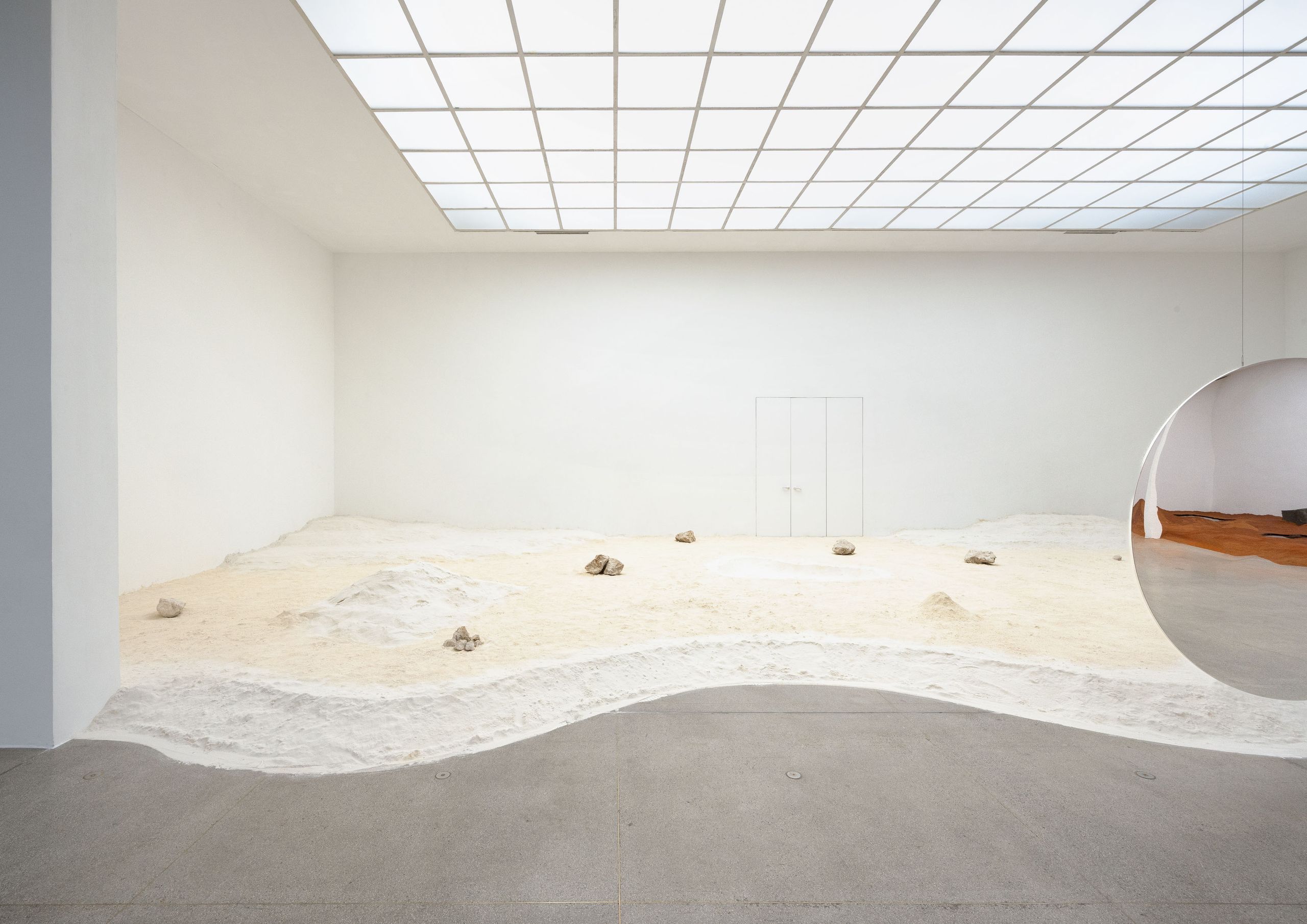
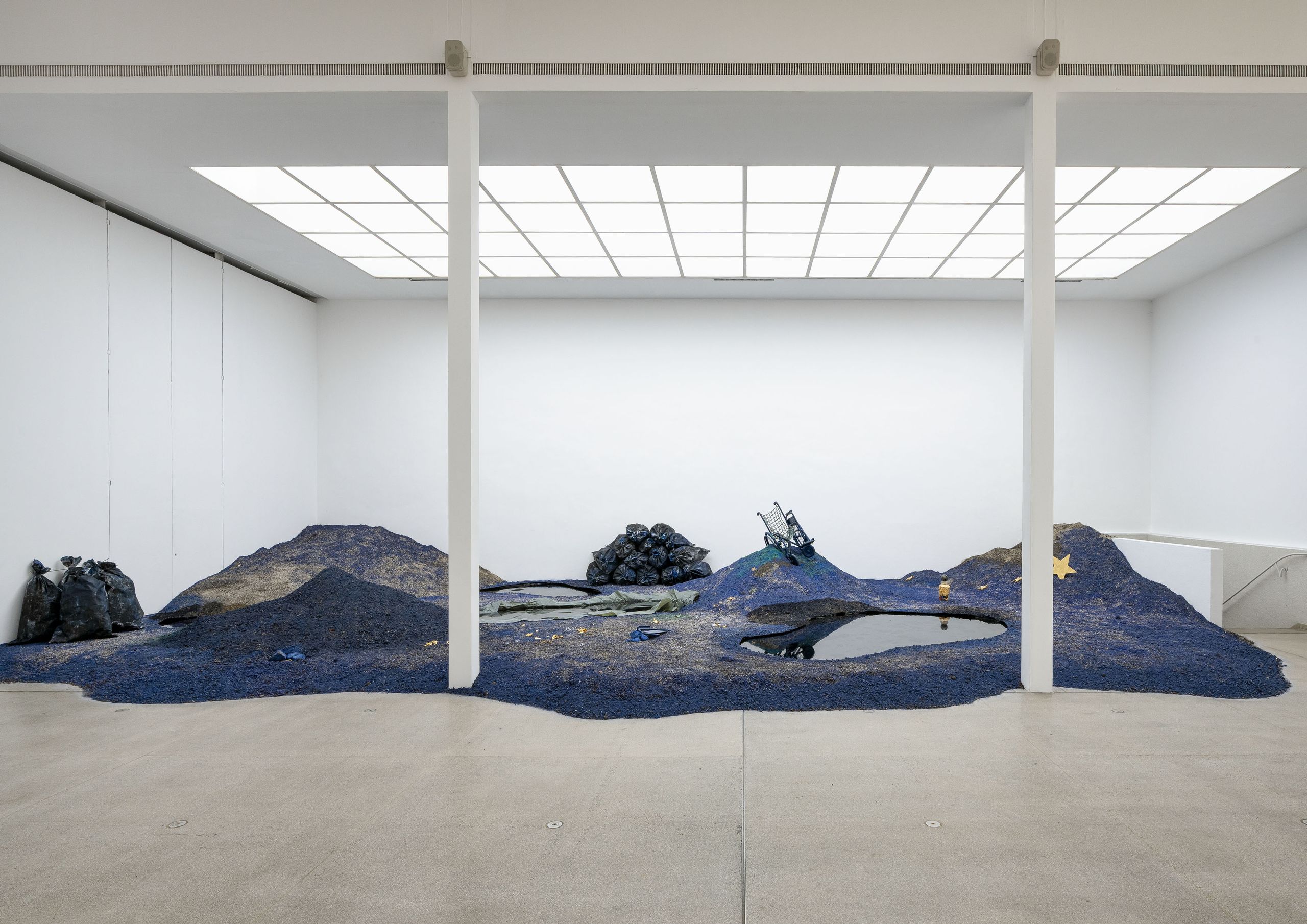
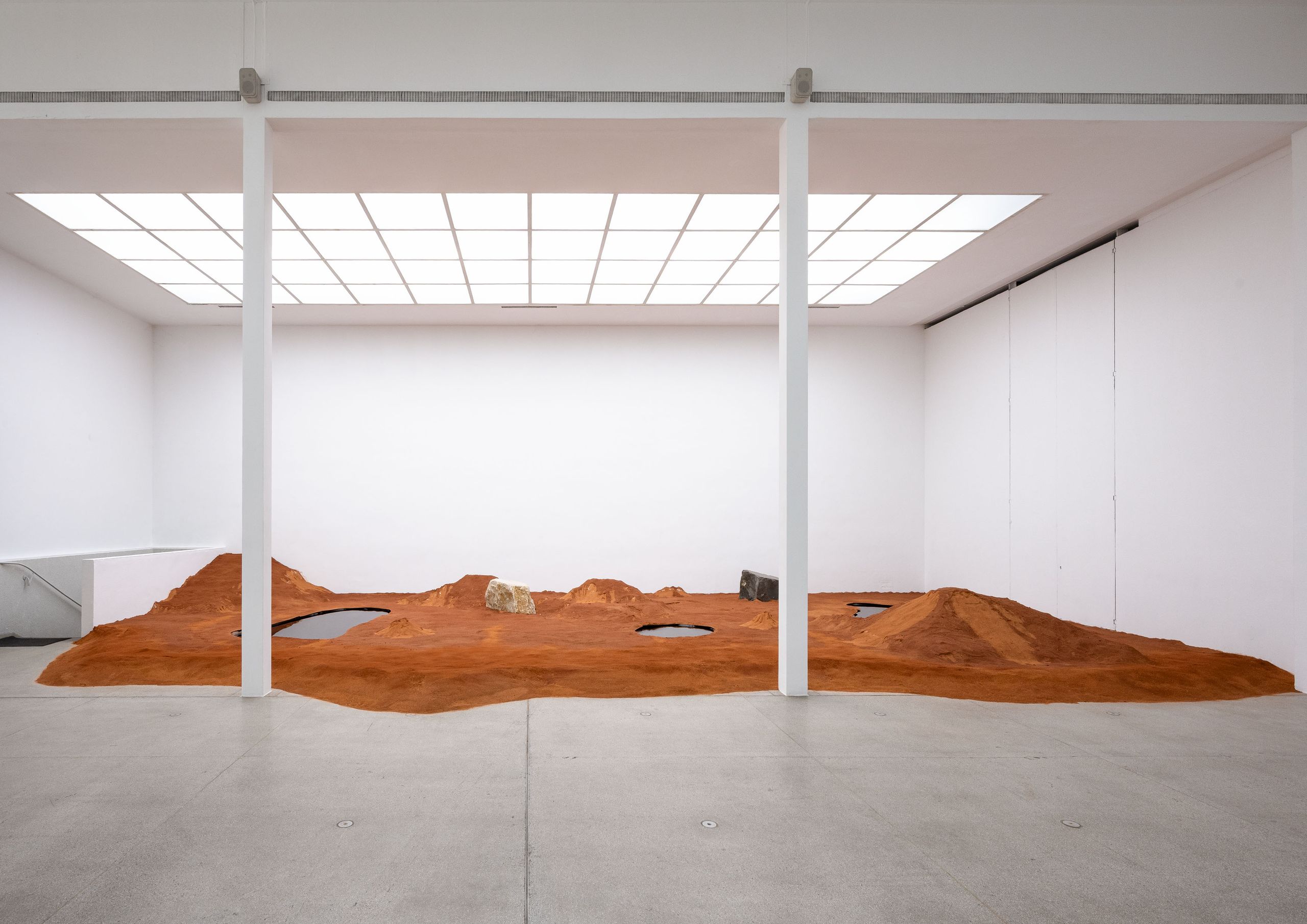
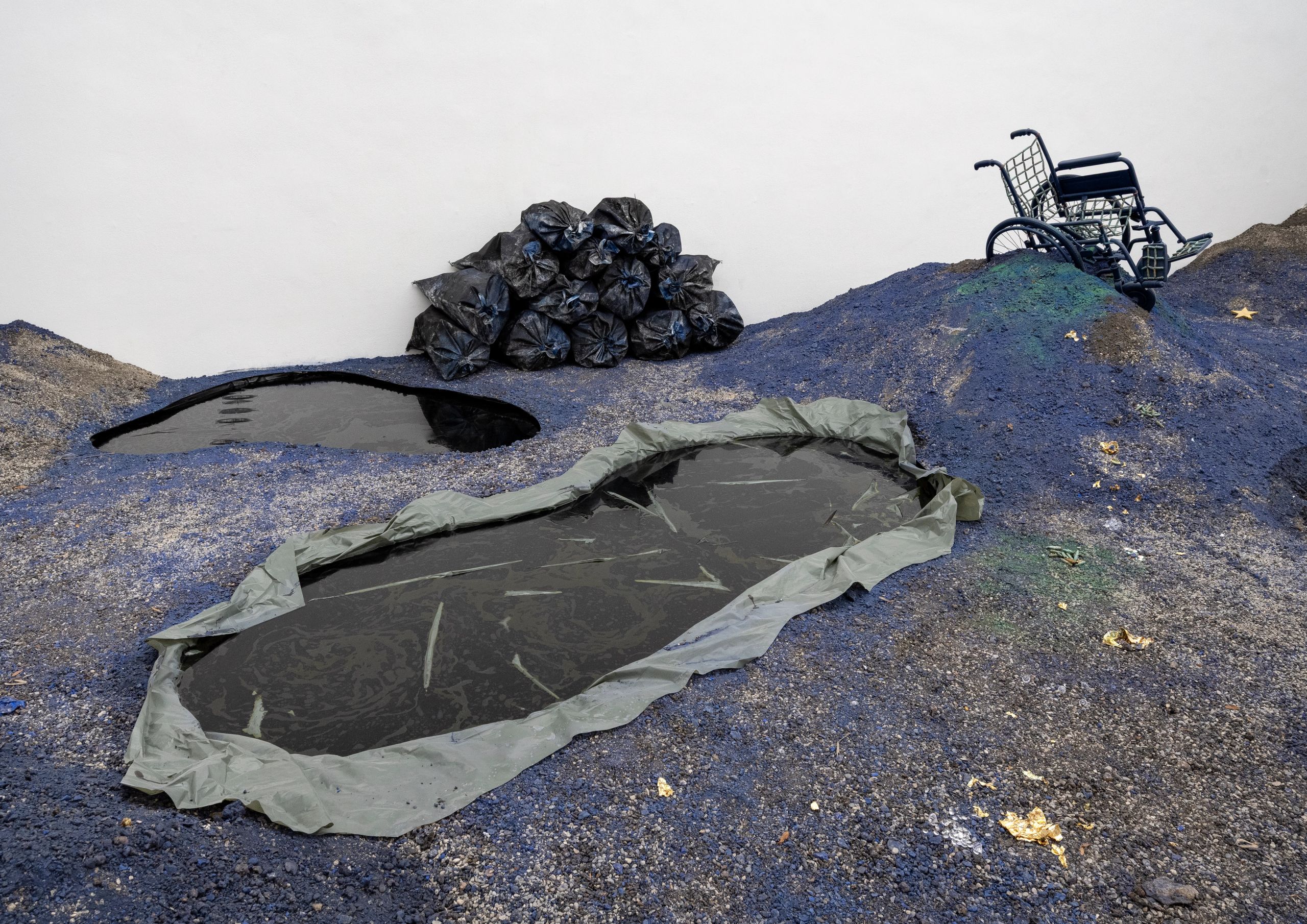
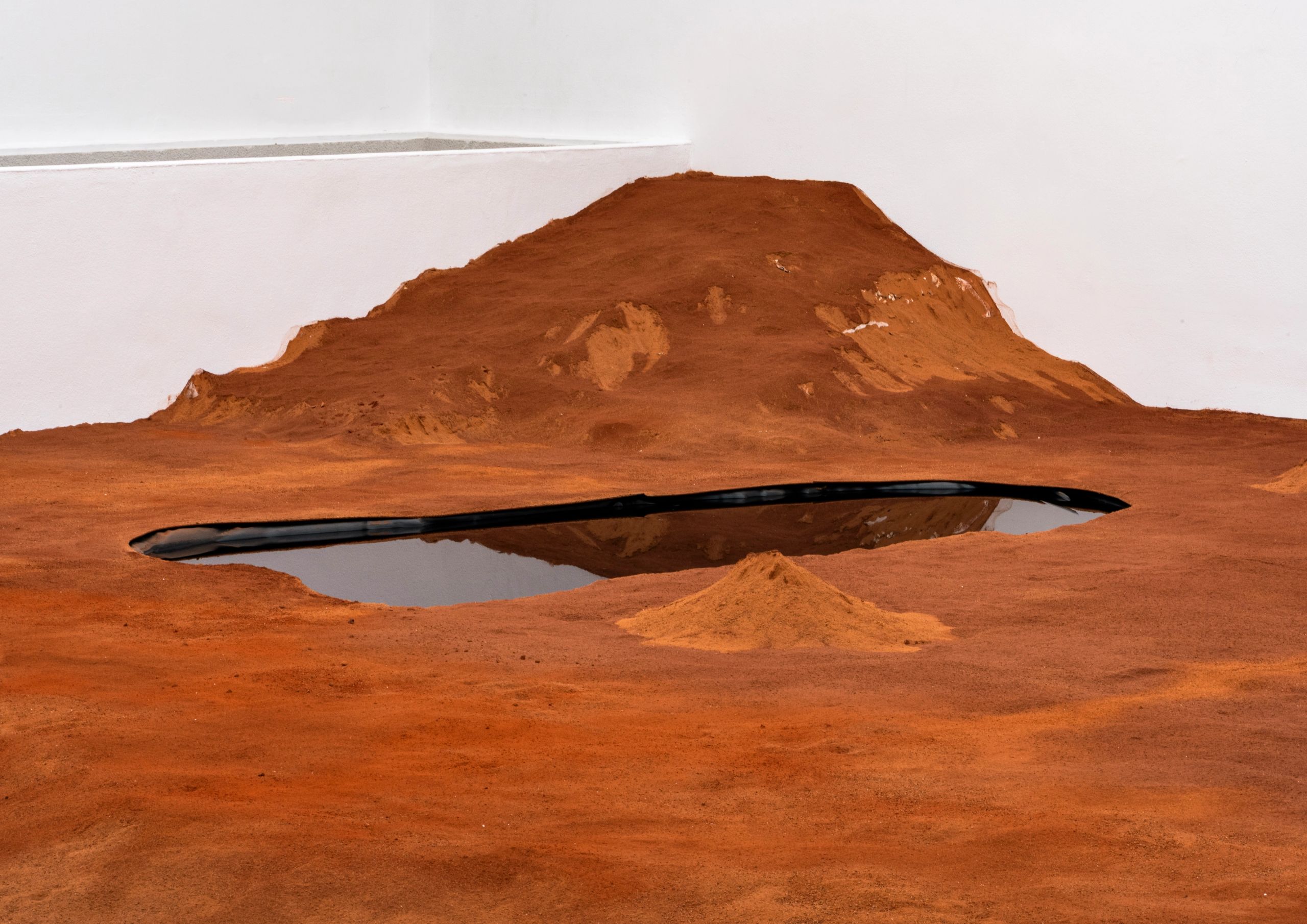
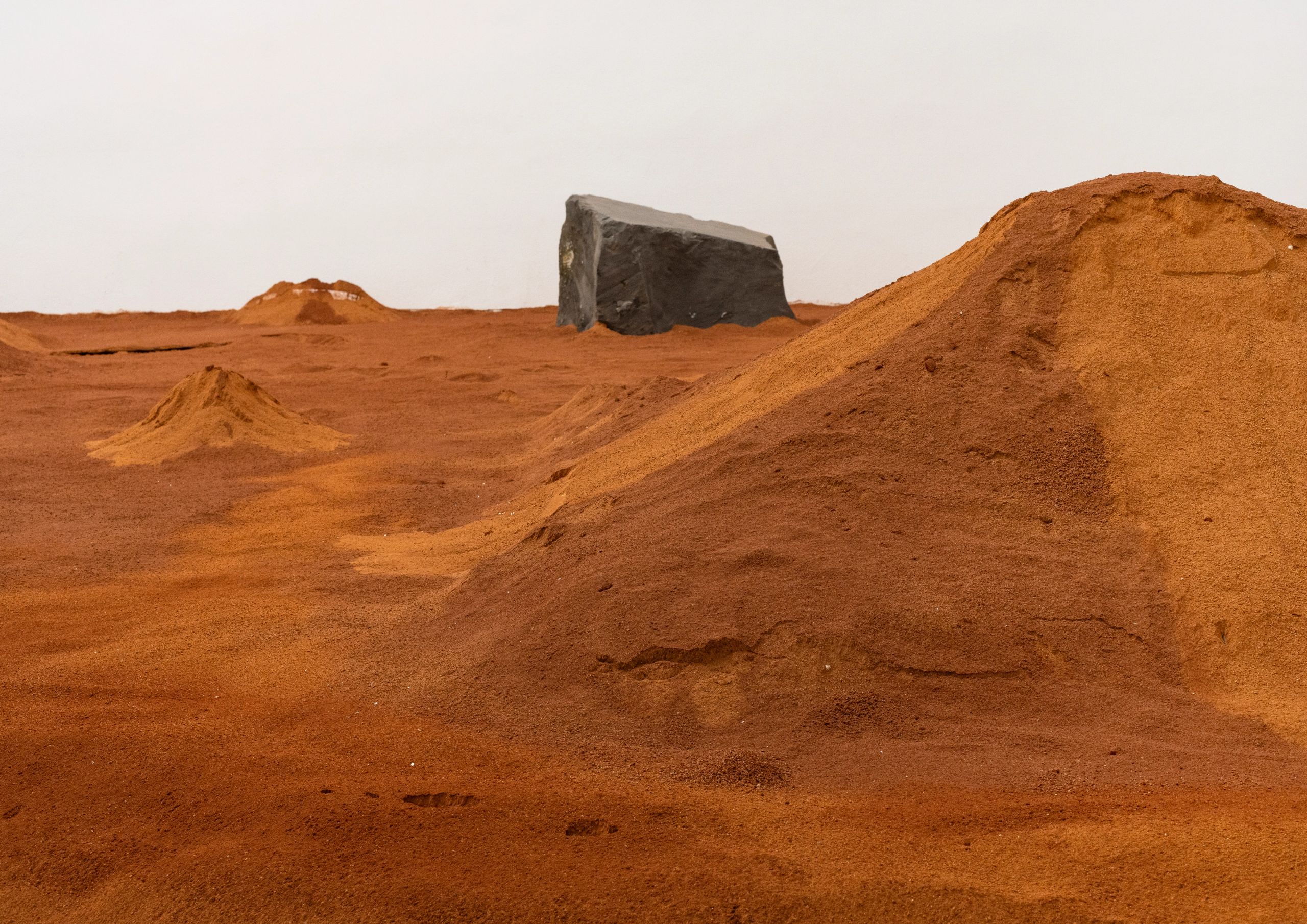
NH: The exhibition floor becomes what you call a mine/mindscape hosting three topographies. The tricolor—red, white, blue—references the flags of global powers. Can you walk us through this?
ND: That choice is based on the concept that, historically, certain nations have been at the forefront of extracting resources from Africa—whether commodities like cocoa and vanilla or minerals such as gold and diamonds, or even human labor.
The red, white, and blue refer to those geopolitical powers. The stars within the blue landscape extend that reference to include China and the European Union. It becomes a visual language of global dominance and participation in extraction. I am interested in embedding subtle cues that encourage deeper reflection. Many people are not aware of the sacrifices that sustain their everyday lives. Africa has one of the lowest carbon footprints globally, yet who is bearing the consequences of global warming?
NH: The exhibition was developed on-site at the Secession. What did that process make possible?
ND: The Secession team—the president, Ramesch Daha, curator Jeanette Pacher, and the technical department—enabled me to physically realize ideas I had held for some time. It was a productive, experimental, and organic process. There is something about entering a space and allowing its architecture to provoke your thinking. Not all artists have the opportunity to work at that scale.
When I entered the space, ideas began to form almost immediately. Working with an artist-led institution makes a difference. There is a shared understanding, and there are things that don’t need to be said. We experimented with different construction methods—wooden pallets, which reference trade; then styrofoam and cardboard; and finally the structures that had the form I needed.
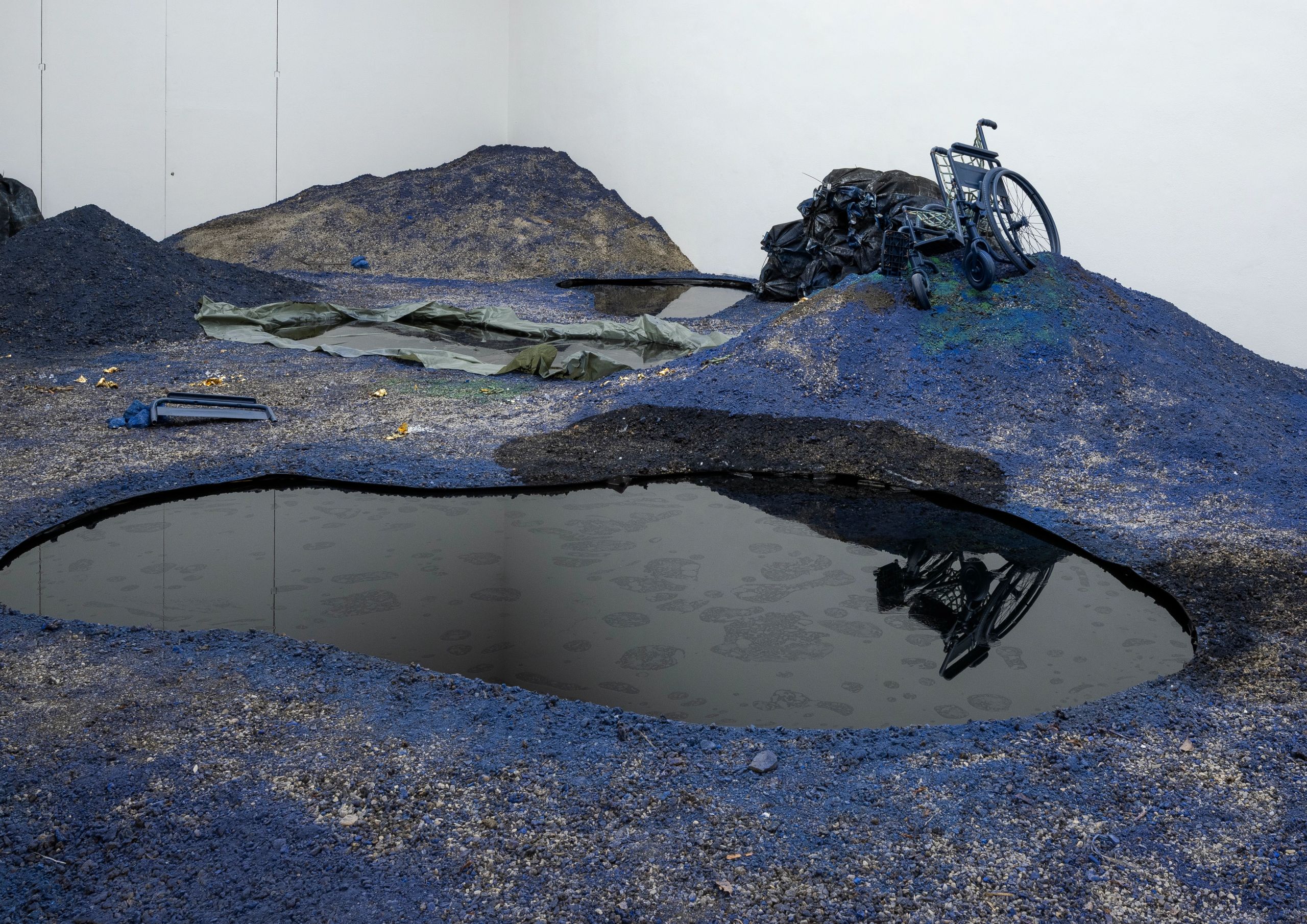
The cobalt site was the most intense. I worked with gravel, mixing in pigments to create variations in color. Sections were cut away so the wheelchair could sit at an angle, partially submerged. I introduced a green pigment to represent the residue and tailings—the chemical and environmental damage caused by extraction. I also wanted that green because it references the patina which grows on metals including bullets— because everything is ultimately a question of time.
Ndidi Dike, Rare Earth Rare Justice, installation view, Secession 2026. Photo: Iris Ranzinger
NH: You’ve spoken about cobalt as a material that connects hands worldwide, but in dehumanizing ways. How does that logic shape the work?
ND: When you talk about going green, everybody knows that one of the major components of technologies—mobile phones, airplanes, military hardware and defense technologies, hospital equipment—is cobalt. Many of those working in cobalt mines in the DRC are young people, women and children. They are treated as expendable and there is little regard for their health or well-being. At the same time, we have this object in our hand that we can’t live without. That disconnect is central to the work.
NH: A wheelchair with its seat woven from spent cartridge casings appears within the cobalt landscape. What is its role?
ND: The wheelchair speaks to bodies that have been rendered vulnerable, injured, or permanently impaired. By weaving spent bullet casings into its structure, I collapse distinctions between harm and care, between violence and support. At the same time, it gestures toward structural disablement: communities, nations, and landscapes systematically depleted through extractive economies, conflict, and environmental damage. These conditions produce long-term consequences—physical, social, and ecological—that are rarely acknowledged.
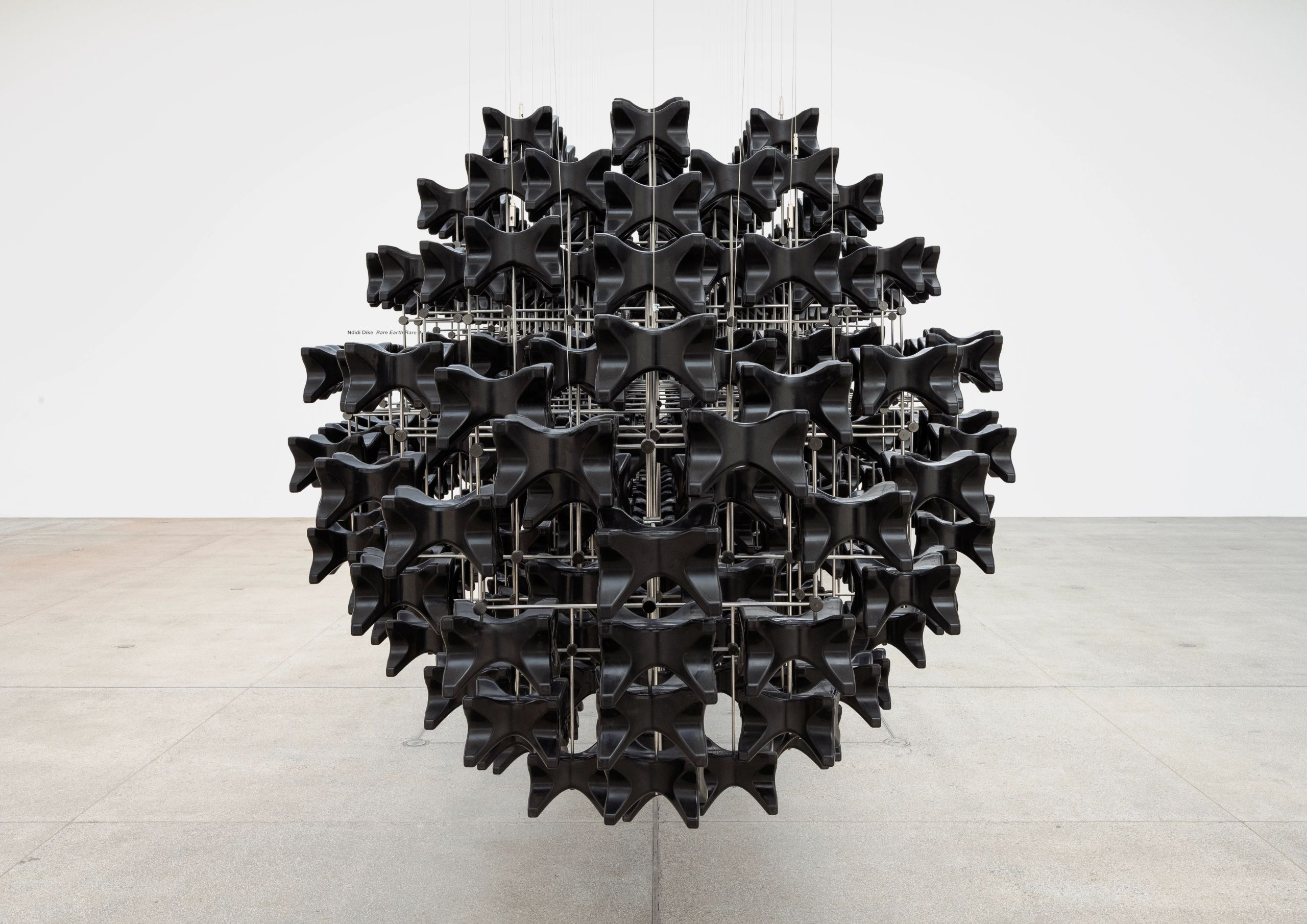
NH: At the center of the exhibition is a suspended sculptural installation composed of autopsy neck rests arranged to trace the layout of a slave ship’s hold. How does this work engage with that history?
ND: I have always been invested in the history of the enslaved. If we consider the infamous 1788 diagram of the British slave ship Brookes, it is impossible to imagine how human beings were tightly packed, laid down, and shackled together in the hold of a ship for a two- to three-month journey.
For me, it is still about extraction. This time, we are talking about Black and Brown bodies. I asked myself: How can I offer a more nuanced reinterpretation of that image—an image that underpinned the Industrial Revolution?
This is where the support of Secession’s production team came in to produce that sculptural installation. When you look at it as a two-dimensional image of the hold of the ship, it also resembles the shape of a bullet. What best represents death, history, mourning, erasure, commodification? For me, it was the autopsy neck rest.
To many people, the neck rest looked beautiful. The diamond shapes and bone-like structures were intriguing. But when I told them what it was, their countenances changed.
Attraction and repulsion consciously coexist in my work. When dealing with such charged topics, my strategy is to draw the viewer in with the beauty of the work. It beguiles you. Once you have accepted that and begin to ask what it is, other layers emerge.
Ndidi Dike, Rare Earth Rare Justice, installation view, Secession 2026. Photo: Iris Ranzinger
NH: At the opening conversation with Bonaventure Soh Bejeng Ndikung, he asked whether reparation was even imaginable at this scale of rupture. How did you arrive at your answer?
ND: My answer was no. When leaders such as the president of Ghana raise the question of reparations at the UN, there is little indication that it will be meaningfully addressed. From the perspective of the Global North, there has been a reluctance to engage with this issue, and I do not see that changing in a substantial way.
NH: Are there other intellectual or artistic influences that informed the exhibition?
ND: In my book Discomfort Zones (2022) there’s a chapter, “Walking Through an Impasse”, that was influenced by Achille Mbembe and his writings on natural resource extraction and the body. Kathryn Yusof’s A Billion Black Anthropocenes or None (2018) and Christina Sharpe’s work is particularly interesting to reflect on through the lens of my earlier works, like the painting In the Wake of My Mind (2005). Antawan Byrd and Perrin Lathrop, too, along with the late Bisi Silva.
Aggregates of influence are important in my practice. In Rare Earth Rare Justice, I present aggregates of plunder. The work is concerned with scale, the volume of earth, the hundreds of autopsy rests—attempts to convey the magnitude of exploitation.
NH: You’ve described the Black body as physically absent but present in its exploitation. How do you respond to the critique that abstraction creates a safe aesthetic distance?
ND: I do not think we always need explicit visualizations of the body to address the commodification of Black bodies. We are living through a time of constant exposure to violence, and there is a level of visual fatigue.
The circulation of violent images is not helpful; many people are distressed and exhausted by it. This fatigue is not new. During the Congo Free State atrocities, photographs documenting violence, such as those by Alice Seeley Harris, were mobilized as evidence. Photography itself has historically functioned as a tool of control and representation within colonial contexts.
NH: You’ve just returned to Lagos after an extended stay in Vienna. How has that transition been?
ND: When we travel abroad and are met with an enabling environment where most of what we need is at our disposal, it’s natural to excel. In Vienna, I had a great deal of professional support; I was able to create. And you can see that in the attention to detail and production in the exhibition.
Back in Lagos, the conditions are very different. I’ve come home to no electricity. This brutal, unrelenting environment constantly pushes me to encounter, endure, and come up with ways to still be productive. I am always pivoting. When aparticular material is not available, I ask: What’s the alternative? That ability to be in flux is something many artists in Lagos possess.
NH: The accompanying publication can travel where the installation cannot. Do you see publishing as a way of depositing these ideas?
ND: Yes, absolutely. “Depositing” is a very apt word. Mining itself is about deposits. There is a resonance there between material extraction and the circulation of ideas.
This interview was conducted in two parts—in Vienna, during the opening of Rare Earth, Rare Justice at the Secession, and via Zoom in April 2026, shortly after Dike returned to Lagos.
The Heart of the Matter: Carrie Mae Weems at FOMU Antwerp
Water is Running: Wura-Natasha Ogunji’s Aquatic Archive
Thenjiwe Niki Nkosi Frames Printmaking As A Relay Process
Olukemi Lijadu: Feedback, Friction and Black Atlantic Music
The Deconstructive Lens of Ngadi Smart: From Drag to Climate Change