AfterBiennales: The Lagoon of Nations at Venice
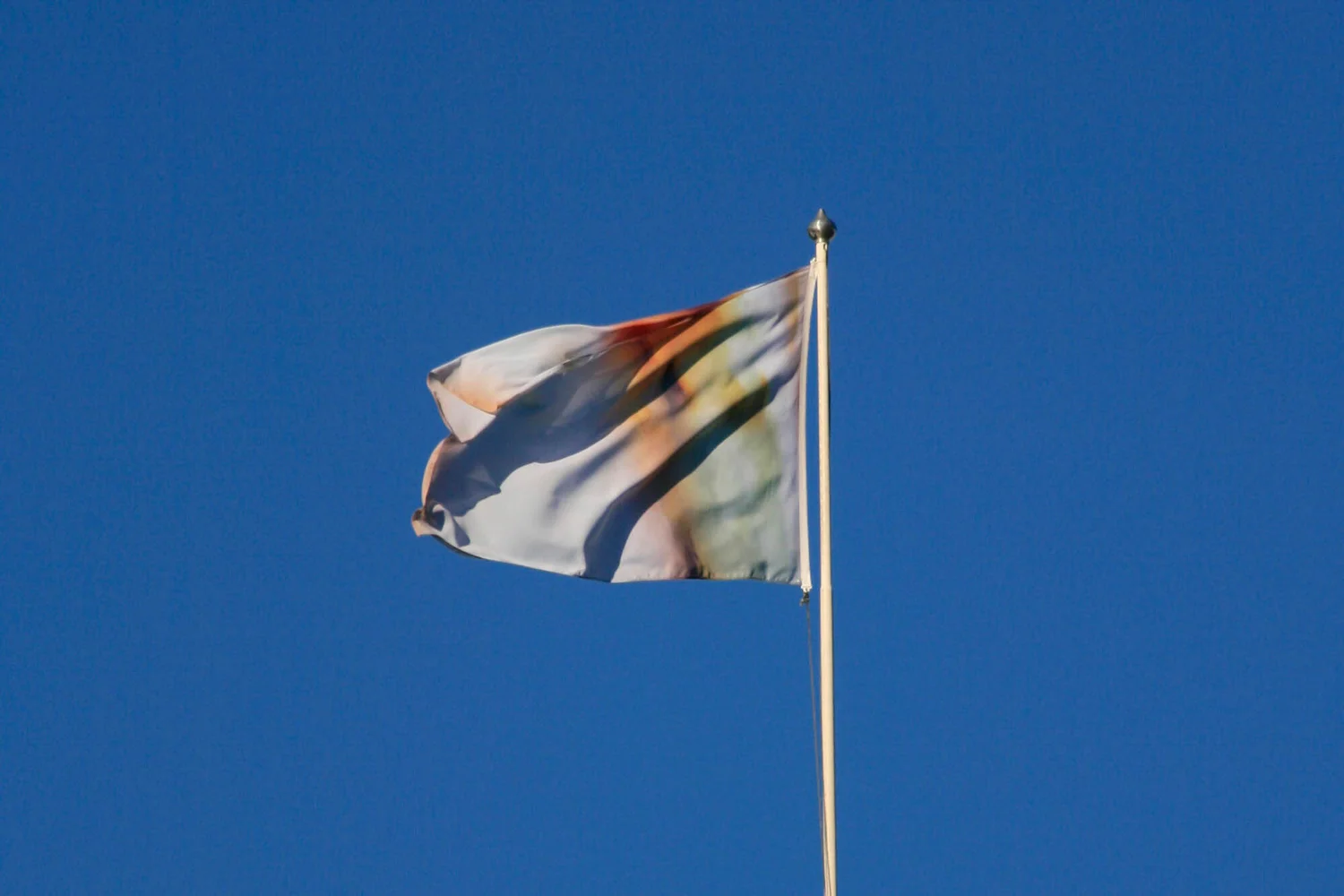
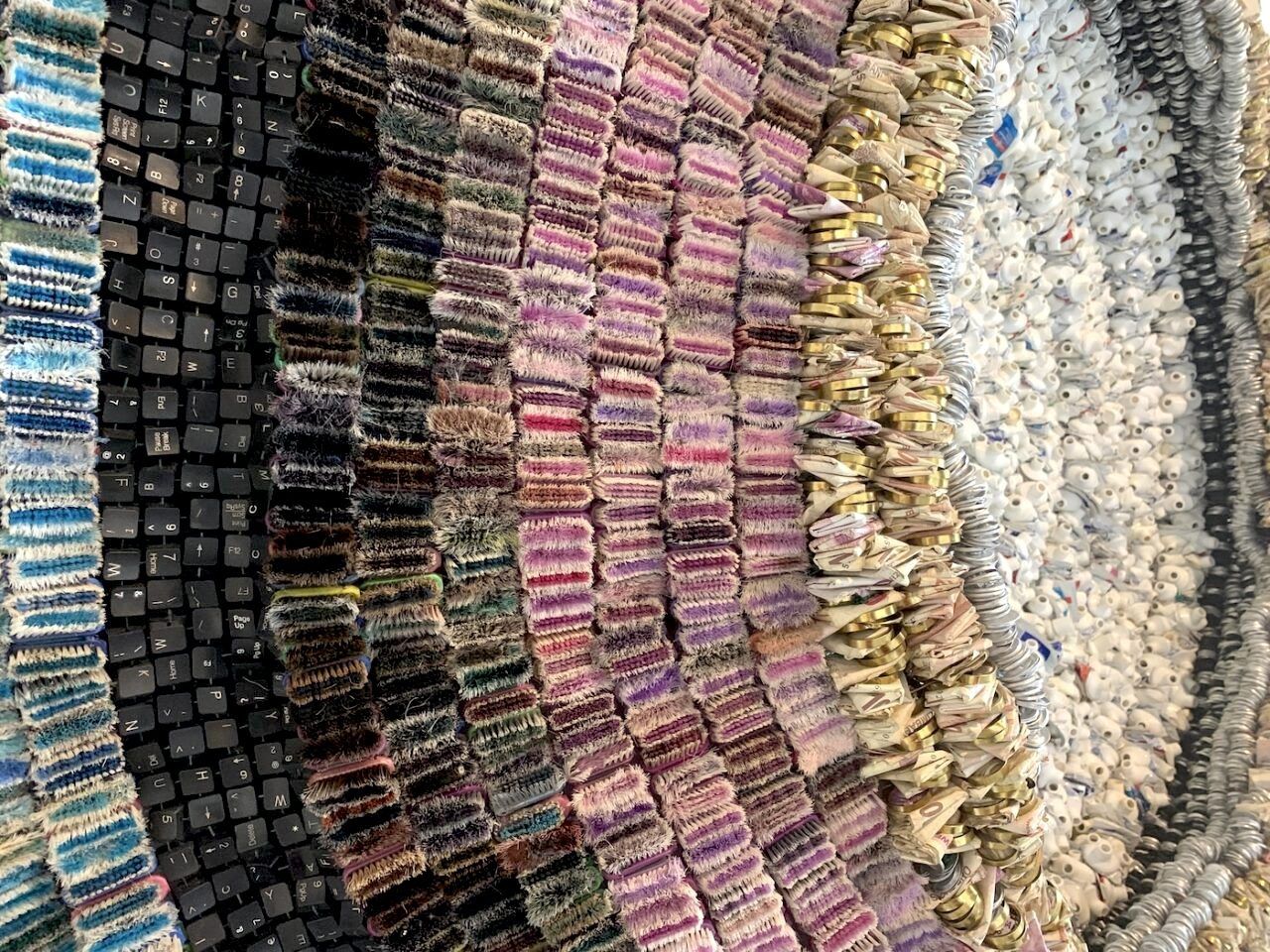
70 artists, "Unfolding Questions, Codes, and Contours" (2012-2020), imaged here first iteration in Bergen 2012, cotton, 79 x 57 inches each (photo by Randi Grov Berger and courtesy Entrée).
With the national pavilion model, the Venice Biennale masquerades provincialism as worldliness; a system that rewards soft power, enables exploitation, and routinely asks Global South artists to bear the cost of its contradictions. With structural parallels to the 1920 League of Nations, the Biennale enshrines the nation-state as the default unit of representation with Europe as its center. Situated on the Venetian lagoon, for a long time it has lagooned its own worldliness — enclosed, managed, and kept it shallow. What would it take to think with fluidity and new contact zones instead?
The minor keys are also the small islands, worlds amid oceans with distinct and endlessly rich ecosystems, social lives that are articulated, for better and worse, within much larger political forms and ecological stakes.
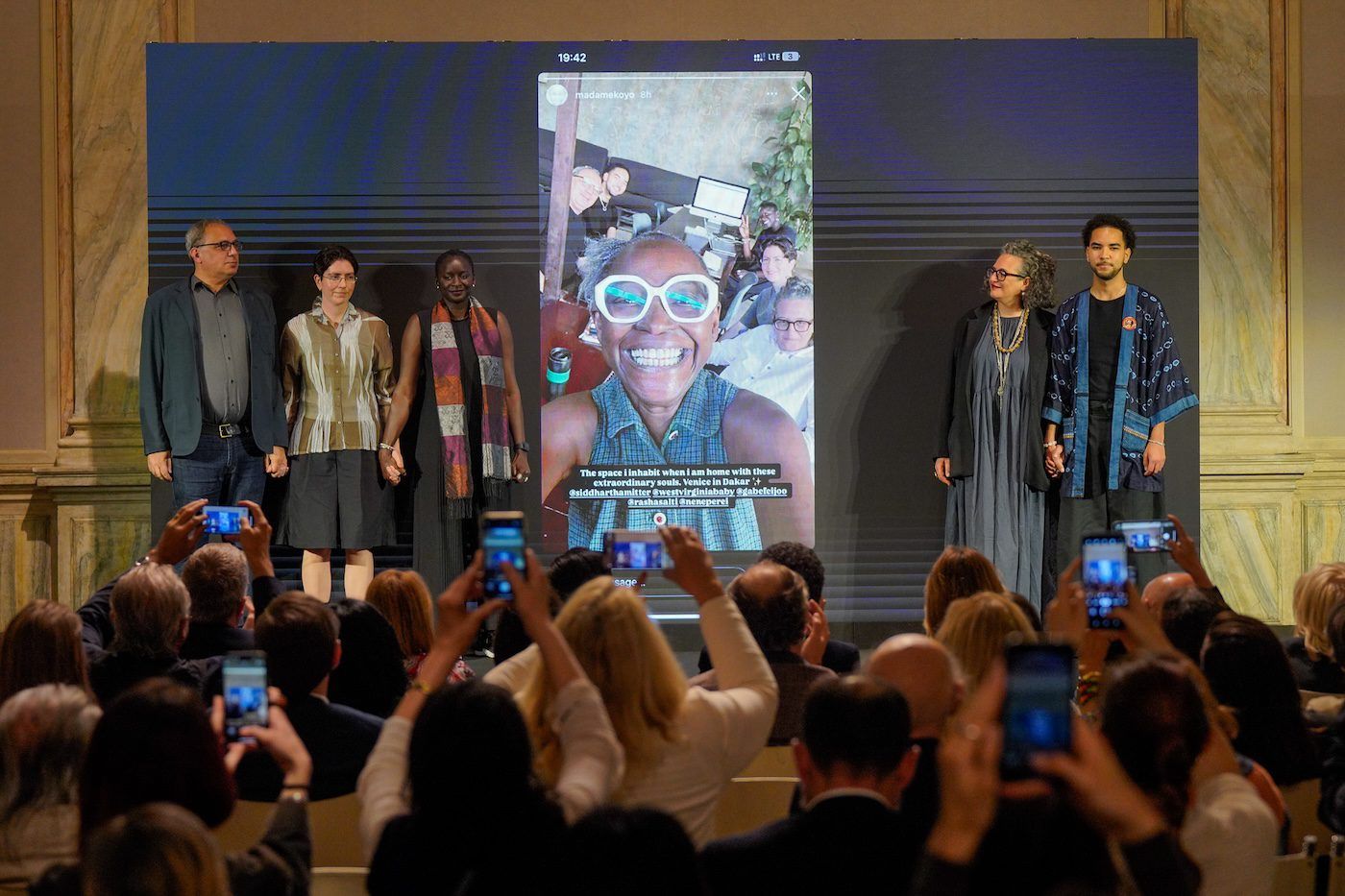
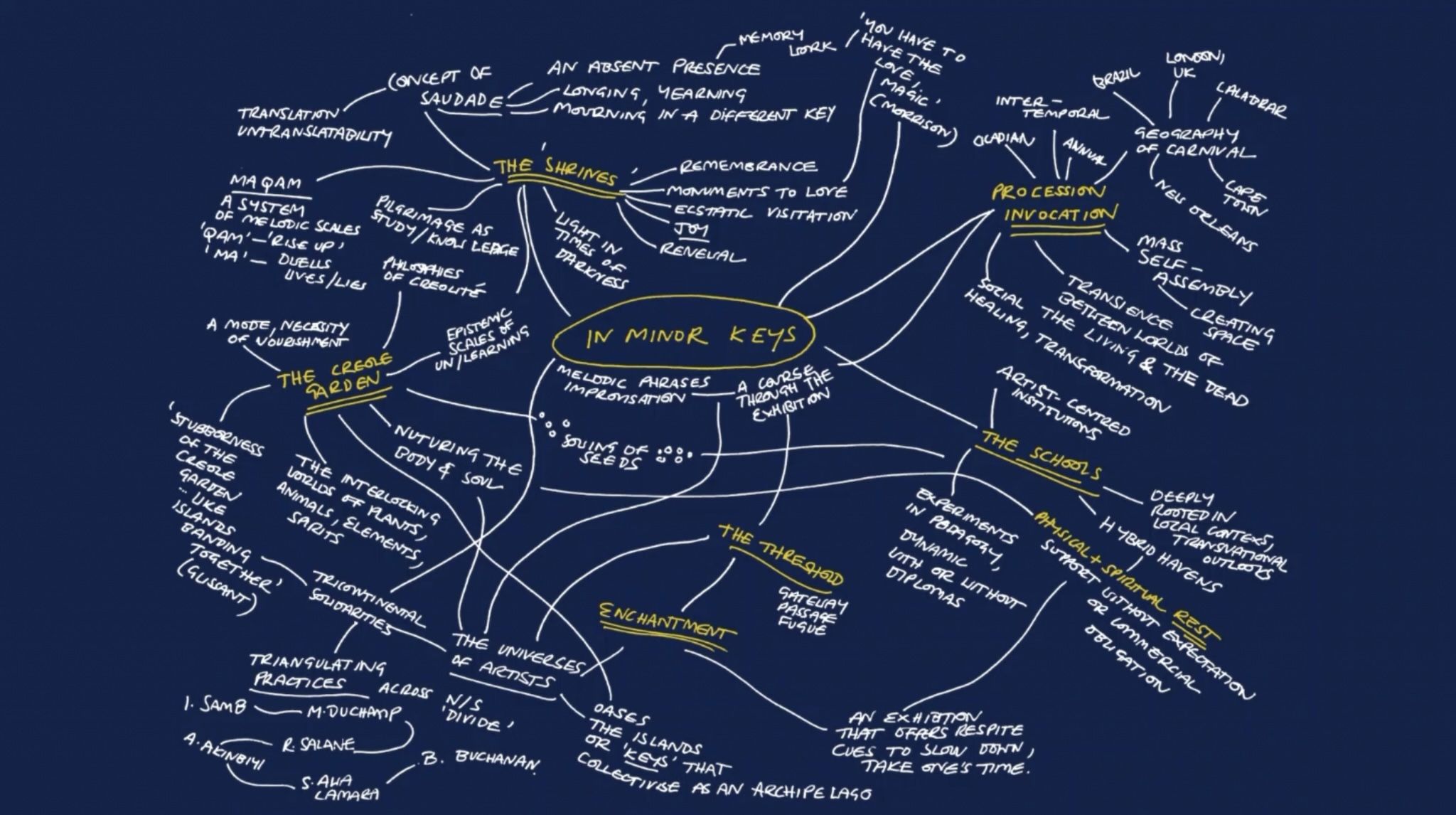
On the occasion of the 61st Venice Biennale ‘In Minor Keys’, curated by the late Koyo Kouoh, we resurface this text as the first in AfterBiennales: a forthcoming C& series that considers the afterlives, infrastructures, and contested futures of biennales. Drawing on the C& Cyclopedia as an integrated open-access archive, the series asks: what forms of African and diasporic practice are inscribed, omitted, or stabilised within bienniale archives — and how might these archives be reworked through collective, translocal editorial practices? Rather than treating biennales as sites of validation or discrete events to be analysed retrospectively, AfterBiennales opens a sustained editorial field in which the biennale becomes a site of recurrence: a structure to be returned to, interrupted, reassembled, and re-narrated over time.
In the aftermath of the 59th edition, Eric Otieno Sumba — writer and independent researcher whose criticism has extensively examined biennale structures and their politics — argued that Venice's brand of worldliness is, at its core, a form of provincialism. From payment rackets disguised as curatorial projects to the self-congratulatory optics of belated "firsts," Sumba traced the structural conditions that make such failures not incidental but inevitable.
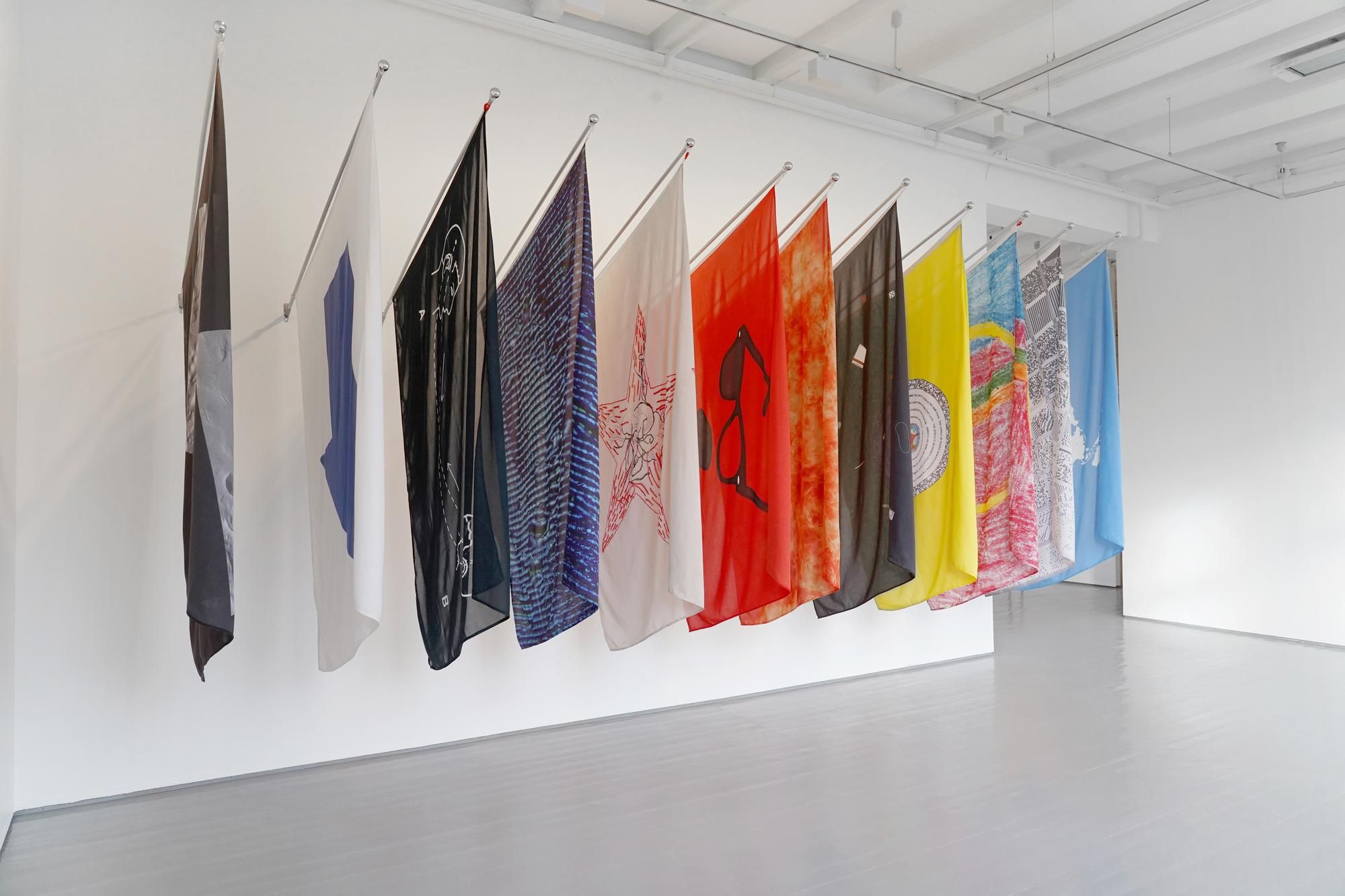
70 artists, "Unfolding Questions, Codes, and Contours" (2012-2020), imaged here first iteration in Bergen 2012, cotton, 79 x 57 inches each (photo by Randi Grov Berger and courtesy Entrée).
Worldliness has always been abundant at the Venice Biennale. Long before “methodological nationalism” was a concern, the Venice Biennale cemented the idea of the nation-state as the default unit of framing artistic practice, while cultivating a brand of worldliness that courts the illusory and implausible. Slightly less than half of the world’s countries regularly participate, and anyone who has had to apply for a visa can only scoff at the idea that national pavilions complicate notions of contemporary borders and citizenship. “Complicated” and “visa application” are all but synonymous within contemporary regimes of human movement, while Europe and the US not only resist provincialization, but also routinely monopolize worldliness.
As a seismograph of global artistic output, the national pavilions of Venice are no longer fit for purpose. Along with pavilion swaps (France-Germany in 2013), takeovers (Estonia at the Dutch Pavilion in 2022), and literal excavations of national histories (Germany in 1993 and 2022), bland critiques of nationalism return reliably every two years to garnish the curatorial statements of the permanent pavilions. The long and bumpy road to Venice for many of the other pavilions is easily lost on western critics, who often don’t bother to visit them (early reviews of the 59th edition by the Guardian, the New York Times, Artnet, and Artnews barely mention pavilions outside the Giardini). Granted, Sweden, Norway, and Finland’s joint Sámi Pavilion can be seen as a small step towards denationalizing the Biennale. Nevertheless, Namibia’s hijacked pavilion, the special support for the Ukraine Pavilion, the US Pavilion’s “first Black woman in Venice” narrative, and the skewed selection process for the Portuguese Pavilion highlight some discontents of the national participation model: the unevenness of pavilion financing, volatile geopolitics, instrumentalization of cultural diplomacy, and widely disparate national selection criteria.
The diplomatic officialdom that the biennale evokes often obscures the significant role that private money plays in the event. Though often compared to the Olympics, rationales at the Venice Biennale increasingly imitate those at the World Economic Forum in Davos. For instance, a well-connected Italian cognitive sciences graduate secured patrons and obtained approval from Namibia’s government to present simple wire-and-stone sculptures for Namibia’s inaugural pavilion. It took an open letter detailing the problematic conceptual themes, inappropriate artistic contribution, and the flagrant disconnection from the country’s contemporary art scene for the pavilion to be withdrawn. Importantly, the letter also highlighted that such cases are nothing new.
In 2013 and 2015, the Kenyan Pavilion was organized by a shifty Italian duo who mainly presented Chinese and Italian artists. In 2015, Kenya withdrew and Costa Rica followed suit after learning that their pavilions’ Italian organizer had run a payment racket offering spots to artists of any nationality willing to pay €5000. In being swiftly dismissed as “curatorial disasters” by commentators, these examples were stripped of their potential to flag the culpability of the biennale’s organizers for creating an enabling environment for individuals to exploit inequality between and within countries for cultural clout.
Generally, countries benefit from the soft power signified by having a pavilion. For artists and curators, however, explicit national affiliation can be an unwieldy burden, as many feel compelled to deconstruct nationalisms in Venice. Consider the high personal cost of the public withdrawal of the curator and artists of the Russian pavilion in protest of Putin’s invasion of Ukraine. While the biennale’s organizers ensured Pavlo Makov and his Ukrainian team were able to present their work, heightened levels of pathos and inappropriate allegories to the war unduly shoehorn the project. On the flipside, the same organizers that (rightly) supported Ukraine’s participation have tolerated individuals making a business model out of non-western country pavilions. Aren’t both scenarios political after all?
Polished cultural diplomacy abroad can hide messy national politics. Simone Leigh’s solo presentation at the US Pavilion galvanized the world’s largest cultural diplomacy machine, which wore the shameful fact that Leigh was only the first Black woman to represent the US in Venice as a badge of honor. Just a month before the biennale, the charade of the prolonged Supreme Court of the United States confirmation hearings to interrogate an evidently well-qualified Black woman called that self-congratulatory narrative into question. In December 2021, the open letter that highlighted the above-mentioned irregularities in Portugal’s selection committee explained that one juror was invested in downplaying the credentials of one of the country’s leading artists, Grada Kilomba, who happens to be a Black woman.
Like the obsolete national pavilions, the superficial worldliness cultivated at the Venice Biennale is a decades-old art-world staple. Asked about the 1980s in New York City’s art circles in an interview, curator Okwui Enwezor recalled that “most Americans I knew and met were actually not worldly at all, but utter provincials in a very affluent but unjust society.” In 1997, at the helm of the second (and last) Johannesburg Biennale, Enwezor shunned the national participation model, opting for a thematic, concept-driven approach. He envisioned that biennale as “an opportunity to convene new contact zones, where serious dialogue, disagreement and exchange can take place.” While the Johannesburg Biennale struggled to fulfill these ambitions, Enwezor enjoyed other opportunities – including documenta 11 (2002) and the 56th Venice Biennale (2015) – to test the validity of that proposition.
Clearly, not everything about the biennale can (or should) be micromanaged in advance from Venice. Nevertheless, a good – and not historical – argument for upholding the national participation model in the twenty-first century is owed to artists in countries with little prospect of ever hosting a pavilion in Venice. Hailed as a coup for women artists, the first Venice Biennale in the wake of Covid-19 still seems determined to tread familiar paths as far as the pavilion model is concerned. Now more than ever, new contact zones are necessary.
Artist-Led Organizations in Focus At The 61st Venice Art Biennale
Zimbabwe Pavilion Announces “Second Nature | Manyonga” for Venice Art Biennale 2026