The Best Part of the Trip is the Journey
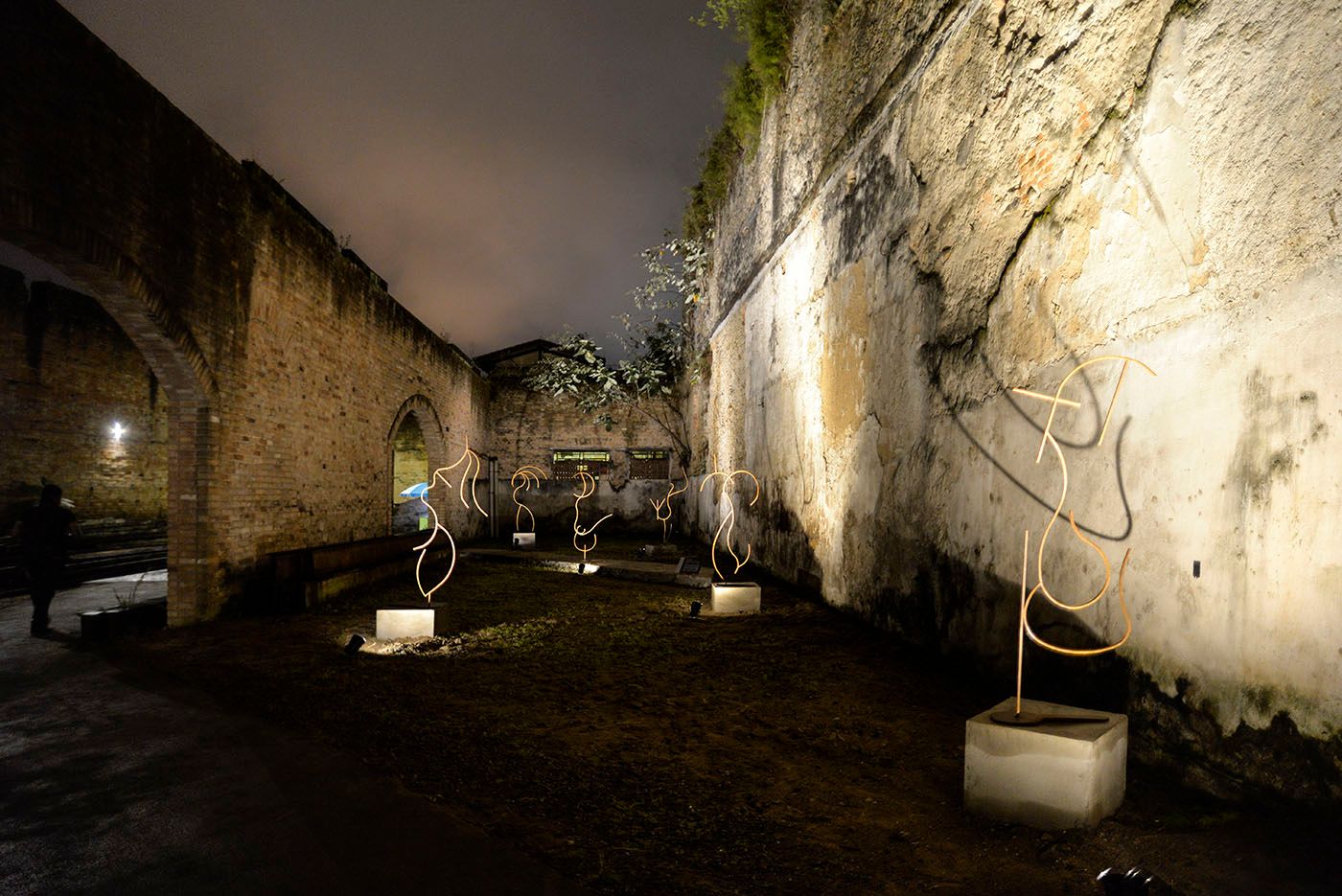
Set of iron sculptures from the series 'How to put air in the words', of Rebeca Carapiá. Photo: Julia Thompson. Courtesy Valongo International Image Festival.
In search of freedom from a colonial mental geography, festival proposes new ways of seeing and conceiving the world.
It was as a piece of parting advice that I first heard from my mother's sister, my godmother Darlúcia: “the best part of the trip is the journey”. Heading off into the unknown, I gradually realized that those words, due to their ancestral and circumstantial force, were being set in motion in order to convey an embodied and common knowledge, safeguarded over many years within my own family. This force of collective evocation is perpetuated both by temporal transmission, across generations, as well as by the spatial experience of our shifts and encounters in the here and now.
Based on singer, songwriter, and literature specialist Tiganá Santana's studies of the [Portuguese] translation of African Cosmology of the Bantu-Kongo: Principles of Life and Living by Congolese writer, teacher and spiritual guide Bunseki Fu-Kiau, and understandings about “oral literature performances”, by professor Leda Maria Martins, I came to understand this saying by my aunt, loaded with rhythm and poetry, as a word-frequency: the waves and radiations steeped in the act of uttering that phrase reaffirm the belief in its effective power of realization. So that the experience manifested in language can only be realized and decoded by those who share a certain way of being and living culturally: according to Fu-Kiau, this understanding is only possible for those who can “taste and feel the radiation beauty [n'niènzi a minienie].”
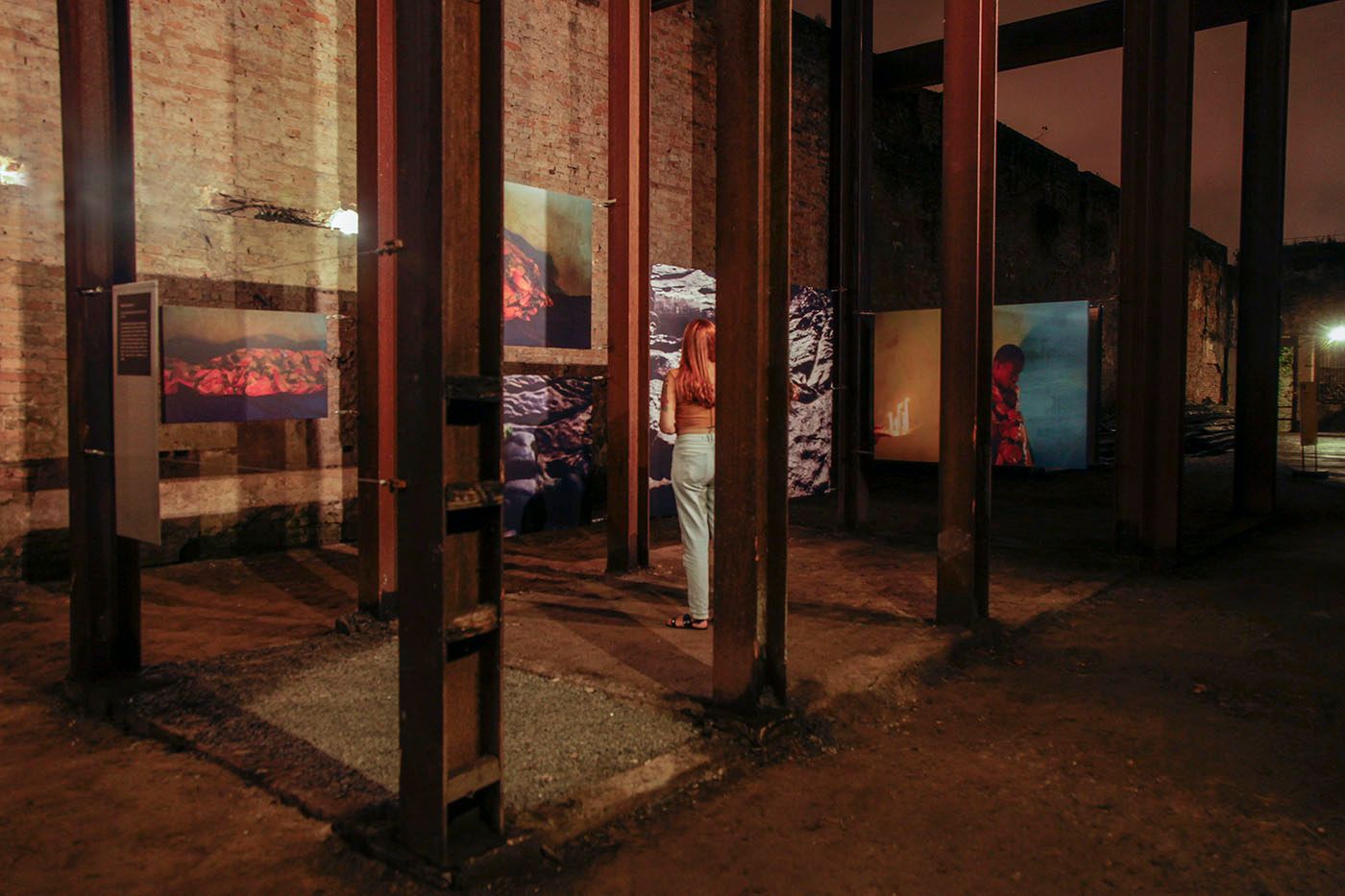
Still life studies, Adriano Machado. Photo: Marina Lima. Courtesy Valongo International Image Festival.
Dissenting forms of expression
More than a year after the aforementioned episode, I can say that what this language brought me, in addition to the understanding that one has to sit without answers, was a number of reflections that led me to the title – The best part of the trip is the journey – of the Valongo International Image Festival 2019. Held last November in the city of Santos, in the state of São Paulo, the festival started from a curatorial crossroads: embodied and common knowledge, multiple temporal dimensions, displacement as choreography and exercises of language.
Taking into consideration our quest to rid ourselves of a colonial mental geography, the idea was to bring about, as a provocation, an attempt at imagining ways of seeing and conceiving the world that are not yet historically available to us. Challenging the universal principles of rationality, understanding how wandering, drifting and disorientation can lead to deviations in the norms of languages, so that we can uncover dissident forms of expression, especially by taking advantage of the various itinerant identities we forge when we are in a permanent state of displacement.
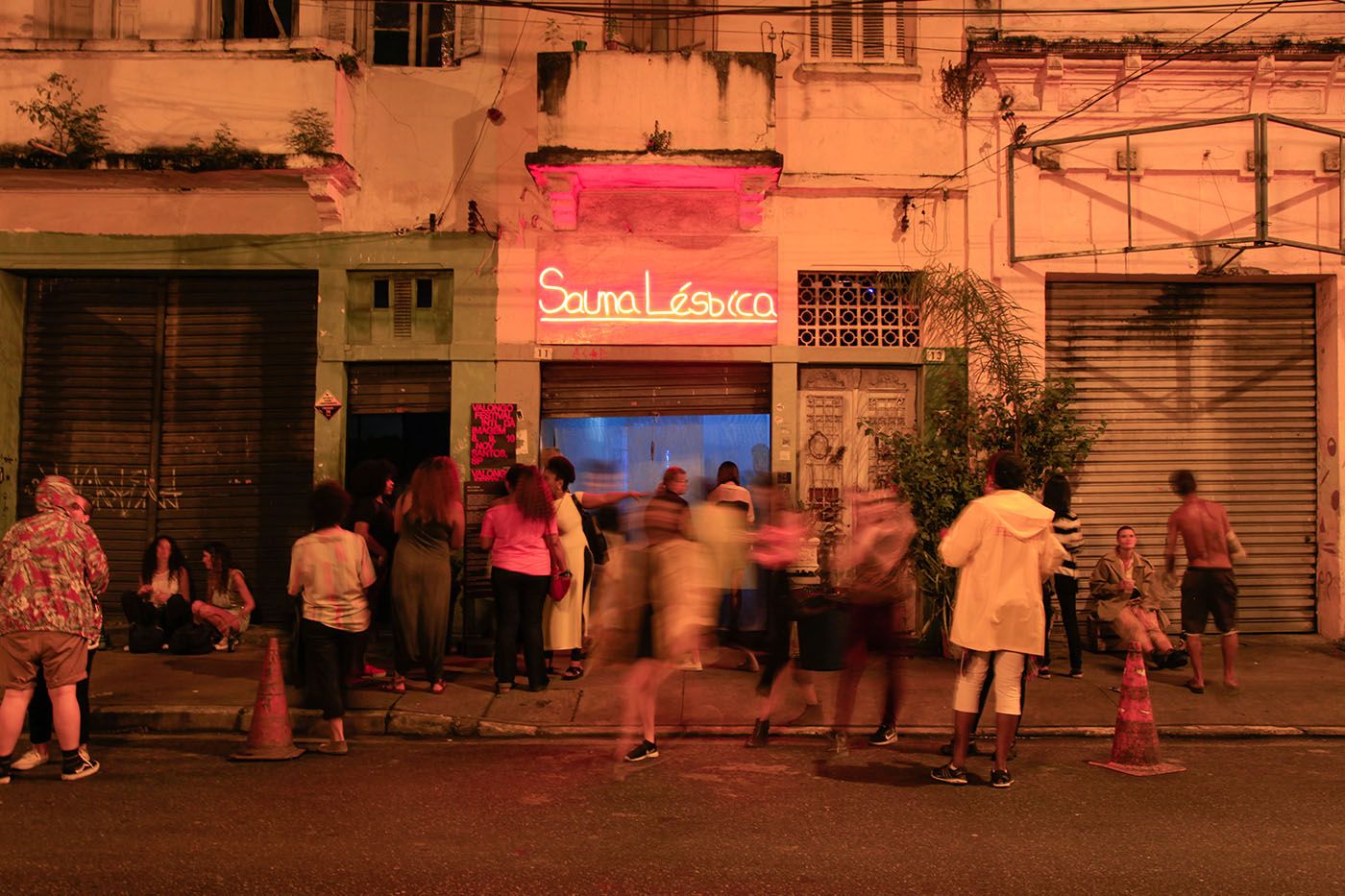
Lesbian Sauna, Malú Avelar. Photo: Marina Lima. Courtesy Valongo International Image Festival.
Artist Residency Program
Dialoguing with the port installations in Santos' historic downtown to provide space for the images, words, sounds and bodies in its ruins, streets, docks and monuments, more than 30 artists, and researchers looked into the visionary potential of images created from our own embodied and common knowledge. The research conducted as part of the festival's artist residency program culminated in three site-specific works.
The first is by Eric Magassa, a French-Swedish artist of Senegalese and Malian descent. Using sculpture, painting, video and photography in a palette of vibrant colors and abstract pictorial elements, he explores relationships surrounding local and Atlantic memories, debating Sweden's role in colonization, and discussing how African artifacts collected by ethnographic museums were appropriated and violated within the logic of modern western raciality.
Artist Malú Avelar proposes the political imagination project, Sauna Lésbica (Lesbian Sauna). The installation is based on the creation of an imaginary conceptual and political space, organized around collective and propositional negotiations in order to think about, through contemporary art, lesbian identities, self-care, as well as a meeting point and celebration of dissident bodies in their various forms of expression.
Drawing on her experience with metalwork and materials such as copper and iron, artist Rebeca Carapiá presents the series Como colocar ar nas palavras (How to put air in words). Through an installation composed of large-scale drawings and sculptures, the artist has created an entire cosmology around the conflicts of the norms of language and body, performing the deconstruction of the geographies of the feminine(s) in order to create other ways of speaking about difference, without explaining it.
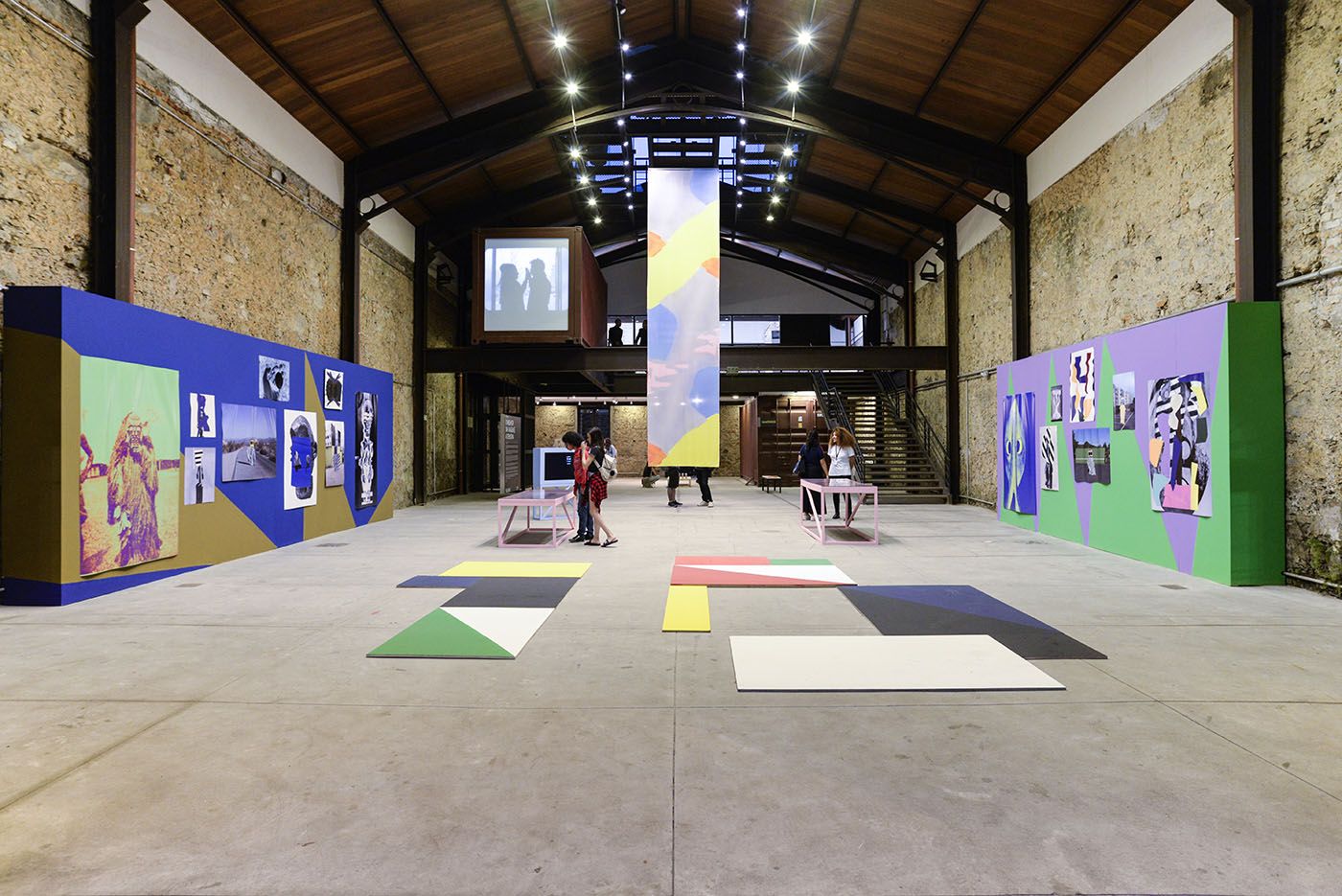
Installation Horizon, Eric Magassa. Photo: Julia Thompson. Courtesy Valongo International Image Festival.
Political bodies
This collective exhibition policy of “we” also included artists and researchers such as Rasheedah Phillips and Anta Helena Recke, as well as names selected in an open call, including Davi Pontes, Iagor Peres, Juliana dos Santos, Adriano Machado, Luana Vitra and Ventura Profana.
Diane Lima is an independent curator and researcher. She holds a Master's in Communication and Semiotics from PUC-SP, and her work focuses on experimenting with multidisciplinary curative practices from a decolonial perspective.
Translated from Portuguese by Zoë Perry
Feature
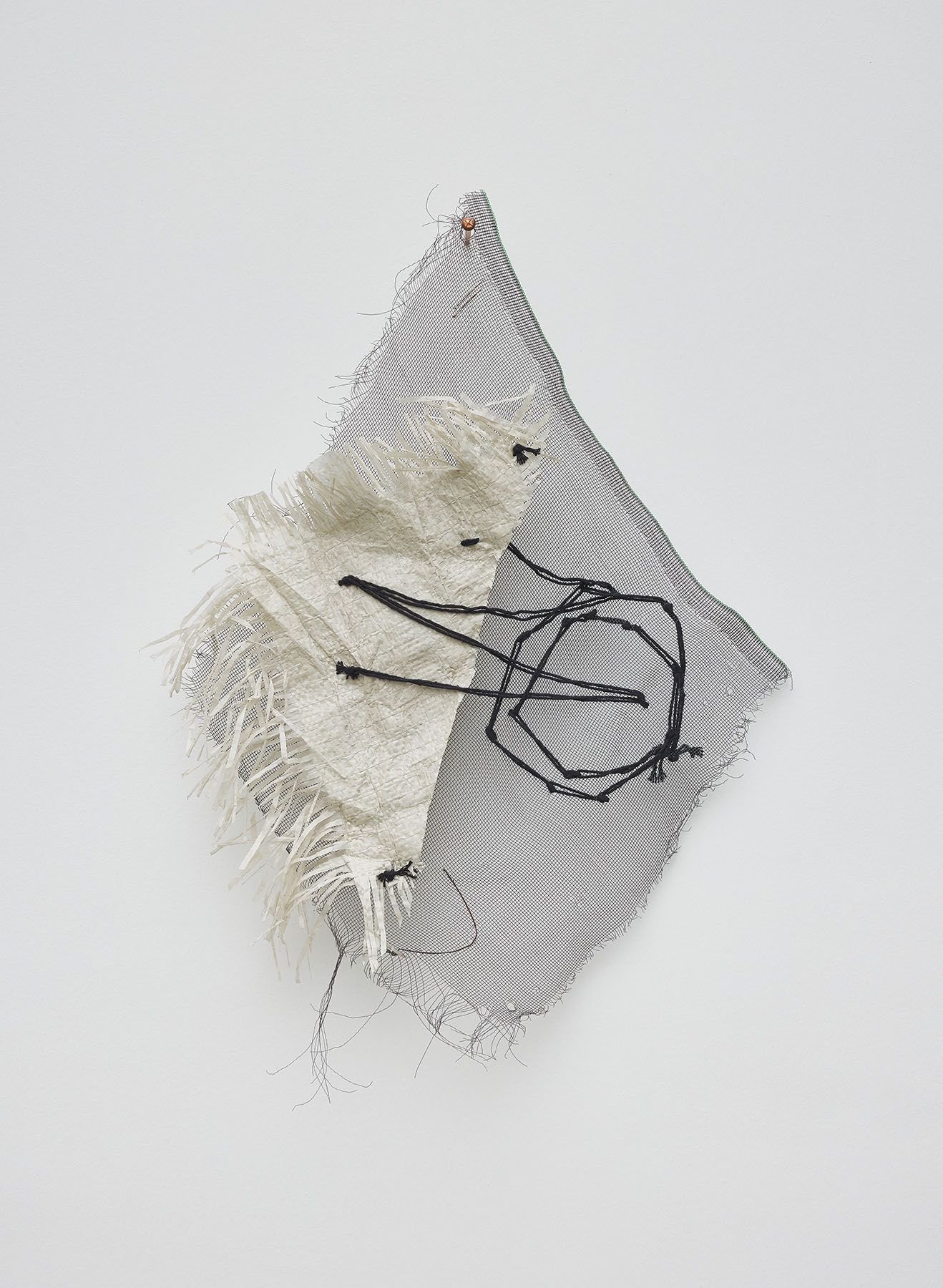
Iahra: Addressing Marine Ecology Through Industrial Materialities
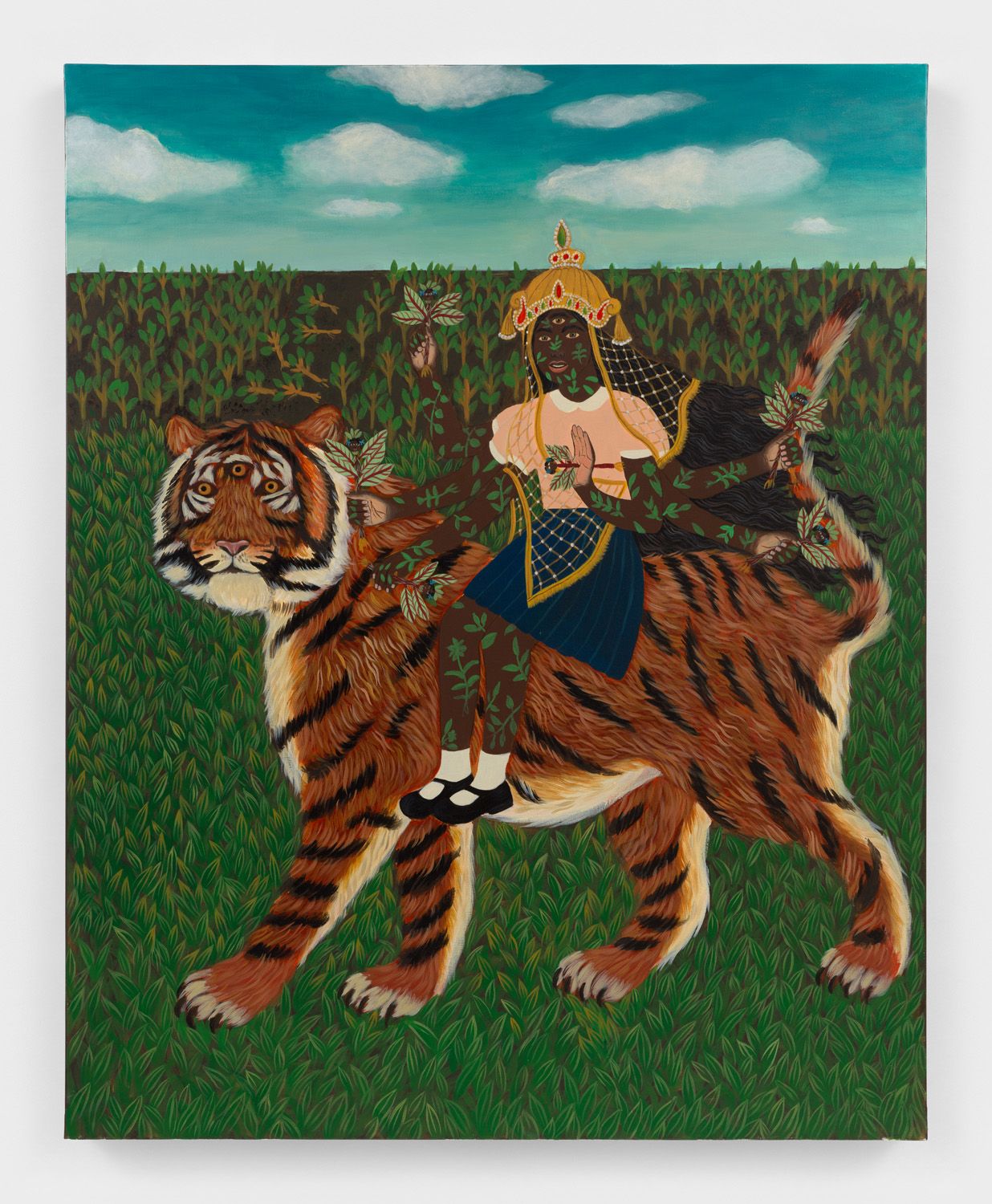
The Convergence of African and Indian Lives in Kelly Sinnapah Mary’s Paintings
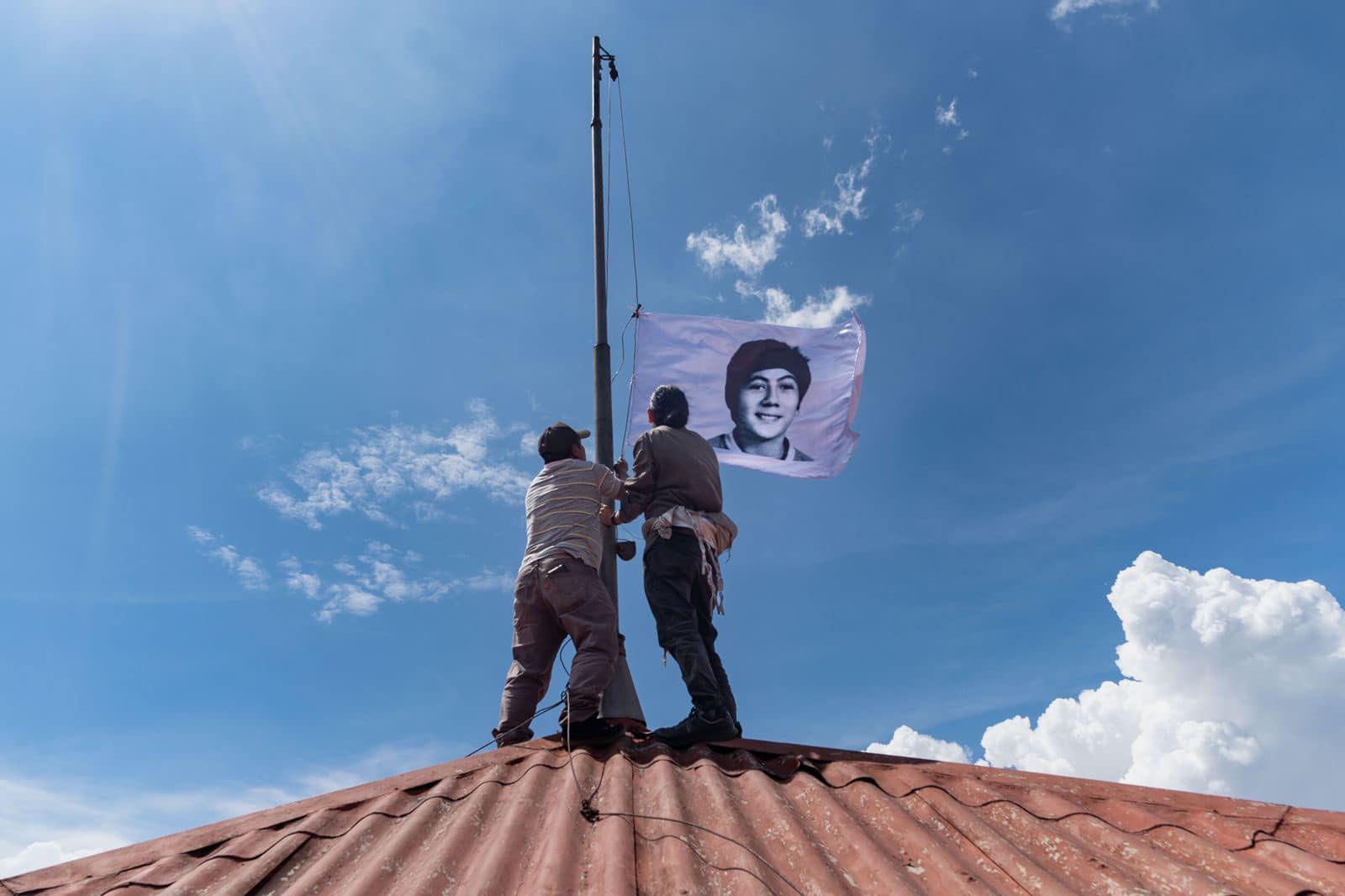
Transforming Memories of State Violence through Poetic Justice
Feature
Seed Archives: Celebrating African and Caribbean Design and Culture in London
Manuel Tzoc: Art as Embodied and Relational Poetry