“They Had To Deny Their Indigenous Origins To Stay Alive”
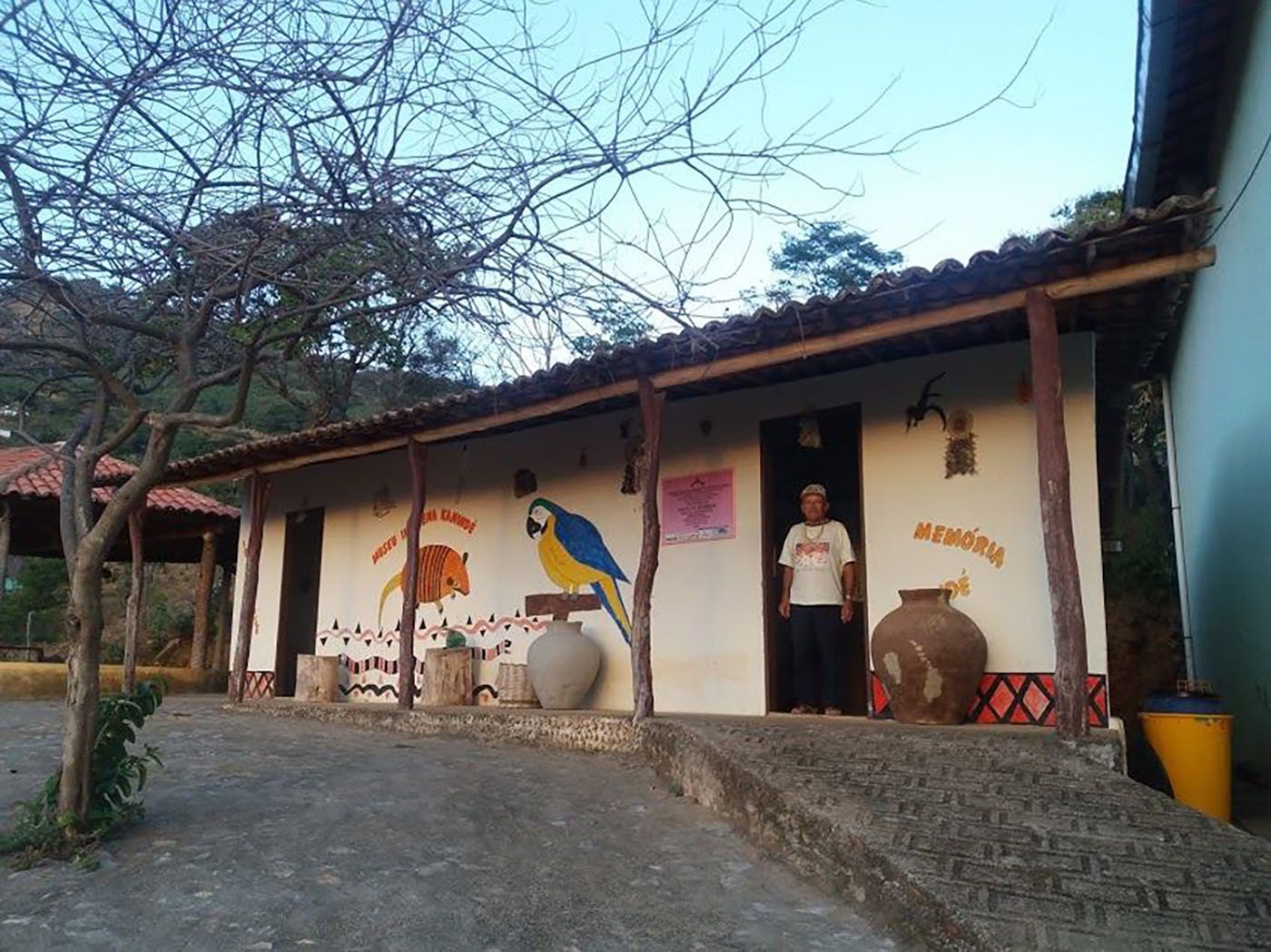
Cacique Sotero, founder of the Kanindé Museum, the first indigenous museum in Ceará. Photo: Alexandre Oliveira Gomes. Kanindé Museum's Collection.
Indigenous peoples recover art and archeological objects to promote the preservation of culture and memory.
In Brazil, indigenous peoples began the process of organizing collections and museums in the 1980s. The country’s first indigenous museum was the Magüta, founded by the Tikuna people, in the state of Amazonas, in 1990, followed by the Kanindé Museum, inaugurated in the state of Ceará, in 1995. In 2020, those museums turned 30 and 25, respectively, but that history of struggle and existence/resistance is still little known when addressing processes of heritage, art and curatorship in Brazil.
According to Suzenalson Santos, coordinator of the Indigenous Kanindé Museum, since the arrival of the Portuguese, until recently, hiding indigenous identity was always a way to survive. Native peoples were constantly threatened by those who wanted to appropriate their lands. They had to deny their indigenous origins to stay alive. They had to not paint themselves, not dance, not speak their own language. They had to forget the customs of their ancestors. With the indigenous mobilization in the 1980s, indigenous identities started reaffirming themselves, and community-based museology emerged as one of the tools they could use to construct a counter-hegemonic narrative in the reaffirmation of indigenous subjectivities.
A loss of traditional knowledge
Benício Pitaguary, a plastic artist and organizer at the Pitaguary Indigenous Museum, also in Ceará, points out that the erasure of indigenous culture throughout the long centuries of colonization made many indigenous people lose knowledge about their traditional practices. “Many didn’t have even one record of corporeal culture; they no longer knew how to paint or even make the paint, despite having all the materials: the jenipapo, the urucum and the toá, which is a clay that we use,” Pitaguary says.
“Before, if you spoke the language, you would die. Imagine if you had body paint that stayed on for two weeks… Not painting ourselves was a way to show that we were not indigenous. We had to accept a white culture,” Pitaguary emphasizes. “We use body paint a lot. It was silenced and we are bringing it back. Whoever would paint themselves would die; today, we need to do the opposite. We need to paint ourselves,” he concludes.
Body painting and performance
Benício Pitaguary’s work also includes performance, painting at shows and art spaces with living bodies. With a degree in Geography from the Federal University of Ceará, he brings indigenous corporeal painting into his academic research. As a professor, he conducts workshops sharing techniques of the ancestors, especially, with the youngest participants. “The main challenge is getting out of people’s heads the idea that only white people make art,” he says. “For us, art is very much connected to the sacred. The concept is different from that of the white people. At our Museum, we want to bring this way of expressing a different worldview,” he concludes.
Art and archeology
As much as art spaces, indigenous museums are also places for education and dialogue between the wisdom and experience of the oldest and new generations. “We have made a work that brings together indigenous education and the identity of the people through the objects that are in the Museum,” says Santos. According to him, the Kanindé Indigenous Museum does not only consist of art objects, but houses archeological pieces as well, such as seeds and feathers, which are used in rituals of the Kanindé people. “These are pieces that are directly related to how the Kanindé people’s material and immaterial culture take shape,” he observes.
Another important aspect of the indigenous museums is their relationship with the land and traditional celebrations. “The Museum is one of the first initiatives of a changing education on their land. It was also one of the first experiments managed from an indigenous semantic perspective, since it was created to tell the history of the Kanindé people. Cacique Sotero, the founder of the Museum, began bringing the pieces together precisely so that the Kanindé people would not forget who they were,” recalls João Paulo Vieira Neto, historian and advisor to the Indigenous Network of Memory and Social Museology.
Their own museology
Indigenous peoples have been elaborating their own museology as a tool for asserting their ethnic identities, their historical and environmental preservation and their political and cultural resistance. In mid-2011, researchers in indigenous cultures and activists organized the Indigenous Network of Memory and Social Museology, which brings together diverse peoples and its work is carried out in research centers throughout several Brazilian states. Every year, they organize the Indigenous Museum Managers’ Meeting and the Forum on Indigenous Museums of Brazil.
Miriane Peregrino started in 2013 “Literatura Comunica!”, in which she develops projects to encourage reading and the visual arts in popular spaces. She has a doctorate in Literature from the Federal University of Rio de Janeiro, Brazil, and studied abroad at Agostinho Neto University, in Angola. Currently, she is conducting research at the University of Mannheim, Germany.
Translated from Portuguese by Sara Hanaburgh
Chavis Mármol: Thinking Manually in the Age of Artificial Intelligence
Archivo Honduras Cuir: The Art of Trans Life and Friendship in Central America
Iahra: Addressing Marine Ecology Through Industrial Materialities
The Convergence of African and Indian Lives in Kelly Sinnapah Mary’s Paintings
Transforming Memories of State Violence through Poetic Justice